
 © 2026 JSH Law Ltd. All rights reserved.
https://jshlaw.co.uk/wp-content/uploads/2026/02/ChatGPT-Image-Feb-3-2026-03_26_42-AM.png
1024
1536
Jessica Susan Hill
https://jshlaw.co.uk/wp-content/uploads/2026/01/jsh-law-logo-new-black-300x67.png
Jessica Susan Hill2026-02-18 19:31:322026-02-18 19:31:34Child Safety and Emotional Harm in Family Court: Understanding Risk Beyond Bruises
 https://jshlaw.co.uk/wp-content/uploads/2026/02/ChatGPT-Image-Feb-3-2026-04_07_33-AM.png
1024
1536
Jessica Susan Hill
https://jshlaw.co.uk/wp-content/uploads/2026/01/jsh-law-logo-new-black-300x67.png
Jessica Susan Hill2026-02-18 16:09:292026-10-10 13:17:46When Coercive Control Leads to Conviction — Why Sentencing Still Falls Short
https://jshlaw.co.uk/wp-content/uploads/2026/02/ChatGPT-Image-Feb-3-2026-04_07_33-AM.png
1024
1536
Jessica Susan Hill
https://jshlaw.co.uk/wp-content/uploads/2026/01/jsh-law-logo-new-black-300x67.png
Jessica Susan Hill2026-02-10 12:47:092026-10-10 13:18:14When a Parent Discloses Strangulation and has a SEN Child: What to Do Next (UK Family Court)
https://jshlaw.co.uk/wp-content/uploads/2026/02/ChatGPT-Image-Feb-3-2026-04_07_33-AM.png
1024
1536
Jessica Susan Hill
https://jshlaw.co.uk/wp-content/uploads/2026/01/jsh-law-logo-new-black-300x67.png
Jessica Susan Hill2026-02-06 12:35:082026-02-10 13:32:13When Court Process Becomes a Tool of Abuse – Why post-separation abuse, litigants in person, and procedural design cannot be treated separately
https://jshlaw.co.uk/wp-content/uploads/2026/02/ChatGPT-Image-Feb-3-2026-04_07_33-AM.png
1024
1536
Jessica Susan Hill
https://jshlaw.co.uk/wp-content/uploads/2026/01/jsh-law-logo-new-black-300x67.png
Jessica Susan Hill2026-02-06 11:49:312026-02-06 11:49:32Child Maintenance Arrears: What the Law Really Says – and What to Do When the System Fails You
 https://jshlaw.co.uk/wp-content/uploads/2026/01/family-court-allegations.png
1024
1536
Jessica Susan Hill
https://jshlaw.co.uk/wp-content/uploads/2026/01/jsh-law-logo-new-black-300x67.png
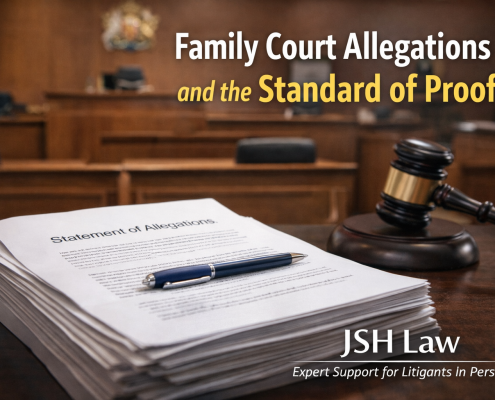
Jessica Susan Hill2026-01-28 15:15:242026-02-03 03:32:07Should an Ex-Partner’s Allegations Be Taken at Face Value in Family Court?
 jsh law ltd
https://jshlaw.co.uk/wp-content/uploads/2026/01/ChatGPT-Image-Jan-28-2026-02_50_51-PM.png
1024
1536
Jessica Susan Hill
https://jshlaw.co.uk/wp-content/uploads/2026/01/jsh-law-logo-new-black-300x67.png
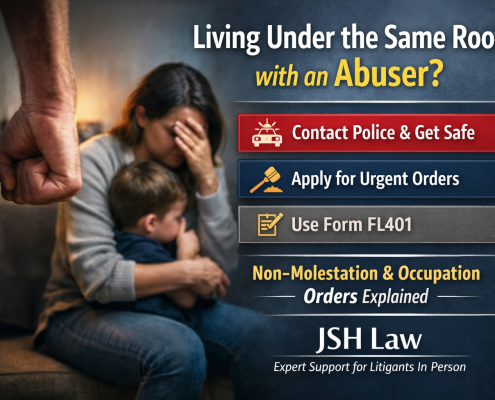
Jessica Susan Hill2026-01-28 14:53:512026-02-03 03:32:52He Raised His Fist While We’re Still Living Together — What Do I Do Now?
 jsh law ltd
https://jshlaw.co.uk/wp-content/uploads/2026/01/ChatGPT-Image-Jan-15-2026-04_34_15-PM.png
1024
1024
Jessica Susan Hill
https://jshlaw.co.uk/wp-content/uploads/2026/01/jsh-law-logo-new-black-300x67.png
Jessica Susan Hill2026-01-15 16:51:272026-10-12 14:36:14Domestic Abuse Allegations and PD12J:
 jsh law ltd
https://jshlaw.co.uk/wp-content/uploads/2026/01/ChatGPT-Image-Jan-15-2026-04_05_50-PM.png
1024
1024
Jessica Susan Hill
https://jshlaw.co.uk/wp-content/uploads/2026/01/jsh-law-logo-new-black-300x67.png
Jessica Susan Hill2026-01-15 16:09:032026-10-12 14:36:26False Allegations in the Family Court