
Posts
 © 2026 JSH Law Ltd. All rights reserved.
https://jshlaw.co.uk/wp-content/uploads/2026/02/ChatGPT-Image-Feb-3-2026-03_26_42-AM.png
1024
1536
Jessica Susan Hill
https://jshlaw.co.uk/wp-content/uploads/2026/01/jsh-law-logo-new-black-300x67.png
Jessica Susan Hill2026-05-07 14:45:042026-10-12 11:51:55Non-Fatal Strangulation: Why Family Courts Must Treat It as a Lethal Risk Warning© 2026 JSH Law Ltd. All rights reserved.
https://jshlaw.co.uk/wp-content/uploads/2026/02/ChatGPT-Image-Feb-3-2026-03_26_42-AM.png
1024
1536
Jessica Susan Hill
https://jshlaw.co.uk/wp-content/uploads/2026/01/jsh-law-logo-new-black-300x67.png
Jessica Susan Hill2026-05-07 09:24:102026-10-12 11:52:00Ontario’s Integrated Domestic Violence Court: Why the UK Should Be Watching© 2026 JSH Law Ltd. All rights reserved.
https://jshlaw.co.uk/wp-content/uploads/2026/02/ChatGPT-Image-Feb-3-2026-03_26_42-AM.png
1024
1536
Jessica Susan Hill
https://jshlaw.co.uk/wp-content/uploads/2026/01/jsh-law-logo-new-black-300x67.png
Jessica Susan Hill2026-05-07 08:36:442026-10-10 13:17:41When Abuse Doesn’t End: Coercive Control and the Family Court© 2026 JSH Law Ltd. All rights reserved.
https://jshlaw.co.uk/wp-content/uploads/2026/02/ChatGPT-Image-Feb-3-2026-03_26_42-AM.png
1024
1536
Jessica Susan Hill
https://jshlaw.co.uk/wp-content/uploads/2026/01/jsh-law-logo-new-black-300x67.png
Jessica Susan Hill2026-03-08 12:05:062026-03-08 13:20:15Sunday Reflection – Let God Prevail: What Jacob’s Story Teaches Litigants in Person About Family Court, Fear, Delay and Healing© 2026 JSH Law Ltd. All rights reserved.
https://jshlaw.co.uk/wp-content/uploads/2026/02/ChatGPT-Image-Feb-3-2026-03_26_42-AM.png
1024
1536
Jessica Susan Hill
https://jshlaw.co.uk/wp-content/uploads/2026/01/jsh-law-logo-new-black-300x67.png
Jessica Susan Hill2026-03-02 15:36:212026-10-12 11:50:16The “Vibe Lawyer” Moment: AI, Litigants in Person, and the Coming Shockwave for the Family Courts© 2026 JSH Law Ltd. All rights reserved.
https://jshlaw.co.uk/wp-content/uploads/2026/02/ChatGPT-Image-Feb-3-2026-03_26_42-AM.png
1024
1536
Jessica Susan Hill
https://jshlaw.co.uk/wp-content/uploads/2026/01/jsh-law-logo-new-black-300x67.png
Jessica Susan Hill2026-03-02 13:08:472026-03-02 13:08:51“Is Any Thing Too Hard for the Lord?” — A Come, Follow Me Reflection for Litigants in Person in the Family Court
 https://jshlaw.co.uk/wp-content/uploads/2026/01/family-court-allegations.png
1024
1536
Jessica Susan Hill
https://jshlaw.co.uk/wp-content/uploads/2026/01/jsh-law-logo-new-black-300x67.png
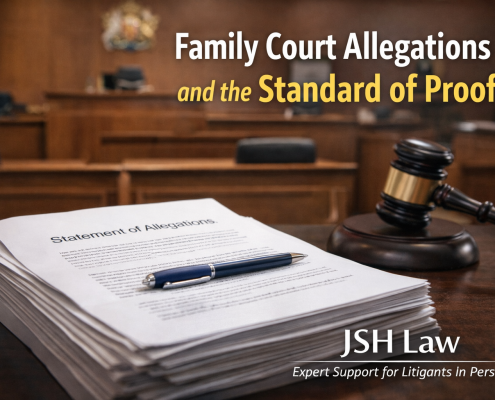
Jessica Susan Hill2026-01-28 15:15:242026-02-03 03:32:07Should an Ex-Partner’s Allegations Be Taken at Face Value in Family Court?
 jsh law ltd
https://jshlaw.co.uk/wp-content/uploads/2026/01/Gemini_Generated_Image_7skug67skug67sku.png
1024
1024
Jessica Susan Hill
https://jshlaw.co.uk/wp-content/uploads/2026/01/jsh-law-logo-new-black-300x67.png
Jessica Susan Hill2026-01-15 20:12:052026-10-12 14:36:02Cafcass Reports in the Family Court: When to Rely on Them — and When to Challenge Them Carefully
 jsh law ltd
https://jshlaw.co.uk/wp-content/uploads/2026/01/ChatGPT-Image-Jan-15-2026-04_34_15-PM.png
1024
1024
Jessica Susan Hill
https://jshlaw.co.uk/wp-content/uploads/2026/01/jsh-law-logo-new-black-300x67.png
Jessica Susan Hill2026-01-15 16:51:272026-10-12 14:36:14Domestic Abuse Allegations and PD12J:
 jsh law ltd
https://jshlaw.co.uk/wp-content/uploads/2026/01/ChatGPT-Image-Jan-15-2026-04_05_50-PM.png
1024
1024
Jessica Susan Hill
https://jshlaw.co.uk/wp-content/uploads/2026/01/jsh-law-logo-new-black-300x67.png
Jessica Susan Hill2026-01-15 16:09:032026-10-12 14:36:26False Allegations in the Family Court