
Archive for category: Family Court Procedure

Understand family court procedure in England and Wales, from C100 applications and preliminary hearings to directions, disclosure, evidence, urgent applications and final orders.

This section explains what each procedural step is for, what litigants in person may need to prepare and how to avoid preventable mistakes.

If you need help making sense of an order or preparing your documents for the next hearing, JSH Law offers structured family court navigation and case preparation support.

Lost a Child Arrangements Case? How to Appeal a Family Court Decision.

/
If you have just lost a child arrangements hearing, you may feel overwhelmed — but you may also have the right to appeal. Appeals in the Family Court are not about re-arguing your case. They focus on legal error, procedural unfairness, or a decision that was plainly wrong. Strict deadlines apply: in most cases, the appellant’s notice must be filed within 21 days. Permission to appeal is usually required, and the correct route depends on who made the original order. This guide explains the appeal test, the correct forms (FP161 or N161), service requirements, and how to apply for a stay pending appeal. If you are within the appeal window, understanding the process quickly and accurately is critical.

Urgent Applications in the Family Court: When & How to Apply

/
Urgent applications in the Family Court are reserved for situations involving immediate risk — not general disagreement between parents. If a child faces potential abduction, serious safeguarding concerns, or immediate harm, the court can intervene quickly, sometimes even without notice to the other party. However, urgency must be clearly justified and properly evidenced. Misusing the urgent route can damage credibility and weaken your case. This guide explains when an application is truly urgent, what forms are commonly used, how without-notice hearings work, and how safeguarding principles under Practice Direction 12J may apply. If you are considering emergency action, understanding the threshold and the risks is essential before filing.

Family Court Procedural Updates (Last 12 Months): What Litigants in Person Need to Know

/
Family Court procedure changes more often than most litigants in person realise. Amendments to the Family Procedure Rules, updates to Practice Directions such as PD12B and PD12J, developments in transparency reporting, and continued digital court reform can all affect how your case is managed. If you rely on outdated guidance, you risk delay, non-compliance, or procedural disadvantage. This article outlines the key procedural developments affecting Family Court proceedings over the last 12 months, explains why they matter, and identifies where you should check for future updates. Staying current is not optional — the court expects compliance with the rules as they stand today, not as they were when you first began your case.

MIAMs & Mediation in Family Court: What You Must Know Before Applying

/
Before applying to the Family Court in most private children cases, you are usually required to attend a MIAM — a Mediation Information and Assessment Meeting. Many litigants in person misunderstand this stage or assume it is optional. It is not. The Family Procedure Rules require applicants to consider mediation before issuing proceedings, unless a valid exemption applies. This guide explains what a MIAM actually involves, when it is required, what exemptions exist (including domestic abuse and urgency), and how mediation fits into the wider Child Arrangements Programme. It also outlines when mediation may be unsuitable and how courts view parties who refuse to engage without good reason. Understanding this stage properly can prevent delay, protect your credibility, and help you approach court strategically.

Family Court Hearing Types Explained (England & Wales)

/
Family Court proceedings move through defined stages, and each hearing has a specific purpose. If you are representing yourself in private children proceedings, understanding whether you are attending an FHDRA, directions hearing, fact-finding, DRA, final hearing or enforcement hearing is critical. Each type of hearing focuses on different issues — from safeguarding and interim arrangements to testing allegations or making final decisions under the Children Act 1989. Many litigants in person lose credibility simply because they prepare for the wrong objective. This guide explains the main Family Court hearing types in England and Wales, what the judge is deciding at each stage, and how you should prepare. Clarity about process gives you structure, and structure strengthens your position.

UK Family Court Forms & Applications: The Complete Guide for Litigants in Person

/
Family Court proceedings in England and Wales are driven by formal applications. If you are representing yourself, knowing which form to use — and when — is critical. From the C100 (Child Arrangements Order) to enforcement applications, emergency protective orders, financial disclosure forms, appeals, and fee remission requests, each document serves a specific procedural purpose. Filing the wrong form or missing a required supplement can delay your case or weaken your position. This guide provides a comprehensive overview of the key Family Court forms a litigant in person may encounter, explains what each one does, and links to the official sources. If you want clarity before submitting an application — or responding to one — this article will help you navigate the system properly.

Family Court Etiquette: How to Conduct Yourself as a Litigant in Person

/
Walking into the Family Court as a litigant in person can feel intimidating. Knowing how to conduct yourself is just as important as knowing the law. This guide explains proper Family Court etiquette in England and Wales — how to address the judge, when to stand, how to speak, what not to do, and how your behaviour can influence credibility. In private children proceedings, the court’s priority is your child’s welfare under the Children Act 1989. Your presentation, emotional control, and ability to focus on the child rather than the conflict matter more than you may realise. This article provides clear, practical guidance so you can enter court calm, prepared, and credible.
Struggling with breaches of a Child Arrangements Order? Learn how litigants in person can approach C79 enforcement applications effectively.JSH LAW LTD

Enforcing Child Contact Orders (C79): When Orders Are Ignored
/
Why non-compliance is so common — and how litigants in person…
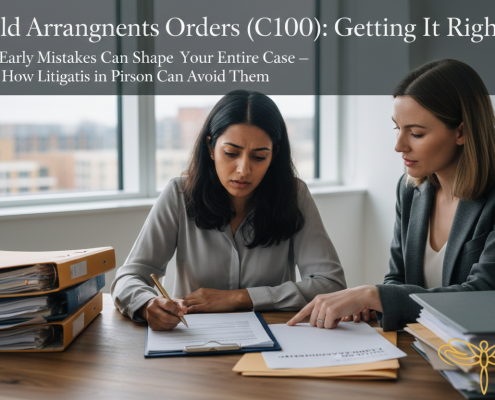
A parent completing a Child Arrangements Order (C100) form with procedural support, reviewing documents at a desk before a family court application.JSH LAW LTD

C100 Application Help | C1A, Cafcass & Child Arrangements | JSH Law

/
A practical guide to Form C100 for private children proceedings in England and Wales, including Child Arrangements Orders, C1A, MIAM exemptions, safeguarding, urgent applications, Cafcass and what happens after filing.