
Hearing Support & McKenzie Friend Services
Referrals & Signposting to Appropriate Professionals
Know when practical litigation support is enough — and when your case needs a solicitor, barrister, specialist advocate, expert or another professional.
Good support includes knowing where its limits are.
JSH Law can help identify when an issue has moved beyond practical McKenzie Friend or litigation support, clarify the type of professional input that may be required and organise the information that professional will need to understand the problem quickly.
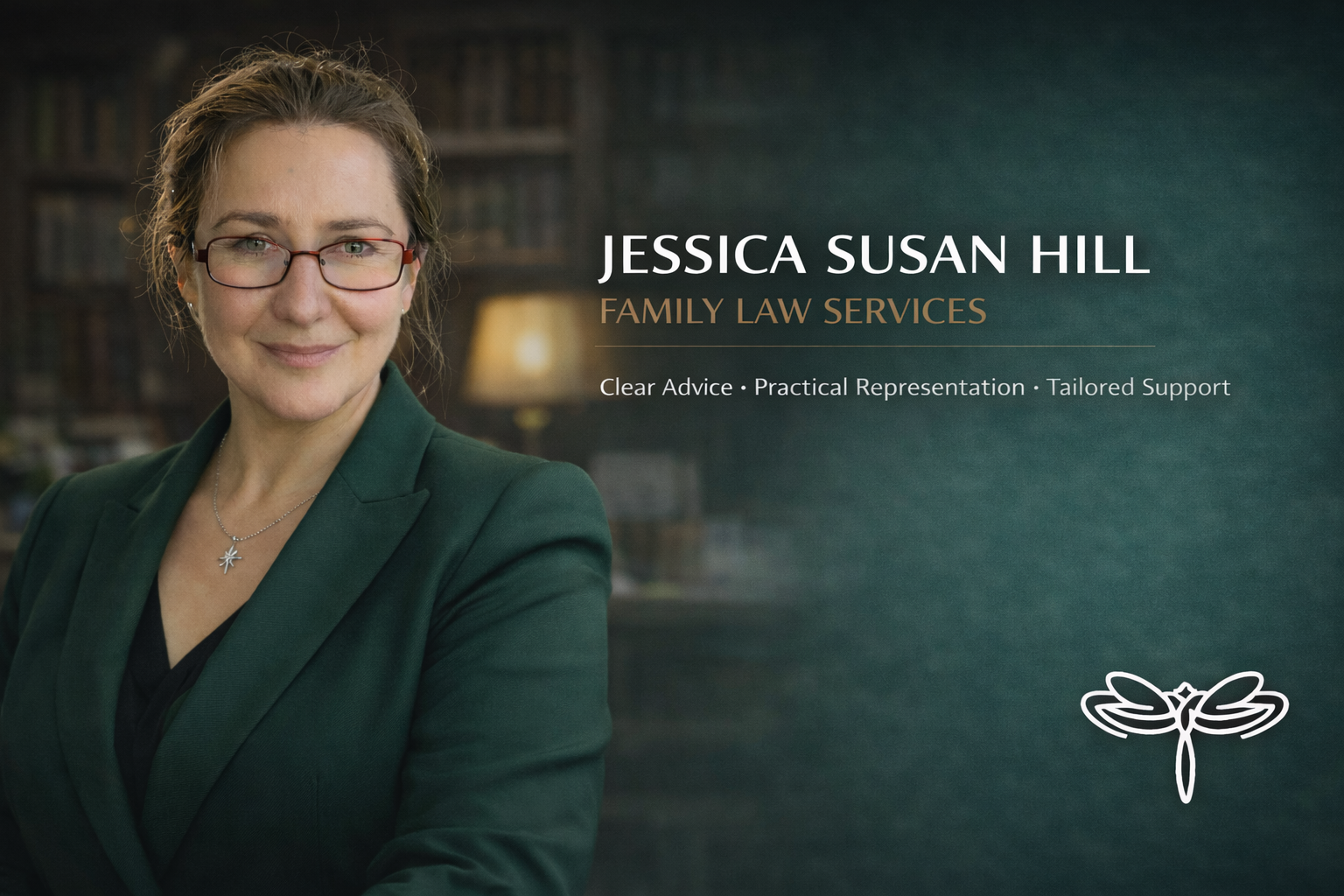
Sometimes the most useful thing I can tell you is: this now needs somebody else.
JSH Law is designed to provide practical, structured support to litigants in person. That can include case organisation, evidence review, document preparation, hearing preparation and McKenzie Friend assistance.
But some work requires a regulated legal professional, specialist advocacy, expert evidence or another form of professional support.
The objective is not to keep every piece of work inside JSH Law. It is to help you identify what the problem is, who is appropriately placed to deal with it and what they will need from you.
When should referral be considered?
You may need another professional if…
Referral should answer four questions
Right professional. Right problem. Right papers. Right timing.
What is the problem?
Is the issue legal advice, advocacy, expert evidence, safety, financial analysis, therapeutic support or something else?
Why is referral needed now?
Is there a hearing, court deadline, safety concern or procedural decision creating urgency?
Who is appropriately qualified?
The professional should match the task rather than simply having a broadly relevant job title.
What do they need to see?
Provide the core order, issue, chronology and documents rather than asking them to reconstruct the entire case from an unsorted archive.
Who might be needed?
Different problems require different professional input
Family-law solicitor
May be appropriate where regulated advice, ongoing representation, conduct of litigation, complex negotiations or management of a legally difficult case is required.
Children-law specialist
Particularly important where proceedings involve care or supervision orders, public-law intervention or other specialist children-law issues.
Barrister
May provide specialist advice, drafting or advocacy. Some appropriately qualified barristers accept instructions directly from members of the public through Public Access.
Domestic-abuse advocate
A specialist advocate or domestic-abuse service may provide safety planning, practical support and advocacy that is different from family-court litigation support.
Expert witness
In suitable cases the court may permit expert evidence from an appropriately qualified professional. Expert evidence in family proceedings is subject to specific procedural controls.
Family mediator
Mediation may be relevant in some disputes where it is appropriate and safe, but it is not a substitute for safeguarding action or specialist legal advice where those are required.
Financial specialist
Financial-remedy cases may sometimes require input from pension, tax, accounting, valuation or other appropriately qualified financial professionals.
Health or therapeutic professional
Court preparation cannot substitute for appropriate medical, psychological or therapeutic support where a person or child needs healthcare or emotional support.
Regulatory boundary
Some legal work is specifically reserved
The Legal Services Act 2007 identifies a number of reserved legal activities. These include the exercise of a right of audience and the conduct of litigation.
Rights of audience
The ability to appear before and address a court as an advocate is a reserved legal activity, subject to statutory entitlements and exemptions.
Conduct of litigation
Conducting litigation is also a reserved legal activity and is distinct from providing general litigation support to a litigant in person.
McKenzie Friend assistance
Ordinary McKenzie Friend support does not turn the provider into the client's solicitor or confer automatic rights of audience.
Know when the boundary has been reached
Where the work required falls outside JSH Law's lawful scope, the appropriate response is referral rather than attempting to blur the distinction.
Solicitor or barrister?
The answer depends on what you actually need
A solicitor may be appropriate where…
You need ongoing case management, regulated legal advice, conduct of litigation, correspondence undertaken as your legal representative, legal-aid assessment or coordination of a complex case.
A barrister may be appropriate where…
You need specialist advice on a defined legal issue, advice on prospects, drafting of complex submissions or representation at a significant hearing.
Public Access may be an option
The Bar Standards Board permits appropriately authorised Public Access barristers to accept instructions directly from members of the public without a solicitor first being instructed.
Check regulatory status
If someone is being instructed as a solicitor or barrister, their professional status should be checked through the relevant official register.
Expert evidence
Do not privately commission an expert report and assume the Family Court can use it
Expert evidence in family proceedings is controlled by the court.
Family Procedure Rule Part 25 sets out the procedure governing expert evidence. In children proceedings, permission requirements also interact with the statutory framework governing the use of experts.
Court permission
Whether expert evidence can be put before the court may depend on permission and the applicable procedural framework.
Defined field
The court will want to know what expert discipline is required and what issue the evidence is intended to address.
Defined questions
Expert evidence should answer properly framed questions within the expert's expertise rather than decide the case.
Duty to the court
An expert's overriding duty is to help the court on matters within their expertise, regardless of who pays or instructs them.
JSH Law can help you organise the issue and understand what procedural questions may need to be addressed. It does not itself turn a privately obtained opinion into admissible expert evidence.
The referral pack
Do not pay a specialist to spend the first hour discovering what the case is about
Where appropriate, JSH Law can help organise a concise pack so the professional can see the relevant issue quickly.
Referral triage
Before contacting somebody, identify what you are asking them to do
Advice
Do you need an opinion about the law, available options, risks or merits?
Advocacy
Do you need someone with the appropriate entitlement to represent you at a hearing?
Ongoing representation
Has the case reached a point where somebody needs to manage the litigation formally on your behalf?
Expert opinion
Is there a specialist factual question requiring expert evidence, subject to the court's control?
Safety support
Is the immediate problem protection, accommodation, domestic-abuse advocacy or another safeguarding intervention?
Practical wellbeing support
Is the person struggling with health, trauma or emotional functioning in a way that requires appropriate healthcare or therapeutic support?
Legal aid
Check eligibility before assuming regulated representation is unaffordable
JSH Law is not a legal-aid provider.
However, some family-law matters fall within the legal-aid scheme where the relevant legal, evidential and financial requirements are met.
The Ministry of Justice provides an official service for finding legal-aid advisers in England and Wales. A legal-aid provider can assess whether the particular problem and the client's financial circumstances fall within the scheme.
Where legal aid may realistically be available, that option should be considered rather than assuming privately funded litigation support is the only route.
Safeguarding comes before case organisation
Some problems are too urgent for a referral pack
If someone is in immediate danger, call 999.
Where there is an urgent risk to a child or vulnerable person, contact the relevant police, local-authority safeguarding service, healthcare service or specialist domestic-abuse service as appropriate.
Litigation preparation should not delay an urgent safeguarding response.
What to send JSH Law
Start with the problem — not the entire archive
Latest relevant order
This usually gives the clearest picture of where the proceedings currently stand.
Next hearing date
Timing can determine whether routine signposting or urgent specialist assistance is required.
The specific problem
Explain what has happened and what you think you need help with.
Relevant professional material
Send the report, judgment, expert issue or other document directly connected to the referral question.
Any urgent deadline
Appeal dates, filing deadlines and imminent hearings should be identified immediately.
Funding constraints
If legal aid, fixed-fee advice or limited-scope representation matters to you, say so at the outset.
What you receive
A clearer route to the next level of support
Depending on the agreed scope, JSH Law may help with:
- identifying the precise issue requiring specialist input;
- distinguishing practical litigation support from work requiring a regulated legal professional;
- identifying the type of professional or specialist likely to be appropriate;
- identifying whether legal-aid enquiries should be made;
- organising a concise summary of the case and referral question;
- preparing a focused chronology relevant to the issue;
- identifying the key orders, reports and documents the professional is likely to need;
- extracting any hearing or filing deadline that needs to be communicated immediately;
- helping formulate the questions you want the professional to answer; and
- signposting to appropriate official directories, regulatory registers or specialist services.
Common referral mistakes
What wastes time and money?
How it works
From “I think I need a lawyer” to a defined referral
Identify the issue
Establish what has happened, what deadline applies and what decision or professional input is needed.
Identify the professional role
Work out whether the task calls for regulated advice, advocacy, expert evidence, safeguarding support or another specialist service.
Organise the case
Reduce the relevant history to a short summary, chronology, latest order and key documents.
Formulate the question
Make clear what you want the next professional to advise on, draft, assess or represent you about.
Move the matter on
Use appropriate professional directories, existing professional contacts or specialist services and provide the information needed for the professional to assess the instruction.
Not sure whether JSH Law is enough?
You do not need to work out the professional boundary on your own.
Explain where the case has reached and what is causing concern. If the issue is suitable for JSH Law, we can define the work. If it needs a different professional, the next step should be identified clearly rather than blurred.
Book a 15-Minute ConsultationYou choose who to instruct
Signposting does not remove your ability to choose your own professional
JSH Law may identify a type of professional, point you towards an official directory or, where appropriate, identify a professional or service that may be worth approaching.
You should consider the professional's qualifications, regulatory status, expertise, availability, fees and terms before instructing them.
A referral or signpost is not a guarantee that a professional will accept the case, agree with JSH Law's preliminary understanding of the issue or achieve a particular result.
Clear boundaries
JSH Law will not pretend to be the professional your case now requires
JSH Law provides non-reserved legal services, litigation support and McKenzie Friend assistance. JSH Law is not an SRA-authorised solicitors' firm and does not provide regulated solicitor representation or conduct litigation on your behalf.
Where regulated advice, reserved legal activity, specialist advocacy, expert evidence or another professional service is required, JSH Law may recommend that you obtain appropriately qualified assistance.
JSH Law can help organise the papers and define the question, but the referred professional is responsible for their own advice, assessment, representation, professional obligations, fees and terms.
You remain responsible for choosing whether and whom to instruct and for complying with court deadlines while any referral is being arranged.
Focused referral preparation
Pay for organisation only where organisation is actually needed
Simple signposting may require little or no substantive preparation.
Where you need JSH Law to review a file, identify the issue, prepare a chronology, create a case summary or organise a focused referral pack, standard litigation-support time is charged at £100 per hour unless another fee has been agreed.
This can be scoped narrowly. The purpose is not to reproduce your entire court bundle, but to give the next professional enough relevant material to assess the issue efficiently.
Any solicitor, barrister, expert or other professional you subsequently instruct will have their own fees and terms.
View JSH Law PricingUnsure who you need?
Book a 15-minute consultation
Tell me where the proceedings have reached, what the immediate problem is and whether there is a court or filing deadline.
You do not need to send your entire case file first. If there is a current court order, judgment, professional report or other document that directly creates the problem, start with that.
Choose a convenient time
If the issue involves an appeal deadline, imminent hearing, public-law proceedings or an urgent safeguarding concern, make that clear in your booking notes.
Your enquiry will be handled in accordance with the JSH Law Privacy Policy .
Official directories & guidance
Check professional status and available routes
Where you are choosing a regulated professional, use official registers and directories rather than relying only on advertising or social-media profiles.
Solicitors Regulation Authority — Solicitors Register →
Law Society — Find a Solicitor →
Bar Standards Board — How to Hire a Barrister →
Need something different?