
 © 2026 JSH Law Ltd. All rights reserved.
https://jshlaw.co.uk/wp-content/uploads/2026/02/ChatGPT-Image-Feb-3-2026-03_26_42-AM.png
1024
1536
Jessica Susan Hill
https://jshlaw.co.uk/wp-content/uploads/2026/01/jsh-law-logo-new-black-300x67.png
Jessica Susan Hill2026-10-05 09:12:112026-10-12 11:26:11Seeing the Pattern: What the Major Coercive-Control Frameworks Can — and Cannot — Tell the Family Court© 2026 JSH Law Ltd. All rights reserved.
https://jshlaw.co.uk/wp-content/uploads/2026/02/ChatGPT-Image-Feb-3-2026-03_26_42-AM.png
1024
1536
Jessica Susan Hill
https://jshlaw.co.uk/wp-content/uploads/2026/01/jsh-law-logo-new-black-300x67.png
Jessica Susan Hill2026-10-05 09:08:092026-10-12 11:26:15Can AI Feel Pain? What the “Pain Axis” Study Really Means for Human Safety and Legal AI© 2026 JSH Law Ltd. All rights reserved.
https://jshlaw.co.uk/wp-content/uploads/2026/02/ChatGPT-Image-Feb-3-2026-03_26_42-AM.png
1024
1536
Jessica Susan Hill
https://jshlaw.co.uk/wp-content/uploads/2026/01/jsh-law-logo-new-black-300x67.png
Jessica Susan Hill2026-10-04 15:12:302026-10-12 13:20:50From Incidents to Trajectories: What Robert Kaiser’s Research Could Teach the Family Court About Coercive Control Evidence© 2026 JSH Law Ltd. All rights reserved.
https://jshlaw.co.uk/wp-content/uploads/2026/02/ChatGPT-Image-Feb-3-2026-03_26_42-AM.png
1024
1536
Jessica Susan Hill
https://jshlaw.co.uk/wp-content/uploads/2026/01/jsh-law-logo-new-black-300x67.png
Jessica Susan Hill2026-10-04 15:08:182026-10-10 13:06:37Delay Is Not Administrative: What Family Justice Can Learn from the New Criminal Court Listing Framework
 © 2026 JSH Law Ltd
https://jshlaw.co.uk/wp-content/uploads/2026/10/Legal-Commentary_-Obligations-Unchanged.png
1254
1254
Jessica Susan Hill
https://jshlaw.co.uk/wp-content/uploads/2026/01/jsh-law-logo-new-black-300x67.png
Jessica Susan Hill2026-10-04 10:32:242026-10-12 11:26:23“The Obligations Are Unchanged”: What Re C Really Says About Domestic Abuse in Child Focused Courts
 © 2026 JSH Law Ltd
https://jshlaw.co.uk/wp-content/uploads/2026/10/Jessica-Susan-Hill-Technology-Abuse-Graphic.png
1254
1254
Jessica Susan Hill
https://jshlaw.co.uk/wp-content/uploads/2026/01/jsh-law-logo-new-black-300x67.png
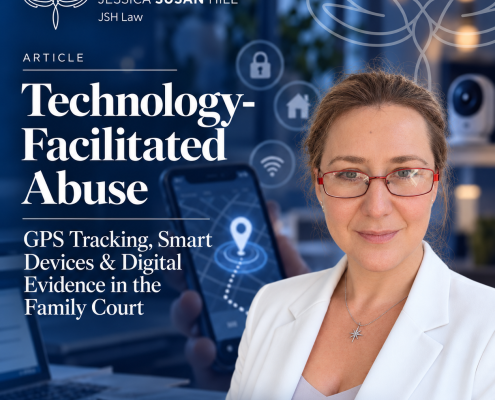
Jessica Susan Hill2026-10-04 09:02:502026-10-12 11:26:28Technology-Facilitated Abuse in the Family Court: GPS Tracking, Smart Devices & Digital Evidence
 © 2026 JSH Law Ltd
https://jshlaw.co.uk/wp-content/uploads/2026/10/Appealing-a-Family-Court-Decision.png
1254
1254
Jessica Susan Hill
https://jshlaw.co.uk/wp-content/uploads/2026/01/jsh-law-logo-new-black-300x67.png
Jessica Susan Hill2026-10-03 12:22:402026-10-10 13:03:15How to Appeal a Family Court Decision in 2026
 © 2026 JSH Law Ltd
https://jshlaw.co.uk/wp-content/uploads/2026/10/Family-Court-Bundles-2026.png
1254
1254
Jessica Susan Hill
https://jshlaw.co.uk/wp-content/uploads/2026/01/jsh-law-logo-new-black-300x67.png
Jessica Susan Hill2026-10-02 10:21:462026-10-12 13:23:04Family Court Bundles in 2026: A Practical Guide for Litigants in Person
 © 2026 JSH Law Ltd. AI-assisted original artwork created for JSH Law using supplied JSH Law branding and portrait photography. All rights reserved.
https://jshlaw.co.uk/wp-content/uploads/2026/10/AI-and-Evidence-in-Court.png
1254
1254
Jessica Susan Hill
https://jshlaw.co.uk/wp-content/uploads/2026/01/jsh-law-logo-new-black-300x67.png
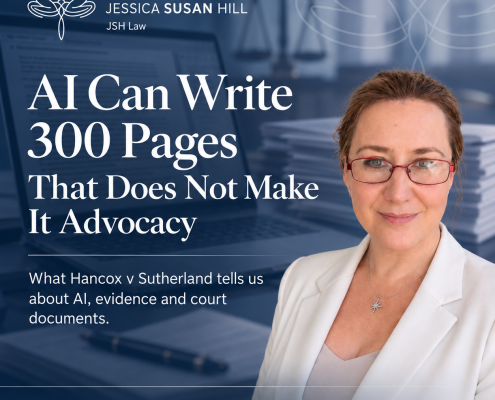
Jessica Susan Hill2026-10-02 09:52:132026-10-12 11:23:19AI Can Write 300 Pages. That Does Not Make It Advocacy.
 © 2026 JSH Law Ltd
https://jshlaw.co.uk/wp-content/uploads/2026/10/Child-Impact-Reports-in-Family-Court.png
1254
1254
Jessica Susan Hill
https://jshlaw.co.uk/wp-content/uploads/2026/01/jsh-law-logo-new-black-300x67.png
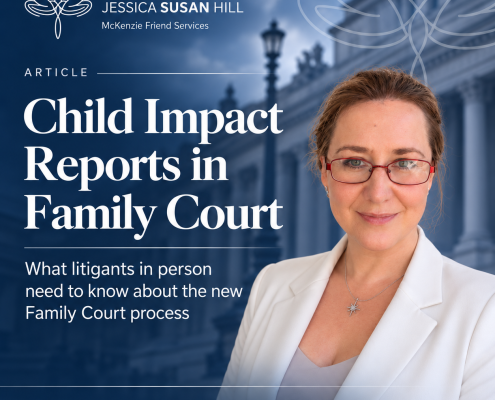
Jessica Susan Hill2026-10-01 09:13:582026-10-12 11:23:14Child Impact Reports in Family Court: What Parents Need to Know About the New Child Focused Courts