
Louis Theroux: Inside the Manosphere — What It Reveals About Narrative, Influence and Conflict

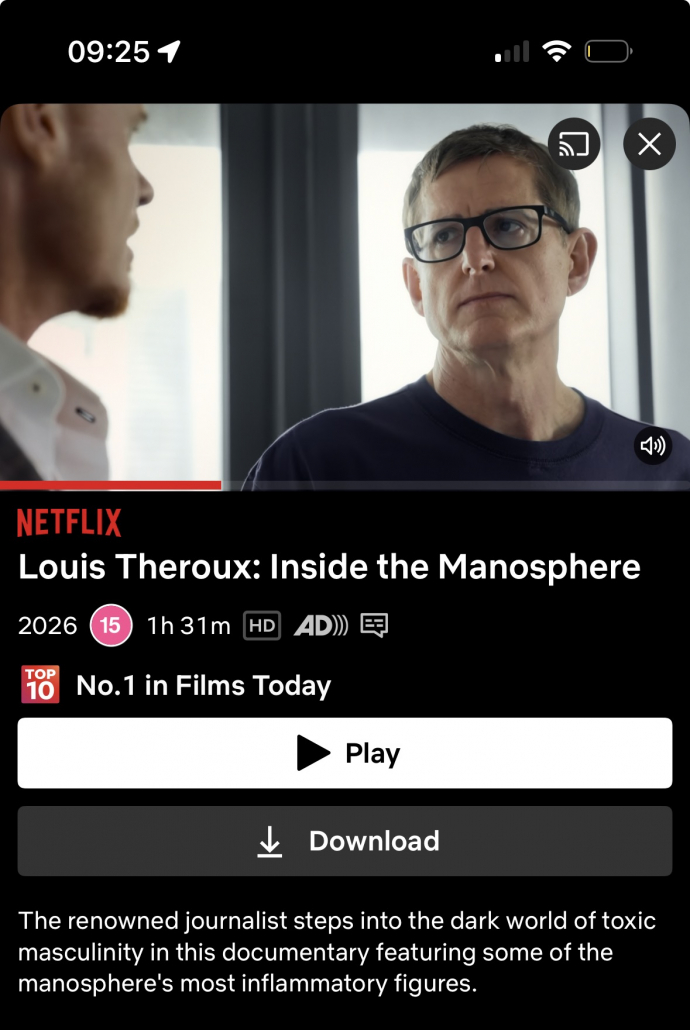
Recently I watched Louis Theroux: Inside the Manosphere on Netflix, and it is one of those documentaries that stays with you because it exposes not just a community, but a way of thinking. It offers a rare insight into how narratives are formed, reinforced and lived out — and why those narratives can have real-world consequences in relationships, conflict and the way people present their experiences.

Screenshot

Louis Theroux: Inside the Manosphere — Understanding Influence, Narrative and the Risks of Unchallenged Belief Systems

Film Reflection | Behaviour, Influence, Masculinity and the Power of Narrative in Modern Culture

I recently watched Louis Theroux: Inside the Manosphere on Netflix, and it is one of those documentaries that is difficult to ignore once seen. It steps into a world that is often discussed in fragments but rarely observed directly: online communities built around identity, grievance, masculinity and perceived injustice.

This is not an easy watch. Nor is it intended to be. What it offers is something far more valuable than simple commentary — it provides access to belief systems, language, patterns of thinking and social dynamics that are shaping behaviour in real-world relationships, including those that ultimately find their way into the family courts.

For anyone working in or around conflict, particularly where relationships have broken down and narratives have hardened, the themes in this documentary are immediately recognisable. At its core, this is not simply a film about men or online culture. It is a film about influence, identity and the construction of narrative.

What Is the Manosphere?

The documentary explores a collection of online spaces often referred to as the “manosphere.” These include forums, influencers and communities that focus on male identity, dating dynamics, power, status and, in many cases, resentment towards women or wider society.

It is important to understand that this is not a single unified group. It is a spectrum. Within it are different ideologies, ranging from self-improvement messaging to far more extreme and harmful belief systems. What connects them is a shared language around grievance, perceived injustice and a re-framing of relationships as adversarial rather than collaborative.

Louis Theroux approaches these spaces in his usual way — calmly, curiously and without overt confrontation. That approach allows the viewer to see something that is often hidden: how these belief systems are presented from the inside, rather than described from the outside.

The Power of Narrative

One of the most striking aspects of the documentary is how powerful narrative can be in shaping belief.

The individuals featured are not simply expressing isolated opinions. They are participating in structured narratives that explain:

  • why relationships fail;
  • why they feel marginalised or rejected;
  • who is to blame;
  • and what behaviour is justified as a result.

These narratives are often internally consistent. That is what makes them compelling. Once accepted, they provide a framework through which all future experiences are interpreted.

This is a critical point. When someone adopts a fixed narrative, new information is rarely evaluated neutrally. Instead, it is filtered through that existing belief system. Evidence that supports the narrative is reinforced. Evidence that contradicts it is dismissed or reframed.

This is not unique to the manosphere. It is a broader human tendency. But the documentary shows how powerful and self-reinforcing these systems can become when they are amplified within closed communities.

Influence and Identity

The film also explores the role of influential figures within these spaces. Certain individuals act as leaders or authorities, shaping how others interpret their experiences. They provide language, explanation and direction.

This matters because identity is not formed in isolation. People look for frameworks that help them understand themselves and their place in the world. When those frameworks are provided in emotionally charged environments — particularly environments built around grievance — they can become deeply embedded.

For some individuals, these communities provide a sense of belonging and clarity. For others, they can reinforce negative thinking patterns, entitlement, hostility or distrust.

Again, the documentary does not shout this point. It shows it quietly, through conversation and observation. That is what makes it effective.

Behaviour, Responsibility and Externalisation

Another recurring theme is the externalisation of responsibility. Many of the viewpoints expressed in the documentary shift responsibility away from the individual and onto external factors — society, women, culture or systems perceived to be unfair.

This is psychologically significant. When responsibility is consistently externalised, it becomes more difficult for individuals to reflect on their own behaviour, choices or patterns.

That does not mean that wider social issues do not exist. They do. But when all outcomes are attributed externally, personal agency is reduced. Growth becomes harder. Conflict becomes more entrenched.

This dynamic is not limited to online communities. It can appear in many forms of conflict, including relationship breakdowns. When both parties feel wronged and neither feels responsible, resolution becomes significantly more difficult.

Why This Matters in Real Life

Although this documentary focuses on online spaces, its impact is not confined to the digital world. The attitudes, language and beliefs explored here do not remain online. They influence behaviour, communication and expectations in real relationships.

In some cases, they contribute to:

  • breakdown in communication;
  • entrenched conflict;
  • hostility between parties;
  • rigid and adversarial thinking;
  • and difficulty in resolving disputes constructively.

For those involved in family proceedings, these dynamics can become particularly visible. The way individuals frame events, assign blame and interpret behaviour often reflects deeper belief systems that have developed over time.

Understanding those frameworks does not mean agreeing with them. But it can help explain why certain positions are held so strongly and why compromise may feel difficult.

The Role of Observation

One of the strengths of Louis Theroux’s approach is his willingness to observe without immediately judging. That does not mean endorsing what is said. It means creating space for it to be expressed fully so that it can be understood.

This is an important distinction. Immediate judgment can shut down insight. Careful observation allows patterns to emerge.

The documentary benefits from this approach. It gives the viewer time to notice inconsistencies, tensions and contradictions within the narratives presented. It allows the audience to draw their own conclusions rather than being told what to think.

That approach has value beyond documentary filmmaking. In any complex situation, particularly one involving strong emotion, stepping back to observe before reacting can reveal far more than immediate confrontation.

Complexity Over Simplicity

What becomes clear throughout the documentary is that the issues involved are not simple. It would be easy to reduce everything to good versus bad, right versus wrong. But reality is rarely that neat.

The individuals featured are not one-dimensional. They are shaped by experiences, frustrations, environments and influences. Some express harmful views. Some appear conflicted. Some are searching for meaning or direction.

Recognising complexity does not excuse harmful behaviour. But it does allow for a more accurate understanding of how such behaviour develops and why it can be so resistant to change.

Why This Documentary Is Important

This is an important documentary because it shines a light on something that is often discussed but not always understood. It shows how belief systems are formed, how they are reinforced and how they can shape behaviour over time.

It also raises important questions:

  • How do people come to adopt certain narratives?
  • What role does community play in reinforcing belief?
  • How can conflicting perspectives be understood without escalating further division?
  • And what happens when narratives become so fixed that they no longer allow for alternative viewpoints?

These are not easy questions, but they are important ones.

Key Takeaways for Litigants in Person

If you are navigating conflict or court proceedings, this documentary highlights several important realities:

  • Be aware of narrative framing. The way events are described can significantly influence how they are understood.
  • Focus on evidence, not assumption. Strong narratives can feel persuasive but must still be supported by clear evidence.
  • Recognise entrenched positions. When someone is deeply invested in a particular viewpoint, changing that perspective may be difficult.
  • Stay grounded in facts and structure. Courts rely on evidence, chronology and clarity rather than belief alone.
  • Avoid escalation where possible. Responding calmly and clearly is often more effective than reacting emotionally.

In short: understanding how narratives are formed can help you present your case more clearly and avoid being drawn into unproductive conflict.

Final Reflections

Louis Theroux: Inside the Manosphere is not comfortable viewing, but it is valuable. It offers insight into how belief systems develop and how they influence behaviour in ways that extend far beyond the spaces in which they originate.

For anyone working in areas involving conflict, relationships or human behaviour, it serves as a reminder that what people say — and how they say it — is often rooted in deeper frameworks of understanding.

Recognising those frameworks does not mean accepting them. But it can provide clarity. And in complex situations, clarity is often the first step towards resolution.

Need Support Navigating Family Court?

If you are dealing with family court proceedings and finding the process overwhelming, you are not alone. Many people face complex situations involving conflicting narratives, emotional strain and unclear guidance.

I support litigants in person by helping structure evidence, clarify issues and present cases in a clear and organised way.

You can book a free 15-minute consultation below to discuss your situation.


Regulatory & Editorial Notice: This article is provided for general educational and commentary purposes only. It does not constitute legal advice or reserved legal activity. References to documentaries, individuals or wider social themes are included for public-interest commentary only.

My Octopus Teacher: What This Extraordinary Documentary Teaches Us

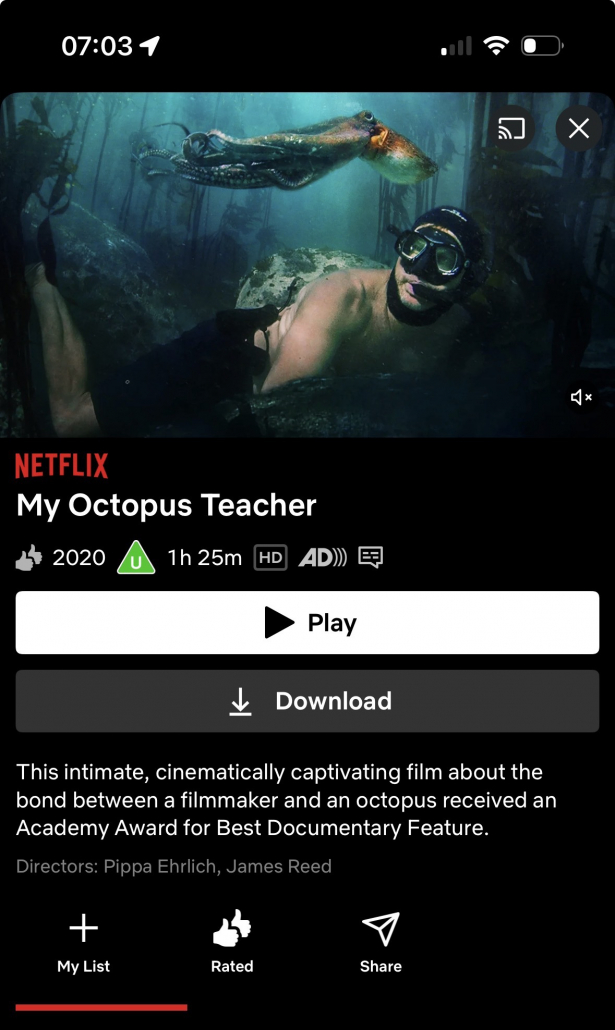
Recently I watched My Octopus Teacher on Netflix, and it is one of those rare documentaries that quietly changes the way you think. On the surface, it is a film about a diver and an octopus. In reality, it is a powerful reflection on trust, observation, vulnerability and the importance of seeing behaviour in context. What makes it so compelling is not spectacle, but patience — and the reminder that real understanding often emerges slowly, through attention rather than assumption.

A reflective analysis of My Octopus Teacher exploring trust, vulnerability, observation and the quiet power of understanding behaviour over time.

My Octopus Teacher: What This Extraordinary Documentary Teaches Us About Trust, Presence and Seeing What Others Miss

Film Reflection | Observation, Vulnerability, Trust and the Quiet Power of Paying Attention

Recently I watched My Octopus Teacher on Netflix, and it is one of those rare documentaries that stays with you long after it ends. On the surface, it appears to be a film about a man diving in the ocean and forming an unusual connection with an octopus. That description, while technically accurate, does not come close to capturing its depth. This is not simply a wildlife documentary. It is a meditation on observation, patience, vulnerability, trust and the importance of truly paying attention to another living being over time.

What makes the documentary so powerful is its refusal to hurry. It does not force drama. It does not rely on noise or spectacle. Instead, it invites the viewer into a slower and more attentive way of seeing. Through that slowness, the film reveals something profound: that truth, trust and understanding are rarely immediate. They emerge gradually, through consistency, patience and repeated presence.

Although this is not a legal documentary, many of its themes resonate far beyond the natural world. For anyone involved in conflict, family court proceedings, or the difficult work of understanding behaviour over time, My Octopus Teacher offers a striking reminder that quick judgments are often shallow ones. Real insight usually comes more slowly.

The Premise of the Documentary

The documentary follows filmmaker Craig Foster, who returns to the cold underwater kelp forests of South Africa during a period of emotional exhaustion and personal disconnection. Rather than seeking distraction, he begins a daily practice of free diving in the same natural environment, without heavy equipment and without trying to impose himself on what he encounters.

During this routine, he discovers an octopus and becomes fascinated by its behaviour. At first, the connection is distant. The octopus hides, disguises itself, keeps its distance and appears wary of human presence. But Foster continues to return, day after day, with a kind of respectful consistency that gradually changes the terms of that encounter.

What follows is extraordinary not because it is sensational, but because it is subtle. The film documents a relationship built not through force, but through patience. It is a story of mutual observation before it becomes one of trust. And that, perhaps, is what makes it feel so rare.

The Discipline of Observation

One of the documentary’s most compelling lessons is the discipline of observation. Foster does not demand interaction. He does not chase or corner. He does not insist that the octopus respond to him on human terms. He simply returns, consistently, allowing the creature to become familiar with his presence.

That is an approach many people struggle with in ordinary life. We are used to speed. We want answers quickly. We often interpret behaviour immediately, assigning motive or meaning before we have enough context to do so fairly. In a culture that rewards reaction, patience can seem passive. This documentary shows that patience is not passive at all. It is an active discipline.

Through repeated observation, patterns begin to emerge. The octopus’s movements, decisions, strategies and responses stop looking random. Instead, they begin to make sense within the context of its environment. Fear, concealment, curiosity, exploration and recovery all become understandable once the viewer has spent enough time watching carefully.

This is one of the strongest themes in the film: if you slow down enough, complexity becomes visible.

Trust Is Built, Not Assumed

The bond between the diver and the octopus is not immediate. It develops in stages. The octopus watches. It withdraws. It tests. It returns. There is caution before there is closeness. That is significant, because it reflects something true of trust more generally: trust is not declared into existence. It is earned through repeated, consistent behaviour.

That may sound obvious, but in practice many people overlook it. They expect trust to be present simply because they want connection or because they believe their intentions are good. But trust is not built from private intention alone. It is built from observable conduct over time.

My Octopus Teacher captures that process beautifully. Trust here is not sentimental. It is responsive. It develops because the octopus begins to learn, through repeated exposure, that this particular presence is not immediately harmful. That trust remains fragile, but it becomes real.

There is something deeply moving in that. The film reminds us that trust often begins not with grand gestures, but with predictability, restraint and the absence of threat.

Intelligence in Unexpected Forms

Another remarkable aspect of the documentary is the octopus’s intelligence. The film shows an extraordinary capacity for adaptation, camouflage, problem-solving and survival. The octopus is not passive within its environment. It is constantly assessing, responding and recalibrating.

What is striking is how much of that intelligence might be missed by anyone not looking carefully. If viewed only briefly, its behaviour might seem instinctive, erratic or purely reactive. But the longer one watches, the clearer it becomes that this is an animal making sophisticated decisions under pressure.

That matters because we often have narrow assumptions about what intelligence looks like. We tend to recognise it most readily when it resembles forms we already respect: language, status, certainty, speed or conventional achievement. But intelligence frequently appears in quieter forms — adaptability, strategic retreat, environmental awareness, survival behaviour and sensitivity to changing conditions.

The octopus in this film embodies that kind of intelligence. It is a reminder that wisdom can be hidden in forms many people overlook.

Behaviour Cannot Be Understood Without Context

One of the deepest lessons in the documentary is that behaviour only becomes meaningful when placed in context. The octopus behaves differently depending on whether it is threatened, hidden, injured, curious, hunting or recovering. A single action tells us very little by itself. A pattern of action over time, viewed within its environment, tells us far more.

This has obvious relevance beyond the ocean. Human behaviour, too, is often misunderstood when stripped of context. Fear can look like defensiveness. Hypervigilance can look like overreaction. Withdrawal can look like indifference. Survival strategies can be mistaken for character flaws if the wider picture is ignored.

The documentary does not preach this point explicitly, but it demonstrates it powerfully. Understanding requires more than observation alone. It requires patient observation in context. That is what allows behaviour to become legible.

In difficult disputes, that lesson matters enormously. Isolated moments can mislead. Patterns, chronology and surrounding circumstances often tell the truer story.

Vulnerability and Risk

As the relationship deepens, the octopus becomes more vulnerable. It allows proximity. It engages. It appears to relax in ways it did not at the beginning. But the natural world remains dangerous. Predators exist. Injury happens. Survival is never guaranteed.

This is one of the reasons the film feels honest rather than sentimental. It does not suggest that trust removes danger. It simply shows that connection and risk often exist together. To be open is to be exposed. To trust is to accept uncertainty. To allow closeness is to become vulnerable to loss.

That tension is central to the emotional force of the documentary. The relationship matters precisely because it is fragile. It is meaningful because it is not protected from the realities of the world around it.

There is a wider truth in that. People often want relationships, processes and systems that offer all the benefits of trust with none of the vulnerability. Life does not work like that. Connection always carries risk. The film does not treat that as a flaw. It treats it as part of what makes connection real.

The Quiet Power of Daily Presence

One of the most affecting things about the documentary is the idea of daily return. Foster does not have one dramatic encounter and draw sweeping conclusions from it. He returns, repeatedly, making himself a regular and recognisable presence in the octopus’s world.

That kind of consistency has transformative power. In many areas of life, change does not come through intensity but through repetition. Relationships are often built in small moments rather than major declarations. Understanding grows through accumulated observation rather than sudden certainty. Recovery, too, often depends on routine rather than revelation.

The film demonstrates this with great restraint. The emotional weight comes not from spectacle, but from the gradual accumulation of contact, familiarity and recognition. This is part of why the documentary feels almost meditative. It values constancy over drama.

What the Documentary Reveals About Seeing Clearly

There is a difference between looking and seeing. Many people look without really seeing at all. They register surface information and move on. This documentary is, in many ways, an invitation to see differently.

To see clearly, one must pause long enough for complexity to appear. One must resist the urge to interpret too quickly. One must allow a subject — whether a person, a conflict or a creature — to reveal itself over time rather than demanding instant clarity.

That kind of seeing requires humility. It requires acceptance that the first explanation may not be the right one, that there may be more going on beneath the surface, and that reality is often subtler than our immediate impressions suggest.

My Octopus Teacher communicates this brilliantly. Its emotional effect depends not on telling the viewer what to think, but on allowing the viewer to notice, gradually, how attention changes understanding.

Why This Documentary Resonates So Strongly

Part of the reason this film resonates with so many people is that it speaks to exhaustion and reconnection. Foster begins the documentary at a point of depletion. He is not simply curious about marine life. He is searching, in some sense, for a way back into aliveness, presence and relationship with the world around him.

That gives the documentary an emotional dimension beyond natural history. It is also a story about restoration through attention. In returning to the water, and in allowing himself to be shaped by a quieter rhythm of observation, he begins to recover a sense of wonder and meaning.

That recovery does not come through conquest or control. It comes through humility, discipline and repeated presence. In a world obsessed with productivity and speed, that feels almost radical.

Key Takeaways for Litigants in Person

Although My Octopus Teacher is not a legal documentary, it offers important lessons for anyone trying to understand behaviour, build a clear case or navigate emotionally difficult proceedings:

  • Do not rush to conclusions. Initial impressions are often incomplete. A fuller picture usually emerges over time.
  • Look for patterns, not isolated incidents. Repeated behaviour often reveals far more than one-off moments.
  • Context matters. Behaviour can only be understood properly when viewed against the surrounding circumstances.
  • Consistency builds credibility. Steady, predictable conduct is often more persuasive than dramatic claims.
  • Patience reveals what urgency can miss. The more emotionally charged a situation is, the more important careful observation becomes.

In short: understanding rarely comes from reacting quickly. It comes from paying close attention, noticing patterns and allowing the wider picture to emerge.

Final Reflections

My Octopus Teacher is an extraordinary documentary not because it tries to impress, but because it invites stillness. It asks the viewer to slow down, to notice, and to appreciate that some of the most important truths reveal themselves quietly.

It is a film about trust, but also about the conditions that make trust possible. It is a film about intelligence, but also about how often intelligence goes unseen. It is a film about vulnerability, but also about the courage required to remain open in a world that contains risk.

Most of all, it is a film about attention. In a noisy world, that may be one of the most valuable lessons of all. To observe with care. To resist premature judgment. To understand that behaviour makes more sense when seen in context. And to recognise that real connection is built not through control, but through presence.

That is what gives the documentary its emotional power. It reminds us that there is wisdom in patience, that there is meaning in quiet consistency, and that sometimes the deepest forms of understanding come not from speaking more loudly, but from watching more carefully.

Need Support Navigating Family Court?

If you are involved in family court proceedings and feel overwhelmed by the process, you are not alone. Many people find themselves trying to understand complex behaviour, organise evidence and present their case clearly while under significant emotional strain.

I help litigants in person structure their material, understand the process and present their position more clearly and confidently.

You can book a free 15-minute consultation below to discuss your situation.


Regulatory & Editorial Notice: This article is provided for general educational and commentary purposes only. It does not constitute legal advice, reserved legal activity, or a solicitor-client retainer. References to films, documentaries, public figures, animal behaviour or wider reflective themes are included as editorial commentary only. Anyone requiring legal advice on a specific matter should seek advice from a suitably qualified legal professional on the facts of their individual case.

Deception (Geoffrey Rush): What the Film Reveals About Truth and Evidence in Court

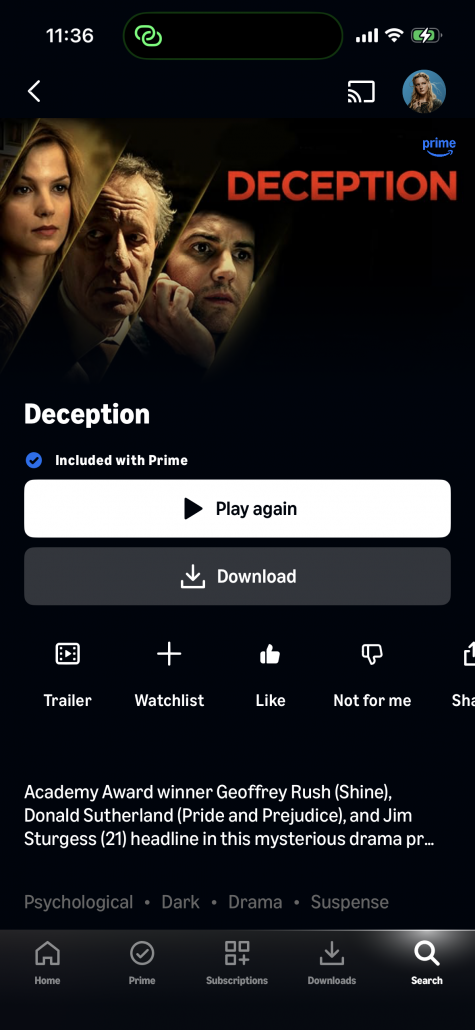
Recently I watched The Best Offer, released in the UK under the title Deception, starring Geoffrey Rush. It is not a legal drama, but it raises fascinating questions about authenticity, manipulation, trust and human judgment. Set in the rarefied world of art and antiques, the film follows an expert in spotting forgery who becomes vulnerable to a deception far more personal than anything he has encountered professionally. What makes it so compelling is not simply the twist, but the way it shows how easily intelligence and experience can be overtaken by loneliness, hope and carefully staged illusion.

The Best Offer (Released in the UK as Deception): Trust, Authenticity, Obsession and the Cost of Being Misled

Film Reflection | Art, Psychology, Deception and What This Story Reveals About Human Judgment

Recently I watched The Best Offer, released in the UK under the title Deception, starring Geoffrey Rush. It is not a courtroom drama and it is not a legal thriller in the conventional sense. Instead, it is a slow-burning psychological film set in the world of art, antiques, valuation and personal isolation. Yet despite that, it raises questions that feel deeply relevant to anyone interested in evidence, authenticity, trust, manipulation and the way human beings can be drawn into believing what they most want to believe.

At the centre of the film is a man whose entire professional life is built on judgment. He is trained to assess originality, value, provenance and fraud. He can spot a fake painting, read a room and understand the hidden motivations of buyers and sellers. He is meticulous, disciplined and intellectually formidable. And yet, for all of that expertise, he proves vulnerable in the one area where human beings are often most exposed: emotional trust.

That is what makes this film so memorable. The Best Offer is not just about a deception. It is about how deception works. It is about how intelligence does not immunise a person against manipulation. It is about loneliness, vanity, desire, projection and the subtle construction of a false reality. It is also about authenticity — both in art and in human relationships — and about the devastating moment when a person realises that the thing they believed to be most precious may never have been real at all.

The Premise of the Film

Geoffrey Rush plays Virgil Oldman, an ageing, celebrated auctioneer and art expert. He is cultured, wealthy, eccentric and highly controlled. He lives alone, keeps people at a distance and appears far more comfortable with objects than with human intimacy. The film immediately establishes him as a man who understands rarity and value, but also as someone whose life has become guarded, ritualised and emotionally narrow.

Virgil is drawn into an unusual assignment when he is contacted by a mysterious young woman named Claire, who wants him to value and sell the contents of a grand inherited property. From the outset, the arrangement is strange. Claire is elusive, hidden, distressed and apparently unable to appear in public. As Virgil becomes involved in cataloguing the contents of the house, he also becomes fascinated by the woman he cannot properly see.

From there, the film deepens into something much more unsettling. What begins as professional curiosity becomes emotional investment. What appears at first to be a story about damaged people finding a route towards trust gradually reveals itself to be something darker: a carefully staged manipulation built with patience, intelligence and precision.

A Film About Authenticity

One of the film’s most powerful themes is authenticity. Because the story is set in the art world, authenticity is not just an abstract idea. It is the currency of the entire environment. Virgil’s life revolves around determining whether objects are genuine or forged, whether value is real or inflated, whether appearances correspond to truth.

That is why the film works so well symbolically. A man who has spent his life distinguishing originals from copies becomes unable to identify deception in a person and in a relationship. The irony is deliberate and devastating. He knows how to examine paintings, furniture, clocks and collections. But he does not know how to assess the emotional theatre unfolding around him.

That contrast gives the film much of its force. Many people assume that expertise in one domain transfers naturally into broader wisdom. It often does not. A person may be highly sophisticated in business, art, law, finance or negotiation and still become vulnerable when loneliness, admiration, secrecy or hope are introduced into the equation.

The Best Offer understands that vulnerability with uncomfortable accuracy.

Loneliness as a Point of Entry

This is also a film about loneliness. Virgil is not merely private. He is deeply alone. His habits, routines and aesthetic world have become a kind of fortress. He lives among beauty but without warmth. He knows value, but not intimacy. He understands possession, but not mutuality.

That matters because deception often succeeds not simply through cleverness, but through need. People are most easily manipulated where they are hungry — hungry for recognition, affection, significance, reassurance, control or redemption. The con in this film works not because Virgil is foolish, but because it is tailored to his emotional architecture.

The deception is personalised. It is engineered to meet him exactly at the point where his defences are weakest. That is what makes it believable and what makes it painful. The film does not ask us to laugh at a gullible man. It asks us to watch what happens when a highly defended person is drawn, perhaps for the first time in his life, into the possibility of emotional closeness.

Obsession, Projection and Self-Deception

Another reason the film is so effective is that it does not present deception as something entirely external. Virgil is deceived, yes, but he also participates in the deception through projection. He fills in gaps. He interprets fragments. He builds an image in his own mind and then increasingly treats that image as reality.

This is an important psychological truth. Human beings rarely perceive the world in a purely neutral way. We interpret what we see through desire, fear and expectation. When we strongly want something to be true, we often become more willing to excuse anomalies, rationalise inconsistencies and ignore warning signs.

That is one of the deepest currents in The Best Offer. The film is not merely about being lied to by others. It is also about the extent to which people can lie to themselves when reality threatens something they cannot bear to lose.

Virgil does not simply miss red flags. He is gradually drawn into a private narrative in which he becomes central, needed, chosen and transformed. The deception succeeds because it is not only an external performance. It becomes intertwined with his own longing and imagination.

The Craft of the Con

The film is patient in the way it presents the fraud. That patience is one of its strengths. The deception is not loud or theatrical. It is layered. It is built through timing, repetition, plausibility and emotional calibration. Pieces are introduced gradually. Trust is cultivated. Curiosity is rewarded. Distance is narrowed in stages.

This is what many people misunderstand about sophisticated manipulation. They imagine it as something dramatic and obvious. In reality, the most effective deceivers often work slowly. They study the target. They create a believable environment. They make the other person feel that discovery is unfolding naturally, when in fact the path has already been laid out for them.

That is exactly what makes The Best Offer so unsettling. The fraud is not merely a theft of objects. It is the theft of confidence, emotional investment and reality-testing. Virgil is not simply robbed. He is led into a false world and invited to participate in it.

Why the Art World Setting Matters

The art and antiques setting is far more than decorative. It sharpens every theme in the film. Art invites questions of value, originality, display, illusion and private possession. It is a world in which surface and substance are constantly being evaluated against one another.

Virgil’s profession also reflects a broader human tendency: we often become attached to things we can own, classify and preserve because they feel safer than relationships. Objects stay where they are placed. They do not contradict, reject or surprise us. Human beings do.

In this sense, the film is not only about fraud. It is about a man who has arranged his life around control and curation, and who then enters an emotional experience that cannot be controlled. Ironically, even that experience turns out to have been curated after all — just not by him.

What the Film Reveals About Trust

Trust is one of the film’s central concerns. Trust is necessary for intimacy, but it is also the mechanism by which people become vulnerable. The problem is not that trust exists. The problem is that trust always involves risk.

Most people want a world in which sincerity can be recognised immediately and dishonesty can be neatly identified. Real life is rarely that kind. Trust is often built under conditions of uncertainty. We infer character from fragments. We rely on tone, consistency, behaviour, timing and instinct. Sometimes those indicators are reliable. Sometimes they are not.

The Best Offer is especially effective because it shows how trust can develop in a highly asymmetrical situation. One person is hidden; the other reveals himself progressively. One person controls access; the other becomes increasingly invested. That imbalance is significant. It means the deceived party is always operating with less information than he believes he has.

That dynamic exists in many real-world relationships, disputes and transactions. The person who appears most in control may in fact be the person being most carefully managed.

Why This Resonates Beyond Film

Although this is not a legal film, it speaks strongly to issues that arise in wider professional and personal life. Anyone involved in negotiation, dispute resolution, family conflict, business, safeguarding, investigations or litigation will recognise the broader lesson: facts matter, but so do narrative, perception and emotional leverage.

People are not deceived only because documents are forged or statements are false. They are often deceived because a larger story is built around them — a story that feels coherent, flattering, rescuing, irresistible or emotionally necessary. Once someone is inside that story, it can become difficult to step back and assess what is actually being evidenced and what is merely being implied.

That is a useful reflection for litigants in person as well. Many people going through proceedings focus only on what they feel or what they believe to be obvious. But proceedings of any kind demand something more disciplined. They require people to separate appearance from proof, emotion from evidence, instinct from structure.

The film’s world is not a courtroom, but the underlying lesson is still relevant: confidence is not proof, beauty is not truth, and a compelling story is not necessarily an honest one.

The Human Cost of Being Misled

What stays with the viewer after the film ends is not merely the cleverness of the twist. It is the emotional wreckage. To be deceived at this level is not simply to lose money or property. It is to experience humiliation, disorientation and grief. It is to look back over moments of tenderness, vulnerability and apparent meaning and realise they may all have been instrumentalised.

That kind of injury is difficult to describe because it strikes at a person’s confidence in their own judgment. Once trust has been manipulated so thoroughly, the damage often extends beyond the original event. The victim may begin to question everything: their instincts, their perceptions, their choices and their worth.

This is one reason why deception in real life can have such a long afterlife. Even when the practical consequences are eventually contained, the psychological consequences may remain. The person has not simply lost something external. They have lost certainty in themselves.

Key Takeaways for Litigants in Person

Although The Best Offer is not a legal film, it still contains useful lessons for anyone navigating a dispute or trying to present a case clearly:

  • Do not assume appearances tell the whole story. A polished narrative, confident person or emotionally compelling account may still require careful testing.
  • Separate feeling from proof. Your instinct about what has happened may be right, but if you are in proceedings you still need clear evidence, chronology and supporting material.
  • Watch for gaps and asymmetries. When one side controls access to information or reveals things selectively, that can shape your perception more than you realise.
  • Consistency matters. Whether in relationships, negotiations or court proceedings, inconsistencies often reveal more than dramatic statements do.
  • Do not build your position on hope alone. Hope can cloud judgment. Structure, documents and careful analysis are more reliable than assumption.

In short: one of the film’s clearest lessons is that intelligence alone is not enough. You also need distance, structure and the discipline to test what you are being shown.

Final Reflections

The Best Offer is a beautifully composed and quietly devastating film. Geoffrey Rush gives it gravity, precision and vulnerability. The film works on multiple levels: as a psychological thriller, as a study in loneliness, as a meditation on art and authenticity, and as an examination of how deception is constructed and sustained.

What gives it lasting power is not just the plot reveal. It is the recognition that human beings are often most vulnerable in the places where they most want to be seen, loved, chosen or transformed. The film understands that deception is rarely just a matter of false facts. It is often a matter of emotional architecture.

For that reason, the story lingers. It leaves the viewer thinking not simply about fraud, but about judgment itself. How do we decide what is real? How often do we trust because something is well-evidenced, and how often because it is beautifully presented? How often do we see what is there, and how often what we desperately want to find?

Those are difficult questions, and that is exactly why the film is worth reflecting on. Whether you approach it as a thriller, an art-world cautionary tale or a broader study in human vulnerability, The Best Offer has something sharp and uncomfortable to say. Not all fakes are hanging on walls. Some are built out of attention, timing, charm, omission and desire. And sometimes the people best trained to detect forgery are the ones least prepared for the kind that arrives disguised as intimacy.

Need Support Navigating Family Court?

If you are involved in family court proceedings and feel overwhelmed by the process, you are not alone. Many people find themselves dealing with complex allegations, confusing procedure and significant emotional strain without clear support.

I help litigants in person organise their evidence, understand the court process and present their position more clearly and confidently.

You can book a free 15-minute consultation below to discuss your situation.


Regulatory & Editorial Notice: This article is provided for general educational and commentary purposes only. It does not constitute legal advice, reserved legal activity, or a solicitor-client retainer. References to films, public figures, artistic themes or psychological dynamics are included as editorial commentary only. Anyone requiring legal advice on a specific matter should obtain advice from a suitably qualified legal professional on the facts of their individual case.