

• Link to Facebook
  • Link to X
  • Link to Facebook
  • Link to LinkedIn
  • Link to LinkedIn
  • Link to Mail
  • Link to Instagram
  • Link to WhatsApp
  • Link to Rss this site
Whatsapp : (+44) 07564 236528
JSH Law | Family Court Support & Litigation Assistance
  • Home
  • Services
    • Family Court Navigation & Case Strategy – Procedural clarity for litigants in person
      • Case overview and procedural mapping
      • Court form support (C100, C79, C2, C1A, etc.)
      • Case timelines and structured chronologies
      • Hearing preparation and expectation-setting
      • Strategic options reviews (next steps, risks, proportionality)
    • Safeguarding, Cafcass & Local Authority Matters – Focused support where risk, reports, and allegations arise
      • Cafcass report analysis and response planning
      • Safeguarding allegation review (including PD12J context)
      • Local authority involvement and threshold guidance
      • Preparing written responses to professional reports
      • Evidence organisation for safeguarding-related issues
    • Court Documents, Statements & Submissions – Clear, compliant, and credible written advocacy support
      • Position statements and schedules of issues
      • Witness statements (fact-based, court-ready structure)
      • Skeleton arguments and written submissions
      • Appeal groundwork and document preparation
      • Document review for tone, relevance, and legal coherence
    • Hearing Support & McKenzie Friend Services – Calm, practical support before and during court
      • McKenzie Friend assistance (subject to court permission)
      • Remote and in-person hearing preparation
      • Note-taking and real-time procedural support
      • Post-hearing debriefs and order explanations
      • Referrals and signposting to appropriate professionals
  • Resources
    • 1. Start Here
      • Before You Apply to Court
      • Common Mistakes
      • Family Court Reality
      • FAQs for Litigants in Person
      • Litigants in Person – Family Court Guidance
    • 2. Family Court Procedure
      • Court Etiquette
      • Forms & Applications
      • Hearing Types
      • MIAM & Mediation
      • Procedural Updates
      • Urgent Applications
    • 3. Cafcass & Reports Cluster
      • Challenging Cafcass Reports
      • Child Impact Analysis
      • Safeguarding Checks
      • Section 7 Reports
      • The Child’s Voice
    • 4. Domestic Abuse & Safeguarding Cluster
      • Child Safety & Emotional Harm
      • Coercive Control
      • PD12J & Fact Finding
      • Post Separation Abuse
      • Protective Orders
      • Safeguarding & Child Protection
      • Safety Planning
    • 5. Court Skills for Litigants in Person
      • Advocacy Skills
      • Bundles & Documents
      • Evidence Explained
      • Evidence Readiness
      • Family Court Procedure
      • Litigants in Person Support
      • McKenzie Friend Support
      • Remote Hearings
    • 6. Tools Templates Research & Cases
      • AI & Legal Process
      • Judicial Review & AI
      • Case Studies (Anonymised)
      • Family Court Accountability
      • Safeguarding Reform
      • Templates & Checklists
  • Matters
    • Core Private Law Children Matters
      • 1. Child Arrangements (Lives With / Spends Time With)
      • 2. Variation of child arrangements orders
      • 3. Enforcement of child arrangements orders
      • 4. Contact breakdown or refusal of contact
      • 5. Urgent / without notice applications
      • 6. Indirect contact disputes (letters, cards, calls)
      • 7. Holiday contact and travel disputes
      • 8. Parental Responsibility disputes
      • 9. Supervised and supported contact disputes
      • 10. Specific Issue Orders
      • 11. Relocation within England & Wales
      • 12. Relocation abroad (procedural preparation only)
      • 13. Prohibited Steps Orders
      • 14. Disputes involving older children / wishes and feelings
      • 15. Children resisting or refusing contact (distinct from breakdown)
      • 16. Reintroduction / rebuilding contact
      • 17. Allegations affecting child arrangements (procedural handling)
      • 18. PD12J Domestic Abuse framework cases
      • 19. Post-separation abuse / litigation abuse
      • 20. Grandparents / extended family applications
      • 21. Challenging Cafcass recommendations
      • 22. Local Authority pre-proceedings (PLO)
      • 23. Transparency orders / reporting restrictions
      • 24. Abuse of process / vexatious litigation
    • Safeguarding, Welfare & Professional Involvement
      • 25. Safeguarding allegations and responses
      • 26. Cafcass involvement and reports
      • 27. Understanding Cafcass recommendations
      • 28. Responding to safeguarding letters
      • 29. Preparing for Cafcass interviews
      • 30. Managing professional concerns raised mid-proceedings
      • 31. Disputed safeguarding narratives
      • 32. Threshold-related concerns (private law context)
    • Hearings, Process & Court Navigation
      • 33. Preparing for first hearings (FHDRA)
      • 34. Preparing for directions hearings
      • 35. Preparing for fact-finding hearings (procedural support)
      • 36. Preparing for final hearings
      • 37. Understanding court orders and directions
      • 38. Managing adjournments and delays
      • 39. Remote / hybrid hearing preparation
      • 40. In-court support as a McKenzie Friend (subject to permission)
    • Documentation, Evidence & Case Preparation
      • 41. Statement preparation and structure
      • 42. Chronologies and timelines
      • 43. Position statements
      • 44. Schedules of issues
      • 45. Organising evidence and exhibits
      • 46. Preparing court-compliant bundles
      • 47. Reviewing and organising large volumes of documents
      • 48. Identifying relevance and proportionality
      • 49. Avoiding common document mistakes
    • Appeals, Reviews & Procedural Challenges
      • 50. Understanding appeal routes and thresholds
      • 51. Preparing procedural material for appeals
      • 52. Transcript management and review
      • 53. Time-limit issues and extensions
      • 54. Applications to vary or revisit orders
      • 55. Procedural irregularities and fairness concerns
    • High-Conflict or Complex Case Dynamics
      • 56. High-conflict co-parenting situations
      • 57. Cases involving repeated applications
      • 58. Managing proceedings involving litigants with representatives
      • 59. Allegations of coercive control (procedural framing)
      • 60. Parallel proceedings and overlapping issues
      • 61. Long-running or stalled cases
    • Additional Procedural Matters Litigants Ask About
      • 62. Making or responding to applications (C100, C2, etc.)
      • 63. Understanding court forms and notices
      • 64. Preparing for court without legal representation
      • 65. Understanding what the court is (and isn’t) deciding
      • 66. Managing anxiety and overwhelm during proceedings (procedural focus)
  • Latest Updates
    • Latest Family Court Articles for Litigants in Person
    • Family Procedure Rules – What’s New
    • Practice Directions Explained
  • Pricing
    • Emergency Family Court Support
  • About
  • Contact JSH Law
  • Click to open the search input field Click to open the search input field Search
  • Menu Menu

Archive for category: Litigants in Person Support

You are here: Home1 / Blog2 / 5. Court Skills for Litigants in Person3 / Litigants in Person Support

Supportive, skills-based guidance to help litigants in person manage the practical demands of family court proceedings.

Using CourtNav for Non-Molestation Orders: A Practical Guide for Litigants in Person

May 22, 2026/0 Comments/in 5. Court Skills for Litigants in Person, Litigants in Person Support/by jessica susan hill

For many victims of domestic abuse, the hardest part of seeking legal protection is not the law itself — it is the process. Fear, trauma, court forms, safeguarding concerns and trying to explain coercive and controlling behaviour in legal language can feel overwhelming, particularly without legal representation. In recent years, digital tools like CourtNav have started to reshape how litigants in person access protective injunctions through the family court system. Designed to help users prepare non-molestation and occupation order applications more clearly and more safely, CourtNav represents one of the clearest examples of legal technology being used to improve access to justice for vulnerable court users.
CourtNav and the Rise of Digital Injunction Applications: What Litigants in Person Need to Know

Part 3 of the JSH Law Legal Tech & AI for Litigants in Person Series

By Jessica Susan Hill | JSH Law

For many victims of domestic abuse, one of the hardest parts of seeking legal protection is not the law itself.

It is the process.

Fear.

Confusion.

Court forms.

Trauma.

Reliving abuse in writing.

Trying to explain coercive and controlling behaviour in a way the legal system can understand.

And often doing all of that without legal representation.

That is the reality many litigants in person face when trying to apply for a non-molestation order or occupation order through the family court.

In recent years, one digital tool has become increasingly important in this area:

CourtNav

CourtNav is one of the clearest examples of legal technology being used not to replace lawyers, but to help vulnerable people access the justice system more safely and more effectively.

But like all legal technology, it has strengths, limitations and risks that litigants in person need to understand properly.


What Is CourtNav?

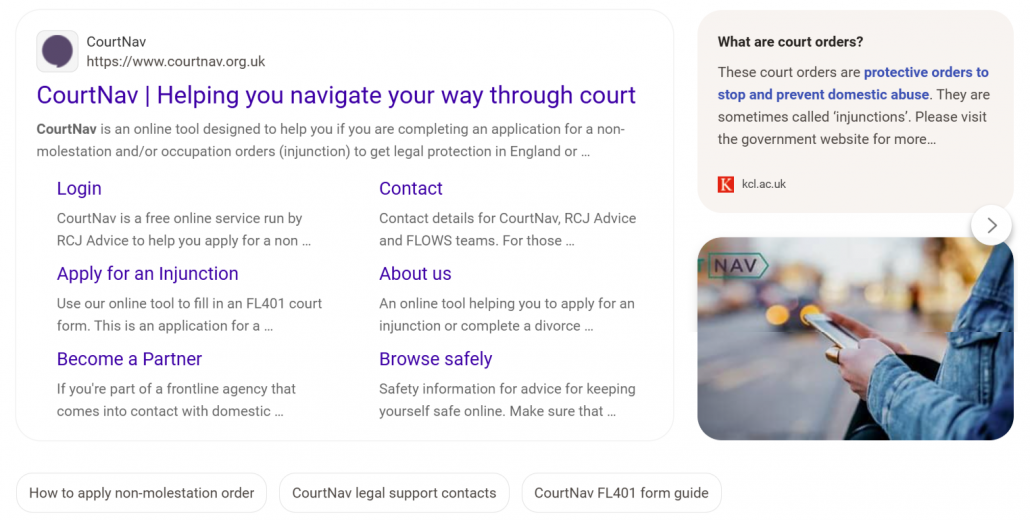
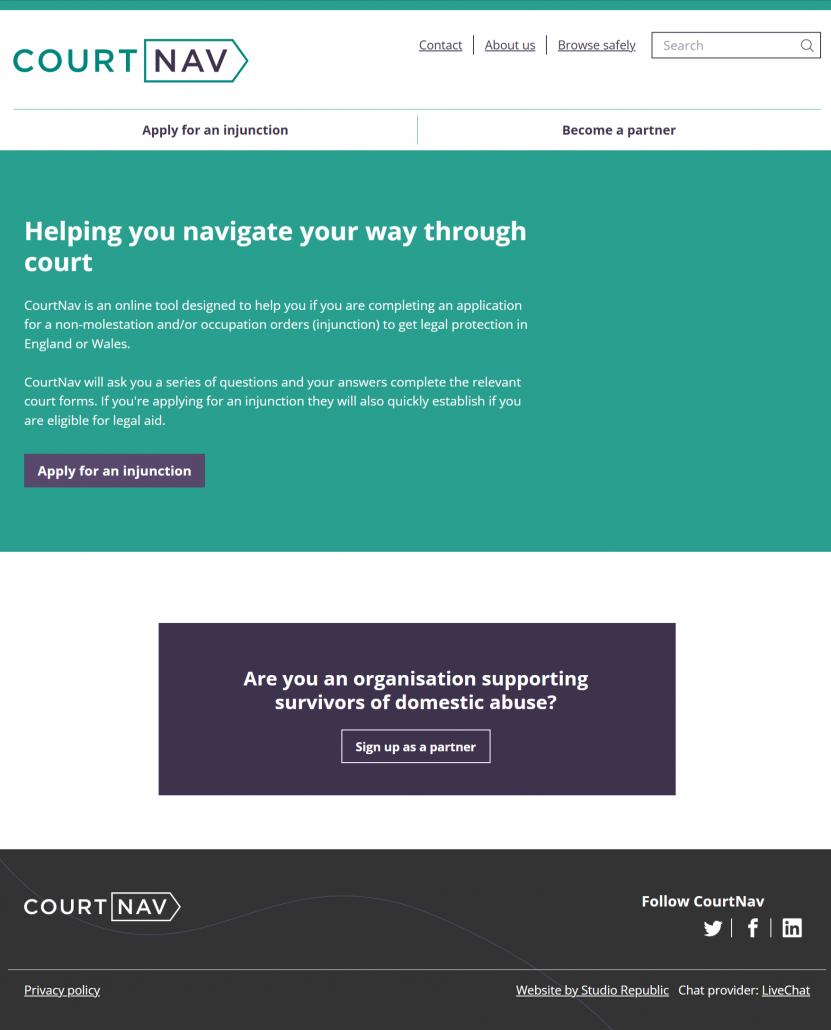
CourtNav is an online digital support tool developed by the charity RCJ Advice.

It is designed primarily to help people prepare applications for:

  • Non-Molestation Orders (FL401 applications);
  • Occupation Orders;
  • domestic abuse injunctions;
  • and related protective orders in the family court.

The system works by guiding users through structured questions about:

  • their relationship;
  • the abuse experienced;
  • children involved;
  • risk factors;
  • living arrangements;
  • police involvement;
  • and safeguarding concerns.

It then helps generate draft court documents and applications which can later be reviewed and submitted.

Importantly:

CourtNav does not make legal decisions.

It helps structure information into a legally usable format.

Why CourtNav Matters

To understand why CourtNav matters, you first need to understand the reality many domestic abuse victims face.

People applying for injunctions are often:

  • traumatised;
  • sleep deprived;
  • fearful;
  • isolated;
  • financially vulnerable;
  • emotionally overwhelmed;
  • and trying to navigate an intimidating legal system while still living in crisis.

Traditional court forms can feel impossible in that situation.

Particularly where abuse involves:

  • coercive control;
  • psychological abuse;
  • financial abuse;
  • stalking;
  • post-separation abuse;
  • or long-term emotional manipulation.

Many victims struggle to explain these patterns clearly in legal language.

CourtNav attempts to bridge that gap.


What CourtNav Does Exceptionally Well

1. It Reduces Procedural Overwhelm

One of CourtNav’s biggest strengths is structure.

Instead of presenting users with complex court forms and expecting them to know what matters legally, CourtNav breaks the process into guided stages.

That can significantly reduce panic and confusion.

For many litigants in person, simply having a structured pathway through the application process is enormously valuable.

2. It Helps People Explain Abuse More Clearly

This is particularly important.

Many victims minimise abuse.

Others struggle to explain coercive control because the behaviour developed gradually over years.

CourtNav’s questioning structure often helps users:

  • identify patterns;
  • organise incidents chronologically;
  • focus on relevant information;
  • and explain risk more coherently.

That can materially improve the clarity of an application.

3. It Improves Accessibility

For people who cannot immediately access legal representation, CourtNav creates a more accessible route into the justice system.

That matters enormously given the ongoing legal aid and access-to-justice crisis.

Without tools like this, many vulnerable people would likely never attempt protective applications at all.

4. It Helps Create More Organised Draft Applications

Many litigants in person submit applications that are:

  • emotionally chaotic;
  • chronologically unclear;
  • highly repetitive;
  • or missing critical safeguarding details.

CourtNav’s structure often improves overall readability and coherence.

Judges and legal professionals still need to assess the evidence critically — but a clearer application helps everybody understand the issues more quickly.


What CourtNav Cannot Do

This is where realism matters.

CourtNav is useful.

But it is not magic.

And it is not a substitute for legal advice or strategic case preparation.

CourtNav cannot:

  • verify allegations;
  • assess witness credibility;
  • cross-examine evidence;
  • predict judicial outcomes;
  • provide emotional support;
  • fully understand complex safeguarding dynamics;
  • or advise strategically on wider family proceedings.

It also cannot fully appreciate nuance in the way experienced professionals can.

For example:

  • counter-allegations;
  • post-separation litigation abuse;
  • false allegations;
  • parental alienation claims;
  • cross-jurisdictional issues;
  • and highly complex coercive control dynamics

often require detailed human analysis.


The Hidden Risk Litigants in Person Often Miss

One important issue rarely discussed publicly is this:

Generating an application is not the same thing as proving a case.

Many litigants assume that once the paperwork is completed, the hardest part is over.

In reality, injunction proceedings can later involve:

  • fact-finding hearings;
  • cross-examination;
  • disclosure disputes;
  • safeguarding investigations;
  • CAFCASS involvement;
  • police evidence;
  • medical records;
  • and detailed credibility assessments.

That is where many litigants in person begin to struggle.

Because the technology may help them enter the system — but not necessarily navigate the litigation that follows.


Coercive Control and the Difficulty of Explaining “Invisible Abuse”

One of the most difficult aspects of family court litigation is explaining coercive and controlling behaviour.

Many victims arrive at court with:

  • no visible injuries;
  • limited evidence;
  • fragmented memories;
  • and years of psychologically manipulative behaviour that is difficult to summarise briefly.

This is where structured digital systems can genuinely help.

By prompting users to identify patterns of:

  • isolation;
  • monitoring;
  • financial control;
  • intimidation;
  • threats;
  • harassment;
  • and fear-based behaviour,

tools like CourtNav can sometimes help people recognise and articulate abuse more clearly than they otherwise might.

That is significant.


The Bigger Legal Tech Question

CourtNav also raises a much wider question:

What happens when legal systems increasingly rely on technology to compensate for reduced access to lawyers?

This is one of the defining access-to-justice issues of modern family law.

Increasingly, the justice system depends upon:

  • digital forms;
  • online portals;
  • remote hearings;
  • AI-assisted drafting tools;
  • self-help platforms;
  • and procedural technology

to help people navigate litigation without representation.

That creates both opportunity and risk.

Technology can improve accessibility.

But it can also create:

  • digital exclusion;
  • overreliance on systems;
  • false confidence;
  • and a dangerous assumption that guided forms are equivalent to legal understanding.

How CourtNav Fits into the Future of Family Court

CourtNav is likely part of a much larger shift.

Over the next decade we will probably see:

  • AI-assisted injunction drafting;
  • automated chronology generation;
  • risk-identification systems;
  • integrated safeguarding workflows;
  • evidence categorisation tools;
  • and increasingly sophisticated digital court support platforms.

Some of that will improve access to justice.

Some of it will create entirely new legal and ethical concerns.

But the direction of travel is already obvious:

Family court is becoming increasingly technological.


Practical Tips for Litigants Using CourtNav

JSH Law Practical Guidance

  • Take your time completing the questions.
  • Focus on facts, incidents and patterns.
  • Avoid writing emotionally if possible.
  • Keep dates and chronology clear.
  • Save supporting evidence separately.
  • Do not exaggerate allegations.
  • Do not assume the court automatically knows your history.
  • Remember that applications may later be scrutinised in detail.
  • Seek support where possible if you are overwhelmed.
  • If children are involved, think carefully about safeguarding issues and risk.

JSH Law Practical Verdict

JSH Law Rating: Extremely Valuable Access-to-Justice Tool

Best for:

  • non-molestation applications;
  • organising abuse allegations clearly;
  • reducing procedural overwhelm;
  • helping litigants begin injunction applications;
  • improving accessibility.

Limitations:

  • not legal advice;
  • not strategic litigation support;
  • cannot replace safeguarding analysis;
  • cannot predict outcomes;
  • cannot fully assess complex abuse dynamics.

Final Thoughts

CourtNav represents something important.

Not because technology solves domestic abuse.

It does not.

But because tools like this acknowledge a reality the justice system can no longer ignore:

Large numbers of vulnerable people are navigating family court without lawyers.

For those people, structure matters.

Clarity matters.

Accessibility matters.

And technology — used carefully and responsibly — may increasingly become one of the few bridges left between vulnerable people and meaningful access to legal protection.


About the Author

Jessica Susan Hill is studying towards SQE1 and SQE2 with BPP Law School and has over 10 years’ experience litigating in person and helping others navigate family court proceedings.

She is the founder of JSH Law and has a particular interest in legal technology, AI, access to justice, safeguarding and practical litigation support for litigants in person.

JSH Law provides practical support including chronology building, evidence organisation, court document preparation assistance and hearing preparation support for litigants in person across England and Wales.

Website: www.jshlaw.co.uk


Part of the JSH Law Legal Tech & AI for Litigants in Person Series

  • Part 1 — The Truth About Using ChatGPT for Family Court as a Litigant in Person
  • Part 2 — Advicenow Review for Litigants in Person
  • Part 3 — CourtNav and the Rise of Digital Injunction Applications
  • Coming next: Claude vs ChatGPT for Family Court Preparation

Regulatory & Editorial Notice: JSH Law Ltd provides litigation support and McKenzie Friend services to litigants in person. JSH Law Ltd is not authorised or regulated by the Solicitors Regulation Authority. This article is provided for general educational and public-interest purposes only and does not constitute legal advice.

https://jshlaw.co.uk/wp-content/uploads/2026/02/ChatGPT-Image-Feb-3-2026-03_26_42-AM.png 1024 1536 jessica susan hill https://jshlaw.co.uk/wp-content/uploads/2026/01/jsh-law-logo-new-black-300x67.png jessica susan hill2026-05-22 09:22:082026-05-22 09:24:30Using CourtNav for Non-Molestation Orders: A Practical Guide for Litigants in Person

Litigants in Person Support in Family Court: What Help Exists — and Why Quality McKenzie Friends Matter

February 26, 2026/0 Comments/in 5. Court Skills for Litigants in Person, Litigants in Person Support/by jessica susan hill

Navigating Family Court without legal representation can feel overwhelming — but you are not without options. While the rise in litigants in person has exposed significant access to justice challenges, a range of support services now exist, from court-based charities to McKenzie Friends offering structured assistance. Understanding what help is available — and the limits of that help — is critical. This guide explains the landscape of litigant support in England and Wales, the role of McKenzie Friends, and why there is an increasing need for ethical, procedurally competent support in modern family proceedings.

Litigants in Person Support in Family Court: What Help Exists — and Why Quality McKenzie Friends Matter

Key Takeaways for Litigants in Person

  • You are entitled to represent yourself in Family Court — and many people now do.
  • Support exists, but it is fragmented and varies in quality.
  • McKenzie Friends can provide structured, strategic assistance — but standards matter.
  • Free support services are valuable but often overstretched.
  • Understanding the limits of each type of support prevents unrealistic expectations.
  • There is a growing need for ethical, professional McKenzie Friends who understand procedure, safeguarding and evidence.

Introduction: You Are Not Alone — But You Must Be Informed

Since the reduction of legal aid in private family law matters, the number of litigants in person has risen significantly. Many individuals now enter the Family Court without solicitors or barristers — not because they choose to, but because they cannot afford representation.

The system has adjusted to this reality. Judges are accustomed to litigants in person. Guidance exists. Court staff assist where they can.

But navigating proceedings without support can feel isolating.

This article explains what support is available to litigants in person in England and Wales, what each service can (and cannot) do, and why there is an increasing need for high-quality, ethically grounded McKenzie Friends.


The Legal Right to Represent Yourself

You have the right to conduct your own case. This is a long-standing principle of access to justice.

The Family Court is governed by the Family Procedure Rules 2010. These rules apply equally whether you are legally represented or not.

The court’s overriding objective requires cases to be dealt with justly and proportionately — and judges must ensure fairness to litigants in person.

However, fairness does not mean advantage. The court cannot act as your legal adviser.


Why Litigants in Person Are Increasing

Key reasons include:

  • Legal Aid, Sentencing and Punishment of Offenders Act 2012 (LASPO) removing most private family legal aid.
  • Rising legal costs.
  • Increased complexity of family litigation.
  • Growing awareness of self-representation options.

Children cases involving domestic abuse may still qualify for legal aid, but evidential thresholds apply.

Many parties fall just outside eligibility.


What Free Support Is Available?

1. Court Staff

Court staff can assist with procedural queries (forms, filing, deadlines). They cannot provide legal advice.

2. CAFCASS

In children cases, CAFCASS conducts safeguarding checks and may prepare reports. They are independent officers of the court — not advisers to either party.

CAFCASS Official Website

3. Support Through Court (Formerly PSU)

This charity provides volunteers who:

  • Help organise documents.
  • Offer emotional support.
  • Attend hearings for reassurance.

They do not provide legal advice.

Support Through Court

4. Citizens Advice

Provides general legal information and guidance.

Citizens Advice

5. Domestic Abuse Charities

Where relevant, specialist organisations provide advocacy and safeguarding assistance.


The Role of McKenzie Friends

A McKenzie Friend is someone who supports a litigant in person during proceedings.

The role originates from the case of McKenzie v McKenzie (1970).

Guidance is set out by the Judiciary:

Judicial Guidance on McKenzie Friends

What a McKenzie Friend Can Do

  • Provide moral support.
  • Take notes.
  • Help organise documents.
  • Quietly offer advice during hearings.
  • Assist with drafting documents.

What They Cannot Do (Without Permission)

  • Address the court.
  • Examine witnesses.
  • Conduct litigation formally.

Rights of audience require specific permission.


Why Quality Matters

Not all McKenzie Friends operate to the same standard.

The absence of formal regulation creates variability.

High-quality McKenzie support should include:

  • Strong understanding of Family Procedure Rules.
  • Knowledge of safeguarding frameworks (PD12J).
  • Clear boundaries regarding role.
  • Transparent fees.
  • Professional documentation standards.
  • Data protection awareness.

Litigants are vulnerable. Poor advice can cause procedural damage.


Ethical Considerations

A McKenzie Friend must not:

  • Encourage vexatious litigation.
  • Inflame conflict.
  • Provide misleading assurances.
  • Undermine court authority.

The role should enhance clarity and structure — not escalate hostility.


Why There Is a Growing Need for Professional McKenzie Support

Family cases increasingly involve:

  • Complex safeguarding issues.
  • Digital evidence.
  • Fact-finding hearings.
  • Detailed disclosure obligations.
  • Procedural compliance requirements.

Litigants in person often struggle with:

  • Drafting coherent witness statements.
  • Preparing bundles compliant with PD27A.
  • Understanding the welfare checklist under the Children Act 1989.

Professional, ethically grounded McKenzie Friends bridge that gap.


Emotional Support vs Strategic Support

Support services often provide emotional reassurance — which is important.

Strategic support is different. It involves:

  • Issue identification.
  • Evidence alignment.
  • Procedural awareness.
  • Hearing preparation.

Both forms of support matter.


Risks of No Support

  • Missed deadlines.
  • Procedural non-compliance.
  • Overlong statements.
  • Disorganised bundles.
  • Emotional reactivity in hearings.

Judges cannot compensate for structural disorganisation.


Access to Justice: A Structural Challenge

The Family Court remains under significant pressure.

Delays, listing backlogs and limited judicial time increase the importance of focused preparation.

Litigant support is not a luxury — it is part of modern access to justice.


How to Choose a McKenzie Friend

Ask:

  • What is your experience in family law?
  • How do you approach safeguarding cases?
  • What are your boundaries?
  • Do you provide written engagement terms?
  • How do you protect client data?

Clarity protects both parties.


How JSH Law Supports Litigants in Person

JSH Law provides litigation support services including:

  • Strategic case review.
  • Evidence structuring.
  • Chronology drafting.
  • Bundle preparation.
  • Hearing preparation.
  • McKenzie Friend attendance.

The aim is not to replace solicitors where representation is available — but to provide structured, principled support where it is not.


Book a 15-Minute Consultation

If you are navigating Family Court alone and need clarity about your next step, you can book a short consultation.


Useful Links

  • Family Procedure Rules 2010
  • Judicial Guidance on McKenzie Friends
  • Support Through Court
  • CAFCASS
  • Citizens Advice
  • Children Act 1989

Regulatory & Editorial Notice

This article is for general information only and does not constitute legal advice. Each case depends on its own facts and procedural history.

JSH Law provides litigation support services to litigants in person. JSH Law is not a firm of solicitors and does not conduct reserved legal activities.

https://jshlaw.co.uk/wp-content/uploads/2026/02/ChatGPT-Image-Feb-3-2026-03_26_42-AM.png 1024 1536 jessica susan hill https://jshlaw.co.uk/wp-content/uploads/2026/01/jsh-law-logo-new-black-300x67.png jessica susan hill2026-02-26 12:57:162026-03-01 14:57:21Litigants in Person Support in Family Court: What Help Exists — and Why Quality McKenzie Friends Matter

Jessica Susan Hill – McKenzie Friend Services Logo

How I Can Help

I provide independent, procedural family court support for litigants in person and professionals navigating complex or high-conflict cases.

My work focuses on:

– Case strategy and procedural clarity

– Evidence review, chronology building, and issue framing

– Statement drafting and refinement

– Court-ready bundles and document compliance

– Support alongside solicitors, counsel, or directly with litigants in person

Support is provided remotely, on an hourly basis, with clear boundaries and no false promises.

This is about structure, preparation, and informed decision-making.


Book a Case Review

About the Author

About the Author

Jessica Susan Hill

McKenzie Friend · Family Court Support

I support litigants in person and professionals in complex private children and
safeguarding-related family court proceedings
.

My work is procedural, strategic, and evidence-focused — helping clients understand process,
prepare properly, and present their case clearly and coherently.

I regularly work alongside solicitors and counsel, or directly with litigants in person,
providing structured support in cases where clarity, preparation, and proportionality matter.

This site exists to reduce confusion, not create false hope.


→ About JSH Law

Procedural support · Evidence preparation · Court-ready documentation

Start Here (Key Guides)

Start Here

If you’re new to family court or feeling overwhelmed, begin with these guides:

  • Before You Apply to Court
  • Understanding Cafcass and Section 7 Reports
  • Safeguarding, Domestic Abuse, and Risk Framing
  • Preparing Your Evidence, Chronology, and Statements
  • Common Mistakes Litigants in Person Make

Practical, procedural guidance — written for real cases, not theory.

Categories

Family Court Procedure
Litigants in Person Guidance

Cafcass & Reports

Safeguarding & Domestic Abuse

Case Studies (Anonymised)

Family Court Accountability

AI & Legal Process

Free Resource

Family Court Preparation Checklist (PDF)

A practical, procedural checklist covering:

  • what to organise before issuing or responding
  • evidence and chronology basics
  • common preparation mistakes to avoid


→ Download Free Checklist

Procedural guidance only · Not legal advice

Authorities Used

– Family Procedure Rules 2010, SI 2010/2955 (U.K.), rr. 1.1, 1.3, pts. 3, 6, 17, 22, 25, 9.
– Practice Direction 3A (MIAM).
– Practice Direction 12B (Child Arrangements Programme).
– Practice Direction 12J (Domestic Abuse and Harm).
– Practice Direction 22A (Evidence).
– Practice Direction 27A (Court Bundles).
– Children Act 1989, c. 41 (U.K.)

Related Reading

You may also find these articles helpful:

  • Understanding Cafcass Reports and Common Errors
  • How Evidence Is Weighed in Family Court
  • Safeguarding Allegations and Risk Assessment
  • Preparing a Chronology the Court Can Follow

Articles are grouped by topic for clarity.

Latest news

  • The Government Finally Recognises Economic Abuse in Financial Remedy Cases – Could This Transform Family Justice?June 10, 2026 - 5:36 pm

    The Government’s new consultation, A Fairer End to Relationships, could mark a major turning point in family law. For the first time, ministers have explicitly recognised that domestic abuse and economic abuse can continue through the financial remedy process itself. From the controversial “gasp factor” to cohabitation rights and enforcement of financial orders, we examine what these proposals could mean for survivors, litigants in person and the future of family justice.

  • If Victims Need Legal Advisers in Crown Court, Why Are Parents Still Facing Family Court Alone?June 5, 2026 - 9:13 pm

    The Government has announced a £5 million pilot scheme to provide independent legal advisers for domestic abuse victims in Crown Court cases. While the move is welcome, many family court litigants continue to face complex proceedings without legal representation or meaningful support. What does this reform mean, and what lessons could family justice learn from it?

  • Contact With Your Child Has Stopped: What to Do Before the Family Court Treats It as the New NormalJune 4, 2026 - 4:32 pm

    Has contact with your child suddenly stopped, or is an existing child arrangements order no longer being followed? This guide explains why delay can make a safe parent-child relationship harder to repair, what evidence the court will examine, when enforcement may be appropriate and how litigants in person can prepare a clear, child-focused case.

FAMILY LAW NEWS & UPDATES:

  • 1. Start Here (11)
    • Before You Apply to Court (2)
    • Common Mistakes (1)
    • Family Court Reality (4)
    • FAQs for Litigants in Person (1)
    • Litigants in Person – Family Court Guidance (3)
  • 2. Family Court Procedure (21)
    • Court Etiquette (1)
    • Court Process & Judicial Approach (2)
    • Forms & Applications (3)
    • Hearing Types (3)
    • MIAM & Mediation (1)
    • Procedural Updates (8)
    • Transparency & Reporting (2)
    • Urgent Applications (2)
  • 3. Cafcass & Reports Cluster (6)
    • Challenging Cafcass Reports (1)
    • Child Impact Analysis (1)
    • Safeguarding Checks (2)
    • Section 7 Reports (1)
    • The Child’s Voice (1)
  • 4. Domestic Abuse & Safeguarding Cluster (21)
    • Child Safety & Emotional Harm (1)
    • Coercive Control (3)
    • PD12J & Fact Finding (2)
    • Post Separation Abuse (3)
    • Protective Orders (2)
    • Safeguarding & Child Protection (4)
    • Safety Planning (2)
  • 5. Court Skills for Litigants in Person (37)
    • Advocacy Skills (1)
    • Bundles & Documents (1)
    • Evidence Explained (1)
    • Evidence Readiness (1)
    • Family Court Procedure (8)
    • Litigants in Person Support (2)
    • McKenzie Friend Support (15)
    • Personal Development for LiPs (5)
    • Remote Hearings (1)
  • 6. Tools Templates Research & Cases (32)
    • AI & Legal Process (17)
      • AI & Justice Reform (4)
      • Judicial Review & AI (8)
    • Case Studies (Anonymised) (2)
    • Family Court Accountability (3)
    • Legal Reflections (5)
    • Safeguarding Reform (3)
    • Templates & Checklists (2)

Important Notice

Information on this site is provided for procedural guidance and general information only.
It does not constitute legal advice and does not create a solicitor–client relationship.

If you require legal advice, you should consult a qualified solicitor.

SUBSTACK SIGNUP

FOLLOW | SHARE | CONTACT

USEFUL LINKS

If you are representing yourself in family court, the following independent and authoritative resources may assist you in understanding procedure, safeguarding processes, and available support.

  • – GOV.UK – Family Court Guidance 
  • – HM Courts & Tribunals Service – Court Forms & Fees
  • – Cafcass – Understanding Cafcass
  • – Advicenow – Practical Guides for LiPs
  • – McKenzie Friends Official Guidance
  • – Support Through Court
  • – Rights of Women – Family Law & Abuse Guidance
  • – Family Law in the 21st Century (Baroness Hale)
  • – Inside the UK Supreme Court
X Logo X Logo Followon X RSS Feed Logo RSS Feed Logo Subscribeto RSS Feed

FOLLOW | SHARE | CONTACT

Companies, Charities, Groups

  • Child Law Project (Ireland)

Petitions

  • Make all court and tribunal transcripts available free of charge

CLIENT DOCUMENTS

Standard Client Agreement & Terms of Business

Compliance & Protection

  • Terms of Service
  • Privacy Policy
  • Disclaimer
  • Complaints Procedure
  • Safeguarding Statement

Services

  • Services
  • Family Court Navigation & Case Strategy – Procedural clarity for litigants in person
  • Safeguarding, Cafcass & Local Authority Matters
  • Court Documents, Statements & Submissions
  • Hearing Support & McKenzie Friend Services

Do You Need to Talk?

We’re a Christ-focused community, doing our best to love and serve others.  Meet online or in person. We’ll answer your questions and introduce you to your local church community. All are welcome.

CATCH THE LATEST JSH LAW ON SUBSTACK

News Categories

Resources Hub

  • 1. Start Here
  • 2. Family Court Procedure
  • 3. Cafcass & Reports Cluster
  • 4. Domestic Abuse & Safeguarding Cluster
  • 5. Court Skills for Litigants in Person
  • 6. Tools Templates Research & Cases

Matters I Support

  • Matters I Can Help With
  • Core Private Law Children Matters
  • Safeguarding, Welfare & Professional Involvement
  • Hearings, Process & Court Navigation
  • Documentation, Evidence & Case Preparation
  • Appeals, Reviews & Procedural Challenges
  • High-Conflict or Complex Case Dynamics
  • Additional Procedural Matters Litigants Ask About

Business Hours

Our support Hotline is available 24 Hours a day: (+44) 07564 236528

  • Monday-Friday: 9am to 5pm
  • Saturday: 10am to 2pm
  • Sunday: Closed

WORKING WITH JSH LAW

What is a McKenzie Friend

Working With JSH Law

UK Family Court Preparation Checklist

My Qualifications – What are the SQE’s?

Message me on WhatsApp

For direct, confidential support:


Message me on WhatsApp

Sign Into Clio to View Your Case Progress

Secure client portal & documents


Download the Clio for Clients app

Review Us On Google

© Copyright - JSH Law | Family Court Support & Litigation Assistance - Enfold WordPress Theme by Kriesi
  • Terms of Service
  • Privacy Policy
  • Disclaimer
  • Complaints Procedure
  • Safeguarding Statement
Scroll to top Scroll to top Scroll to top