
 © 2026 JSH Law Ltd. All rights reserved.
Using CourtNav for Non-Molestation Orders: A Practical Guide for Litigants in Person
For many victims of domestic abuse, the hardest part of seeking legal protection is not the law itself — it is the process. Fear, trauma, court forms, safeguarding concerns and trying to explain coercive and controlling behaviour in legal language can feel overwhelming, particularly without legal representation. In recent years, digital tools like CourtNav have started to reshape how litigants in person access protective injunctions through the family court system. Designed to help users prepare non-molestation and occupation order applications more clearly and more safely, CourtNav represents one of the clearest examples of legal technology being used to improve access to justice for vulnerable court users.

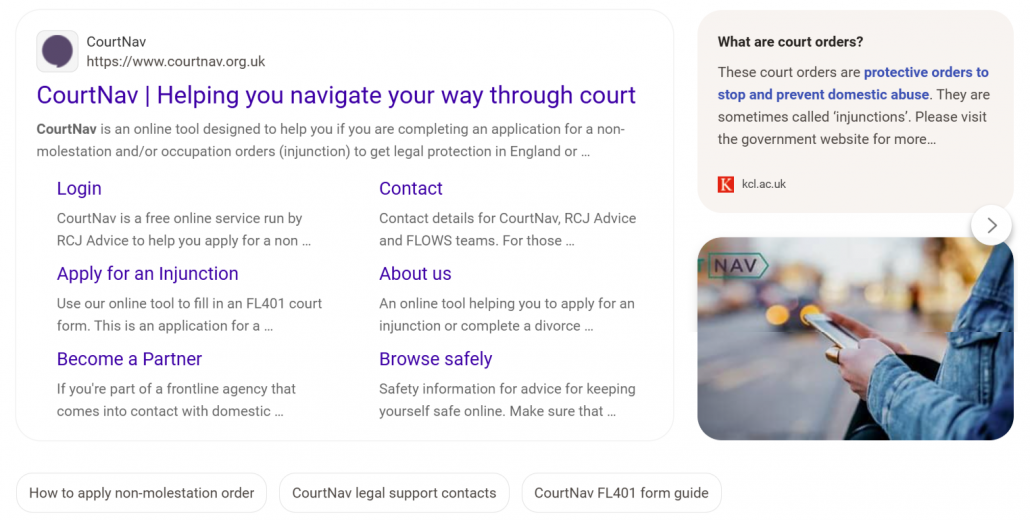
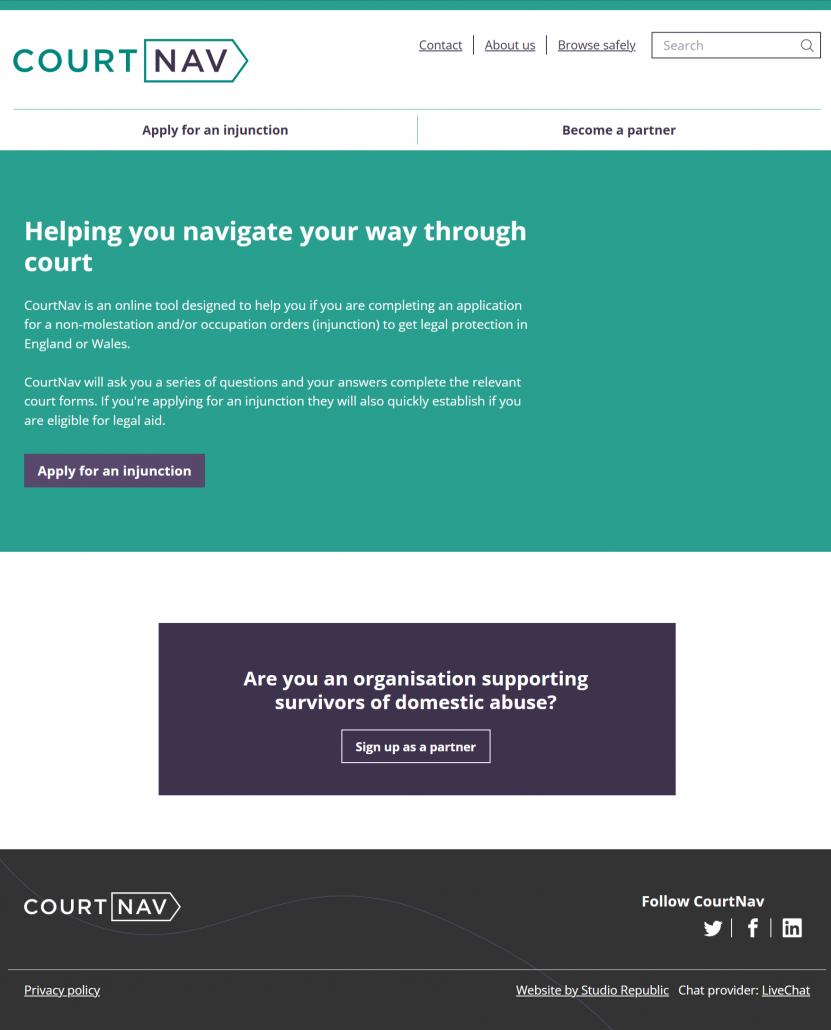
CourtNav and the Rise of Digital Injunction Applications: What Litigants in Person Need to Know
Part 3 of the JSH Law Legal Tech & AI for Litigants in Person Series
By Jessica Susan Hill | JSH Law
For many victims of domestic abuse, one of the hardest parts of seeking legal protection is not the law itself.
It is the process.
Fear.
Confusion.
Court forms.
Trauma.
Reliving abuse in writing.
Trying to explain coercive and controlling behaviour in a way the legal system can understand.
And often doing all of that without legal representation.
That is the reality many litigants in person face when trying to apply for a non-molestation order or occupation order through the family court.
In recent years, one digital tool has become increasingly important in this area:
CourtNav is one of the clearest examples of legal technology being used not to replace lawyers, but to help vulnerable people access the justice system more safely and more effectively.
But like all legal technology, it has strengths, limitations and risks that litigants in person need to understand properly.
What Is CourtNav?
CourtNav is an online digital support tool developed by the charity RCJ Advice.
It is designed primarily to help people prepare applications for:
- Non-Molestation Orders (FL401 applications);
- Occupation Orders;
- domestic abuse injunctions;
- and related protective orders in the family court.
The system works by guiding users through structured questions about:
- their relationship;
- the abuse experienced;
- children involved;
- risk factors;
- living arrangements;
- police involvement;
- and safeguarding concerns.
It then helps generate draft court documents and applications which can later be reviewed and submitted.
Importantly:
It helps structure information into a legally usable format.
Why CourtNav Matters
To understand why CourtNav matters, you first need to understand the reality many domestic abuse victims face.
People applying for injunctions are often:
- traumatised;
- sleep deprived;
- fearful;
- isolated;
- financially vulnerable;
- emotionally overwhelmed;
- and trying to navigate an intimidating legal system while still living in crisis.
Traditional court forms can feel impossible in that situation.
Particularly where abuse involves:
- coercive control;
- psychological abuse;
- financial abuse;
- stalking;
- post-separation abuse;
- or long-term emotional manipulation.
Many victims struggle to explain these patterns clearly in legal language.
CourtNav attempts to bridge that gap.
What CourtNav Does Exceptionally Well
1. It Reduces Procedural Overwhelm
One of CourtNav’s biggest strengths is structure.
Instead of presenting users with complex court forms and expecting them to know what matters legally, CourtNav breaks the process into guided stages.
That can significantly reduce panic and confusion.
For many litigants in person, simply having a structured pathway through the application process is enormously valuable.
2. It Helps People Explain Abuse More Clearly
This is particularly important.
Many victims minimise abuse.
Others struggle to explain coercive control because the behaviour developed gradually over years.
CourtNav’s questioning structure often helps users:
- identify patterns;
- organise incidents chronologically;
- focus on relevant information;
- and explain risk more coherently.
That can materially improve the clarity of an application.
3. It Improves Accessibility
For people who cannot immediately access legal representation, CourtNav creates a more accessible route into the justice system.
That matters enormously given the ongoing legal aid and access-to-justice crisis.
Without tools like this, many vulnerable people would likely never attempt protective applications at all.
4. It Helps Create More Organised Draft Applications
Many litigants in person submit applications that are:
- emotionally chaotic;
- chronologically unclear;
- highly repetitive;
- or missing critical safeguarding details.
CourtNav’s structure often improves overall readability and coherence.
Judges and legal professionals still need to assess the evidence critically — but a clearer application helps everybody understand the issues more quickly.
What CourtNav Cannot Do
This is where realism matters.
CourtNav is useful.
But it is not magic.
And it is not a substitute for legal advice or strategic case preparation.
CourtNav cannot:
- verify allegations;
- assess witness credibility;
- cross-examine evidence;
- predict judicial outcomes;
- provide emotional support;
- fully understand complex safeguarding dynamics;
- or advise strategically on wider family proceedings.
It also cannot fully appreciate nuance in the way experienced professionals can.
For example:
- counter-allegations;
- post-separation litigation abuse;
- false allegations;
- parental alienation claims;
- cross-jurisdictional issues;
- and highly complex coercive control dynamics
often require detailed human analysis.
The Hidden Risk Litigants in Person Often Miss
One important issue rarely discussed publicly is this:
Many litigants assume that once the paperwork is completed, the hardest part is over.
In reality, injunction proceedings can later involve:
- fact-finding hearings;
- cross-examination;
- disclosure disputes;
- safeguarding investigations;
- CAFCASS involvement;
- police evidence;
- medical records;
- and detailed credibility assessments.
That is where many litigants in person begin to struggle.
Because the technology may help them enter the system — but not necessarily navigate the litigation that follows.
Coercive Control and the Difficulty of Explaining “Invisible Abuse”
One of the most difficult aspects of family court litigation is explaining coercive and controlling behaviour.
Many victims arrive at court with:
- no visible injuries;
- limited evidence;
- fragmented memories;
- and years of psychologically manipulative behaviour that is difficult to summarise briefly.
This is where structured digital systems can genuinely help.
By prompting users to identify patterns of:
- isolation;
- monitoring;
- financial control;
- intimidation;
- threats;
- harassment;
- and fear-based behaviour,
tools like CourtNav can sometimes help people recognise and articulate abuse more clearly than they otherwise might.
That is significant.
The Bigger Legal Tech Question
CourtNav also raises a much wider question:
This is one of the defining access-to-justice issues of modern family law.
Increasingly, the justice system depends upon:
- digital forms;
- online portals;
- remote hearings;
- AI-assisted drafting tools;
- self-help platforms;
- and procedural technology
to help people navigate litigation without representation.
That creates both opportunity and risk.
Technology can improve accessibility.
But it can also create:
- digital exclusion;
- overreliance on systems;
- false confidence;
- and a dangerous assumption that guided forms are equivalent to legal understanding.
How CourtNav Fits into the Future of Family Court
CourtNav is likely part of a much larger shift.
Over the next decade we will probably see:
- AI-assisted injunction drafting;
- automated chronology generation;
- risk-identification systems;
- integrated safeguarding workflows;
- evidence categorisation tools;
- and increasingly sophisticated digital court support platforms.
Some of that will improve access to justice.
Some of it will create entirely new legal and ethical concerns.
But the direction of travel is already obvious:
Family court is becoming increasingly technological.
Practical Tips for Litigants Using CourtNav
JSH Law Practical Guidance
- Take your time completing the questions.
- Focus on facts, incidents and patterns.
- Avoid writing emotionally if possible.
- Keep dates and chronology clear.
- Save supporting evidence separately.
- Do not exaggerate allegations.
- Do not assume the court automatically knows your history.
- Remember that applications may later be scrutinised in detail.
- Seek support where possible if you are overwhelmed.
- If children are involved, think carefully about safeguarding issues and risk.
JSH Law Practical Verdict
JSH Law Rating: Extremely Valuable Access-to-Justice Tool
Best for:
- non-molestation applications;
- organising abuse allegations clearly;
- reducing procedural overwhelm;
- helping litigants begin injunction applications;
- improving accessibility.
Limitations:
- not legal advice;
- not strategic litigation support;
- cannot replace safeguarding analysis;
- cannot predict outcomes;
- cannot fully assess complex abuse dynamics.
Final Thoughts
CourtNav represents something important.
Not because technology solves domestic abuse.
It does not.
But because tools like this acknowledge a reality the justice system can no longer ignore:
Large numbers of vulnerable people are navigating family court without lawyers.
For those people, structure matters.
Clarity matters.
Accessibility matters.
And technology — used carefully and responsibly — may increasingly become one of the few bridges left between vulnerable people and meaningful access to legal protection.
About the Author
Jessica Susan Hill is studying towards SQE1 and SQE2 with BPP Law School and has over 10 years’ experience litigating in person and helping others navigate family court proceedings.
She is the founder of JSH Law and has a particular interest in legal technology, AI, access to justice, safeguarding and practical litigation support for litigants in person.
JSH Law provides practical support including chronology building, evidence organisation, court document preparation assistance and hearing preparation support for litigants in person across England and Wales.
Website: www.jshlaw.co.uk
Part of the JSH Law Legal Tech & AI for Litigants in Person Series
- Part 1 — The Truth About Using ChatGPT for Family Court as a Litigant in Person
- Part 2 — Advicenow Review for Litigants in Person
- Part 3 — CourtNav and the Rise of Digital Injunction Applications
- Coming next: Claude vs ChatGPT for Family Court Preparation
Regulatory & Editorial Notice: JSH Law Ltd provides litigation support and McKenzie Friend services to litigants in person. JSH Law Ltd is not authorised or regulated by the Solicitors Regulation Authority. This article is provided for general educational and public-interest purposes only and does not constitute legal advice.
 © 2026 JSH Law Ltd. All rights reserved.
 © 2026 JSH Law Ltd. All rights reserved.
Leave a Reply
Want to join the discussion?Feel free to contribute!