
 © 2026 JSH Law Ltd. All rights reserved.
Advicenow Review: A Lifeline for Litigants in Person?
For many litigants in person, the hardest part of family court is not simply the law itself — it is understanding the process. Court forms, procedural terminology, safeguarding issues, bundles, deadlines and hearings can quickly become overwhelming for people without legal representation. In that landscape, free practical resources have become increasingly important. Advicenow is one of the best-known access-to-justice platforms in the UK, providing plain-English legal guidance designed specifically for ordinary people navigating the justice system without lawyers.

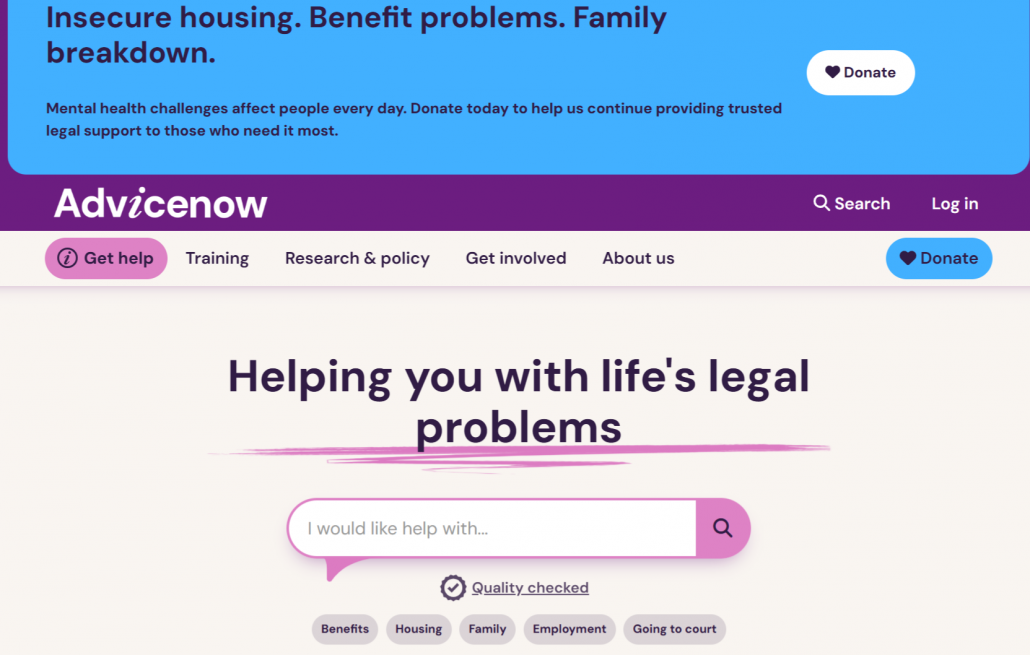
Advicenow Review for Litigants in Person: One of the Best Free Legal Resources in the UK?
Part 2 of the JSH Law Legal Tech & AI for Litigants in Person Series
By Jessica Susan Hill | JSH Law
When people think about legal technology, they often imagine artificial intelligence, futuristic software and automated legal robots.
But some of the most valuable tools available to litigants in person are not AI-powered at all.
Sometimes the most important thing is simply clear, reliable, practical guidance written in plain English by people who genuinely understand how overwhelming the court system can be.
That is where Advicenow has become one of the most important access-to-justice resources in the UK.
For many litigants in person, Advicenow quietly fills a gap that the justice system itself often leaves wide open.
It does not replace legal advice.
It does not replace representation.
But it does something increasingly valuable in modern family court:
What Is Advicenow?
Advicenow is a UK-based public legal education platform run by Law for Life, a charity focused on improving access to justice and legal capability.
The platform provides practical legal guidance designed specifically for ordinary people rather than lawyers.
Its resources cover areas including:
- family law;
- children arrangements;
- domestic abuse;
- housing;
- employment;
- benefits;
- debt;
- consumer rights;
- small claims;
- court preparation;
- and representing yourself in court.
Unlike many legal websites, Advicenow is not written primarily to impress professionals.
It is written to help people survive legal problems.
Why Advicenow Matters More Than Ever
The rise in litigants in person has fundamentally changed the landscape of family court.
Large numbers of people now find themselves navigating:
- child arrangements proceedings;
- safeguarding allegations;
- fact-finding hearings;
- non-molestation applications;
- enforcement proceedings;
- CAFCASS involvement;
- court bundles;
- position statements;
- and procedural deadlines — alone.
At the same time:
- legal aid remains heavily restricted;
- family law representation is expensive;
- court systems are increasingly digital;
- and procedural expectations remain extremely high.
The result is that many litigants in person enter court with little understanding of:
- what documents they need;
- what the court expects;
- what a hearing will look like;
- how evidence should be presented;
- or even what the legal language means.
Advicenow directly addresses that gap.
What Advicenow Does Exceptionally Well
1. Plain-English Explanations
This is probably Advicenow’s greatest strength.
Many legal resources unintentionally assume prior legal knowledge.
Advicenow generally does not.
Its guides explain:
- court terminology;
- legal processes;
- procedural stages;
- and practical steps
in language ordinary people can realistically understand.
That sounds simple.
In reality, it is one of the hardest things to do well in legal communication.
2. Practical Court Preparation Guidance
Advicenow is at its strongest when it focuses on practical litigation support.
Particularly valuable resources include:
- Representing yourself in family court
- How to prepare a trial bundle and index
- guides about evidence;
- guides about hearings;
- and procedural walkthroughs.
These are genuinely useful resources.
Particularly for overwhelmed litigants trying to make sense of unfamiliar processes.
3. Emotional Accessibility
This is an underrated point.
Many legal websites feel cold, intimidating or transactional.
Advicenow often feels written by people who understand:
- stress;
- fear;
- confusion;
- and procedural overwhelm.
That tone matters.
Especially in family proceedings involving children, safeguarding and domestic abuse.
4. It Helps Reduce Procedural Chaos
One of the biggest problems litigants in person face is not necessarily legal argument.
It is procedural chaos.
Missed deadlines.
Wrong forms.
Disorganised evidence.
Poorly structured statements.
Bundles without pagination.
Irrelevant material.
Emails sent emotionally rather than strategically.
Advicenow helps reduce some of that chaos by providing structure.
Where Advicenow Cannot Replace Human Support
This is where honesty matters.
Even excellent legal information websites have limits.
Advicenow cannot:
- review your evidence in detail;
- identify strategic weaknesses in your case;
- prepare bespoke chronologies;
- draft your statement personally;
- organise thousands of pages of evidence;
- prepare your hearing strategy;
- cross-examine witnesses for you;
- or emotionally support you through litigation in real time.
This is important because some litigants mistakenly believe that reading legal guidance is the same as being strategically prepared.
It is not.
Information helps.
But applying information to a live, emotionally charged, fact-specific family court case is much harder.
The Hidden Problem Many Litigants Still Face
There is another issue that often goes unspoken.
Many litigants in person do not merely lack information.
They lack:
- confidence;
- organisation;
- procedural understanding;
- time;
- emotional capacity;
- and the ability to step back objectively from their own case.
Even with excellent resources like Advicenow, many people still struggle to:
- identify relevance;
- present evidence proportionately;
- structure arguments;
- or focus on what the court actually needs to determine.
This is often where practical litigation support becomes valuable.
Advicenow vs AI Legal Tools
One of the most interesting developments in legal tech is the contrast between:
- traditional public legal education platforms like Advicenow;
- and emerging AI systems like ChatGPT and Claude.
Advicenow’s strengths:
- human-written;
- curated;
- reliable;
- carefully structured;
- non-hallucinatory;
- practical;
- trusted.
AI’s strengths:
- speed;
- customisation;
- document drafting;
- summarisation;
- chronology generation;
- interactive explanations.
In reality, the future likely lies in combining both approaches.
Reliable human-created legal guidance combined with carefully supervised AI assistance may ultimately become one of the most effective access-to-justice models available.
Can Advicenow Replace a Solicitor or Barrister?
No.
But that is not really its purpose.
Advicenow is best understood as:
That is enormously valuable.
Particularly for people who:
- cannot afford representation;
- are waiting for legal advice;
- need urgent procedural guidance;
- or simply need to understand what is happening.
The Bigger Access to Justice Issue
Advicenow’s importance also says something uncomfortable about the modern justice system.
People are increasingly dependent on free online resources because formal legal support is financially out of reach for many ordinary families.
That creates a strange situation:
- courts expect increasingly professional standards;
- while many litigants have no realistic access to professional representation.
Platforms like Advicenow are therefore doing work that arguably helps prevent even greater pressure on an already overstretched justice system.
Because informed litigants generally:
- prepare better;
- understand procedure more clearly;
- make fewer avoidable mistakes;
- and communicate more effectively.
JSH Law Practical Verdict
JSH Law Rating: Highly Recommended for Litigants in Person
Best for:
- understanding family court procedure;
- learning legal terminology;
- basic court preparation;
- bundle guidance;
- practical legal education;
- reducing overwhelm.
Not a replacement for:
- bespoke legal advice;
- evidence strategy;
- hearing preparation support;
- complex safeguarding analysis;
- or case-specific procedural assistance.
Final Thoughts
There is a tendency in legal technology discussions to focus only on AI.
But genuine access to justice is often improved not by flashy technology, but by clarity.
Advicenow succeeds because it does something many legal systems fail to do:
It explains things clearly to ordinary people at moments of high stress and vulnerability.
That is not a small achievement.
For litigants in person, particularly in family court, knowledge alone will not solve every problem.
But good information, clearly explained, can make the system feel less frightening, less chaotic and more navigable.
And sometimes, that is the difference between complete procedural overwhelm and someone finally feeling able to take the next step.
About the Author
Jessica Susan Hill is studying towards SQE1 and SQE2 with BPP Law School and has over 10 years’ experience litigating in person and helping others navigate family court proceedings.
She is the founder of JSH Law and has a particular interest in legal technology, AI, access to justice and practical litigation support for litigants in person.
JSH Law provides practical support including chronology building, evidence organisation, court document preparation assistance and hearing preparation support for litigants in person across England and Wales.
Website: www.jshlaw.co.uk
Part of the JSH Law Legal Tech & AI for Litigants in Person Series
- Part 1 — The Truth About Using ChatGPT for Family Court as a Litigant in Person
- Part 2 — Advicenow Review for Litigants in Person
- Coming next: CourtNav and the Rise of Digital Injunction Applications
- Coming next: Claude vs ChatGPT for Family Court Preparation
Regulatory & Editorial Notice: JSH Law Ltd provides litigation support and McKenzie Friend services to litigants in person. JSH Law Ltd is not authorised or regulated by the Solicitors Regulation Authority. This article is provided for general educational and public-interest purposes only and does not constitute legal advice.
 © 2026 JSH Law Ltd. All rights reserved.
 © 2026 JSH Law Ltd. All rights reserved.
Leave a Reply
Want to join the discussion?Feel free to contribute!