
 © 2026 JSH Law Ltd. All rights reserved.
https://jshlaw.co.uk/wp-content/uploads/2026/02/ChatGPT-Image-Feb-3-2026-03_26_42-AM.png
1024
1536
Jessica Susan Hill
https://jshlaw.co.uk/wp-content/uploads/2026/01/jsh-law-logo-new-black-300x67.png
Jessica Susan Hill2026-10-06 12:15:482026-10-21 11:24:27AI May Democratise Legal Drafting. Can the Courts Survive the Volume?© 2026 JSH Law Ltd. All rights reserved.
https://jshlaw.co.uk/wp-content/uploads/2026/02/ChatGPT-Image-Feb-3-2026-03_26_42-AM.png
1024
1536
Jessica Susan Hill
https://jshlaw.co.uk/wp-content/uploads/2026/01/jsh-law-logo-new-black-300x67.png
Jessica Susan Hill2026-10-06 12:12:212026-10-21 11:24:33When AI Stops Answering and Starts Acting: Agentic AI, Legal Responsibility and the Next Professional Risk© 2026 JSH Law Ltd. All rights reserved.
https://jshlaw.co.uk/wp-content/uploads/2026/02/ChatGPT-Image-Feb-3-2026-03_26_42-AM.png
1024
1536
Jessica Susan Hill
https://jshlaw.co.uk/wp-content/uploads/2026/01/jsh-law-logo-new-black-300x67.png
Jessica Susan Hill2026-10-06 12:08:392026-10-12 13:03:58If AI Does the Junior Work, Who Trains the Lawyers of 2035?
 © 2026 Jessica Susan Hill / JSH Law. All rights reserved.
https://jshlaw.co.uk/wp-content/uploads/2026/10/When-Domestic-Abuse-Becomes-Normal.png
1254
1254
Jessica Susan Hill
https://jshlaw.co.uk/wp-content/uploads/2026/01/jsh-law-logo-new-black-300x67.png
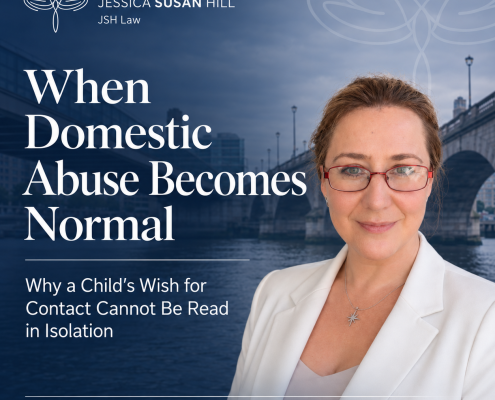
Jessica Susan Hill2026-10-06 08:27:552026-10-12 13:03:53When Domestic Abuse Becomes Normal: Why a Child’s Wish for Contact Cannot Be Read in Isolation© 2026 JSH Law Ltd. All rights reserved.
https://jshlaw.co.uk/wp-content/uploads/2026/02/ChatGPT-Image-Feb-3-2026-03_26_42-AM.png
1024
1536
Jessica Susan Hill
https://jshlaw.co.uk/wp-content/uploads/2026/01/jsh-law-logo-new-black-300x67.png
Jessica Susan Hill2026-10-05 09:45:592026-10-12 13:03:49The Jury Trial U-Turn Is Not the End of Court Reform: What the 2026 Courts and Tribunals Bill Still Changes© 2026 JSH Law Ltd. All rights reserved.
https://jshlaw.co.uk/wp-content/uploads/2026/02/ChatGPT-Image-Feb-3-2026-03_26_42-AM.png
1024
1536
Jessica Susan Hill
https://jshlaw.co.uk/wp-content/uploads/2026/01/jsh-law-logo-new-black-300x67.png
Jessica Susan Hill2026-10-05 09:38:572026-10-12 13:03:46AI Slop, Costs and Litigants in Person: Should Courts Sanction Bad AI Use?© 2026 JSH Law Ltd. All rights reserved.
https://jshlaw.co.uk/wp-content/uploads/2026/02/ChatGPT-Image-Feb-3-2026-03_26_42-AM.png
1024
1536
Jessica Susan Hill
https://jshlaw.co.uk/wp-content/uploads/2026/01/jsh-law-logo-new-black-300x67.png
Jessica Susan Hill2026-10-05 09:26:512026-10-12 11:26:02Should AI Become a Legal Person? Imogen Rivers, Robot Rights and the Responsibility Gap© 2026 JSH Law Ltd. All rights reserved.
https://jshlaw.co.uk/wp-content/uploads/2026/02/ChatGPT-Image-Feb-3-2026-03_26_42-AM.png
1024
1536
Jessica Susan Hill
https://jshlaw.co.uk/wp-content/uploads/2026/01/jsh-law-logo-new-black-300x67.png
Jessica Susan Hill2026-10-05 09:23:502026-10-10 13:06:15AI Can State Facts. Can It Tell the Truth? Why the Difference Matters in Law© 2026 JSH Law Ltd. All rights reserved.
https://jshlaw.co.uk/wp-content/uploads/2026/02/ChatGPT-Image-Feb-3-2026-03_26_42-AM.png
1024
1536
Jessica Susan Hill
https://jshlaw.co.uk/wp-content/uploads/2026/01/jsh-law-logo-new-black-300x67.png
Jessica Susan Hill2026-10-05 09:19:012026-10-12 11:26:06Behaviour Is Not Need: Why Family Lawyers Need Cross-Disciplinary Literacy© 2026 JSH Law Ltd. All rights reserved.
https://jshlaw.co.uk/wp-content/uploads/2026/02/ChatGPT-Image-Feb-3-2026-03_26_42-AM.png
1024
1536
Jessica Susan Hill
https://jshlaw.co.uk/wp-content/uploads/2026/01/jsh-law-logo-new-black-300x67.png
Jessica Susan Hill2026-10-05 09:15:172026-10-22 14:10:49“Welfare Is Not Enough”: Re E [2026] EWCA Civ 1167 and Special Guardianship Orders in Care Proceedings