

Resolute Wins Mayor of Barnsley’s Award 2026: From National Recognition to Safer Responses to Domestic Abuse
JSH Law | Community leadership | Domestic abuse & safeguarding | 20 November 2026
First national recognition. Now an award from the town where it all began.
Resolute Women’s Support Services is celebrating the Mayor of Barnsley’s Award at the Proud of Barnsley Awards 2026, just days after receiving the King’s Award for Voluntary Service. The honours are deserved—but they also invite a question: how can every organisation help survivors safely, before a crisis develops?
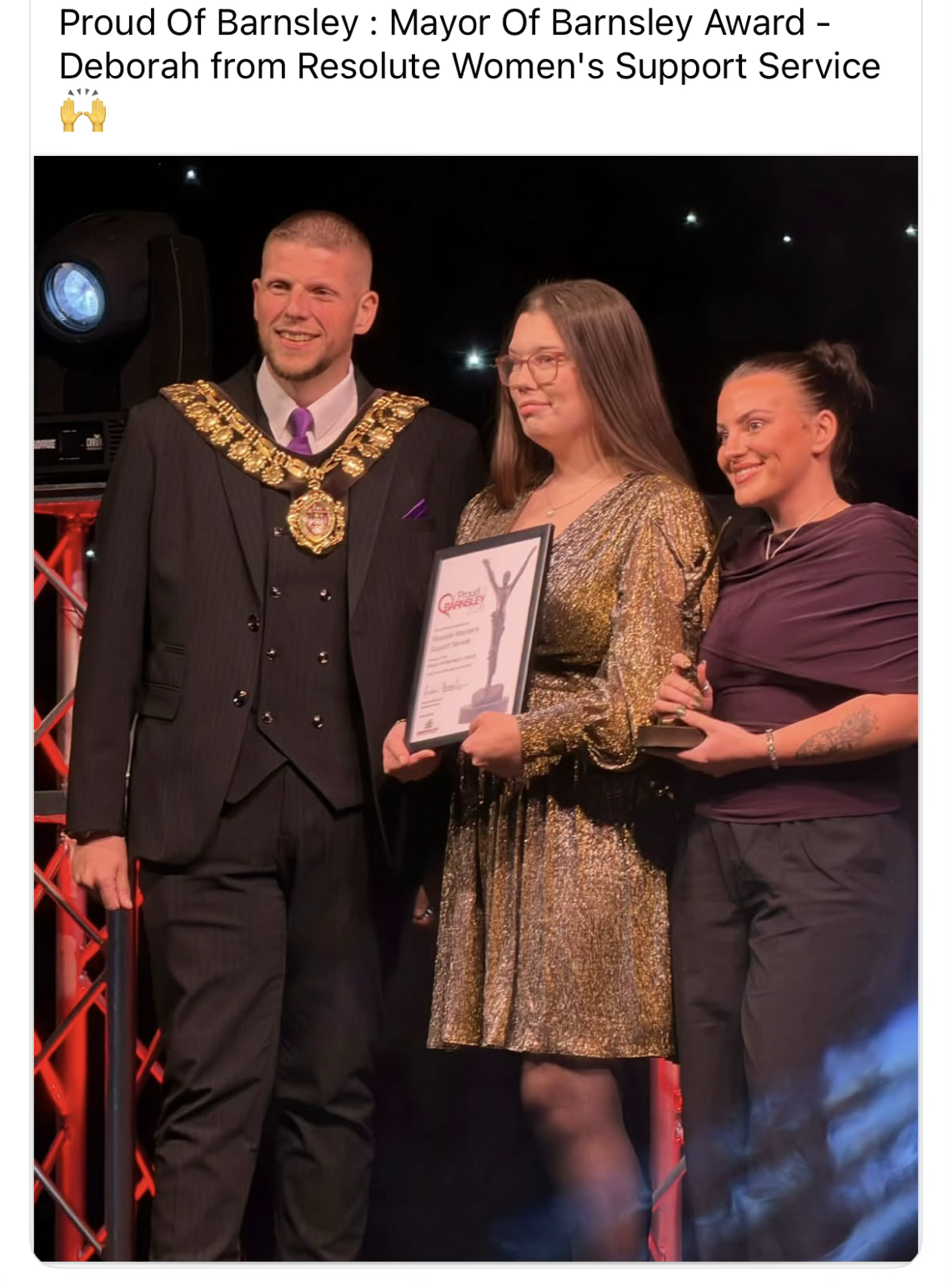
Resolute Women’s Support Services, the Barnsley-based, survivor-led domestic abuse charity founded by Deborah Jones, has received the Mayor of Barnsley’s Award at the Proud of Barnsley Awards 2026, according to Deborah’s public announcement on 20 November. It comes in the same week as the charity’s official recognition in the King’s Award for Voluntary Service 2026 recipients, published on 14 November. The King’s Award recognises outstanding community service by volunteer-led organisations; the mayoral honour is reported here from Deborah’s first-hand public account.

Recognition is more than a headline. It is an opportunity to raise standards in the first response to domestic abuse disclosures, to invest in specialist support and to prepare people in workplaces and communities to act without causing further harm. Resolute’s RISA™ training, launching in January 2027, is one route organisations can explore.
Two awards, one mission: prevention, recovery and dignity
In November 2026, the national King’s Award for Voluntary Service programme recognised 250 groups across the United Kingdom and Crown Dependencies. The official awardees list expressly includes Resolute Women’s Support Services under South Yorkshire. It is a considerable achievement for volunteers who operate in a difficult area of community support, where the results of good work are often private rather than public.
Deborah has now announced a second honour: the Mayor of Barnsley’s Award at the Proud of Barnsley Awards 2026. It brings the recognition back home to the community in which Resolute works. Barnsley Council identifies Councillor Liam Hardcastle as the borough’s mayor for 2026–27. Deborah thanked the Mayor, Barnsley Council, the Barnsley Chronicle and those who nominated and supported Resolute.
At the heart of her message is a belief that women should not have to wait until abuse becomes an emergency before they can access meaningful support. Resolute’s promise—“We were you. We stand with you.”—reflects its survivor-led identity. Lived experience, however, is not a substitute for professional standards: its greatest strength is when it informs compassionate, skilled, safe support, with proper boundaries and access to specialists.
There is also a reason to distinguish carefully between the two awards. The King’s Award is independently listed by the national award scheme. The reported mayoral award and the figure of 32 current volunteers come from Deborah’s public post, rather than an independently obtained awards register. Neither award should be interpreted as certification of a training curriculum or as an assurance that an organisation never faces operational challenges. Their real value is recognition of service and the community’s investment in it.
The people behind Resolute: a celebration of service, not just leadership
Deborah rightly used the announcement to recognise the people who make the charity work. She referred to 32 volunteers, along with trustees, counsellors, therapists, advocates, partners and everyone who has supported Resolute’s development. Her most important tribute, however, was to the women who have entrusted the organisation with their experiences.
The everyday work behind domestic abuse support is not particularly visible. It can mean helping someone make sense of coercive control, offering space to be heard without judgement, identifying a safe place to obtain specialist assistance, or staying alongside a person who has been bounced between services. Some needs can be addressed quickly; others require sustained recovery, practical housing or financial help, healthcare or specialist legal intervention.
JSH Law congratulates Deborah and everyone at Resolute. But there is another aspect of good practice worth defending as organisations celebrate: no survivor is obliged to supply a personal story, photograph or testimony for publicity. The people at the centre of this work deserve confidentiality, informed consent and control over how their experiences are discussed.
Why this recognition should make institutions examine their first response
A survivor does not always arrive at a domestic abuse service and say, “I need help with coercive control.” They may first tell an HR manager that they are frightened of their partner, a receptionist that they cannot receive calls safely, a teacher that their family is being monitored, or a housing officer that money is being withheld. How that disclosure is received may influence whether the person ever seeks further help.
The scale of the problem is substantial. According to the Office for National Statistics’ October 2026 explanation, an estimated 9.6% of people aged 16 or over in England and Wales—about 4.7 million people—experienced domestic abuse in the previous year. The ONS cautioned that methodological changes mean an apparent increase should not yet be treated as proof of an established long-term trend.
In practical terms, organisations need to recognise that domestic abuse can involve patterns of controlling or coercive behaviour, isolation, financial restrictions, threats, intimidation, technology-facilitated monitoring and post-separation abuse. An inappropriate question, a careless email, an ill-judged referral or an assurance of absolute confidentiality can increase danger rather than reduce it.
A good response should be calm, non-judgemental, proportionate and sensitive to safety. It should avoid investigating the survivor as though they were a witness being cross-examined. It should support informed choices, explain any necessary safeguarding escalation and help someone access qualified specialist services. Crucially, it must not displace the survivor’s agency.
This is particularly relevant to families already involved with the courts. The risks posed by domestic abuse may intersect with the welfare of children, child arrangements, housing, employment and financial pressure. The Domestic Abuse Act 2021 recognises children who see, hear or experience the effects of domestic abuse as victims in their own right where the statutory conditions apply. An early disclosure must therefore be handled with both adult and child safeguarding in mind, while recognising the difference between a disclosed allegation, an assessment and an established legal finding.
The legal sector also needs to examine its own habits. A person may arrive overwhelmed, with hundreds of messages and a chronology of incidents. That person does not necessarily need another demand for a perfect narrative. They need to understand what can safely be recorded, who should receive it, the boundaries of legal confidentiality and when specialist domestic abuse support or regulated legal representation is needed. This is why better community training and well-funded specialist services have complementary—not competing—roles.
RISA™ training: from recognition to a safer, more confident first response
One practical way to build on Resolute’s recognition is to ensure that people encountering survivors at work and in the community have appropriate training. Resolute has announced the launch of RISA™ (Resolute Independent Survivor Advocate) training in January 2027. The programme aims to equip a trusted person within an organisation to respond to a disclosure, offer appropriate reassurance and practical continuity, and help someone find specialist assistance.
RISA™ training | January 2027 launch
Would your team know what to do if someone disclosed domestic abuse tomorrow?
Explore the official programme, arrange a conversation with Resolute and register your interest for training designed for workplaces, schools, health services, housing, charities and community organisations.
Learn About RISA Training & Register Interest
Enquiries and registration are handled by Resolute.
What does RISA training cover?
The official Resolute training page describes 12 modules taught across two half-days. Topics include understanding different forms of domestic abuse and coercive control; listening without judgement; trauma-informed responses; safeguarding responsibilities; barriers to seeking help; and connecting people with specialist services. Resolute says learners are assessed and certified, with certification renewed annually.
Resolute describes the training as accredited, but the public programme description reviewed for this article does not identify an independent awarding body or formal qualification framework. Organisations requiring external accreditation for regulatory, commissioning or professional-development purposes should ask Resolute for details before committing.
Why a trained first contact may matter
General awareness sessions can help people recognise warning signs. RISA is framed differently: its purpose is to prepare a named, trusted contact who understands what to do following a disclosure and how to maintain an appropriate connection while more specialised support is engaged. That continuity can help reduce the burden of repeatedly retelling a distressing experience.
| Awareness training | Additional RISA emphasis |
|---|---|
| Recognise signs of abuse | Respond calmly and safely to disclosures |
| Understand abuse and coercive control | Understand trauma-informed practice and safeguarding |
| Know specialist services exist | Help a person access support and provide continuity |
| Participation may be the only outcome | Resolute specifies assessment, certification and annual renewal |
Who should consider RISA?
Resolute lists a wide range of potential participants: police reception and neighbourhood teams; housing staff; schools, nurseries, colleges and universities; GP and other healthcare services; social care; employers and HR teams; retail and transport staff; charities, faith organisations and volunteers. The choice of trainee is as important as the organisation’s sector. Resolute recommends someone people already feel comfortable approaching.
What RISA does not replace
A RISA is not a counsellor or Independent Domestic Violence Adviser (IDVA) by virtue of completing this programme. Resolute expressly says RISAs work alongside specialist services, rather than replacing them. The training should not be presented as authority to carry out specialist risk assessments beyond competence, act as a safeguarding lead where one is legally or professionally required, investigate allegations, give legal advice or provide therapy. The organisation remains responsible for its own safeguarding procedures, confidential information, supervision, escalation and referral pathways.
These distinctions reflect the broader approach in NICE guidance on domestic violence and abuse, which envisages training appropriate to a professional’s role and access to specialist knowledge. Good training strengthens an organisational response; it cannot compensate for an absence of specialist services to refer people to.
Costs, dates and how to enquire
The programme is scheduled to launch in January 2027. Resolute has not published one universal price; its website says charges depend on organisational type, with reduced rates for charities, not-for-profits and small businesses. The published RISA registration-of-interest page is the authoritative place to obtain current delivery, pricing and booking details. You can also contact teamresolute@resolutesupport.uk. Submitting an enquiry is not a confirmed booking.
Five things organisations can do now—not after the next disclosure
- Choose a safe first point of contact. Make the role visible to staff and service users, and arrange cover when the named person is unavailable.
- Prepare for safe conversations. Train staff to listen, avoid judgement, avoid pressuring someone to reveal details and never encourage an unsafe confrontation.
- Explain confidentiality accurately. Do not promise secrecy that cannot be maintained; be clear about secure records and when a safeguarding concern or immediate danger may need escalation.
- Build referrals before they are needed. Identify credible specialist domestic abuse services, emergency assistance, healthcare, housing and child safeguarding routes. Review the information regularly.
- Test the wider culture. Examine policies on leave, safe communications, working arrangements, data protection and management support. Training one person does not discharge the organisation’s wider responsibilities.
Employers can consult Acas for workplace guidance and the Home Office domestic abuse statutory guidance for wider context. Resolute also provides a free Domestic Abuse Readiness Check, which can help an organisation identify practical improvements; it is not a substitute for a full safeguarding or legal compliance audit.
Celebrate Resolute—and make the next step count
There are moments when a charity’s success deserves a simple, heartfelt celebration. This is one of them. From Deborah’s decision to build a survivor-led service to the dedication of its volunteers, Resolute has given Barnsley good reason to be proud. The national and local recognition acknowledges people who are willing to stand beside others when they are most vulnerable.
But recognition should produce action. More informed first responses, better-funded specialist domestic abuse services, safer employment and safeguarding practice, and practical community partnerships would be the most valuable legacy of these awards. An award cannot keep a service financially secure by itself; it can, however, help organisations and supporters understand why that service matters.
RISA™ training: register your organisation’s interest
The January 2027 programme is designed to help trusted people respond safely to domestic abuse disclosures and work alongside specialist services. Whether you represent a school, employer, health provider, charity, housing service or local community organisation, ask Resolute about the training and suitability for your team.
Go to Resolute’s RISA Training Page
Official registration and training enquiries go directly to Resolute.
Read more about the charity in our Resolute resource guide, our King’s Award tribute and our earlier Save The Lotus feature. For current services and opportunities to support Resolute, visit its official website. The current status of earlier fundraising appeals should be checked directly with the charity.
If you or someone you know is experiencing domestic abuse
In immediate danger, call 999. If you cannot speak on a mobile, follow the operator’s instructions and use the Silent Solution procedure when prompted. The free National Domestic Abuse Helpline for women in England is available on 0808 2000 247; Wales’s Live Fear Free helpline can be reached on 0808 80 10 800. If a device or account may be monitored, consider seeking help from a safer phone or computer. Do not post identifiable details about survivors or children in public comments.
For people facing family proceedings, JSH Law can assist with evidence organisation, chronologies, documents and hearing preparation within its non-reserved scope. Book a JSH Law consultation for defined-scope support. Domestic abuse and RISA training enquiries should instead be directed to Resolute and specialist services.
Sources, verification and transparency
- King’s Award for Voluntary Service: 2026 awardees (official list, South Yorkshire).
- Barnsley Council: Mayor for 2026–27.
- Deborah Jones’s public announcement of the Mayor of Barnsley’s Award at Proud of Barnsley 2026, shared with JSH Law on 20 November 2026.
- Resolute: official RISA training details and registration.
- ONS: domestic abuse prevalence and caveats (22 October 2026).
- NICE PH50: responding to domestic violence and abuse.
- Home Office: Domestic Abuse Act 2021 statutory guidance.
Last source check: 20 November 2026. The King’s Award is independently verified; the mayoral award and volunteer headcount are attributed to Deborah Jones’s public account. The photographs were supplied for this article. Training specifications, fees, dates and claimed accreditation are Resolute’s own published descriptions and should be reconfirmed with the provider. The author is involved in RISA training delivery. This article provides general information and commentary, not tailored legal advice. JSH Law Ltd is not an SRA-authorised solicitors’ firm; it provides non-reserved legal information, litigation support and document-preparation assistance.
 © 2026 JSH Law Ltd. All rights reserved.
 © 2026 JSH Law Ltd

Leave a Reply
Want to join the discussion?Feel free to contribute!