A practical guide for litigants in person when appeals are ignored
— explaining procedure, preparation, and process in plain English.
Introduction: when the system stops responding
Judicial Review is not about arguing that a judge “got it wrong”.
It is about what happens when the justice system fails to act lawfully at all — for example, where appeals are ignored, left unlisted indefinitely, or refused without reasons.
For litigants in person, this can feel like hitting a brick wall.
This page explains:
-
When Judicial Review is and is not appropriate
-
How AI can be used safely and lawfully to manage a Judicial Review case
-
The step-by-step process, from identifying the failure to issuing proceedings
-
The limits, risks, and realities — without false hope or technical fluff
This is not legal advice.
It is procedural clarity.
What Judicial Review actually is (and isn’t)
Judicial Review (JR) is a public law remedy. It exists to challenge unlawful decision-making by public bodies, including courts and court administration, where they act:
-
Outside their powers
-
Procedurally unfairly
-
Irrationally (in the strict public-law sense)
-
In breach of a legal duty
Judicial Review is brought in the Administrative Court, part of the High Court.
Linked institutionally to HMCTS, but legally distinct from ordinary appeals.
Judicial Review is not:
-
A second appeal
-
A way to re-argue the facts
-
A shortcut because an appeal looks weak
-
A complaint about judicial reasoning
If an appeal route exists and is functioning, Judicial Review will usually fail.
When Judicial Review may be appropriate for litigants in person
Judicial Review may be viable where:
-
An appeal has been properly lodged but never listed
-
The court refuses to determine an appeal at all
-
No reasons are given where reasons are legally required
-
There is a systemic administrative blockage
-
Procedural fairness has broken down (no hearing, no response, no access)
In short:
👉 when the problem is procedural illegality, not disagreement with the outcome.
When Judicial Review is not the right route
Judicial Review is not appropriate where:
-
You disagree with the judge’s findings
-
The judge misunderstood the evidence
-
The law was applied badly but appeal routes remain open
-
You are late and cannot justify delay
-
You are trying to bypass an appeal process
This matters because misusing Judicial Review leads to fast refusal — often with costs risk.
Where AI fits in — and where it does not
AI does not decide cases.
AI does not replace legal judgment.
AI does not invent evidence or law.
Used properly, AI is a case-management and clarity tool.
AI can help litigants in person to:
-
Organise complex timelines
-
Structure evidence chronologically
-
Identify procedural failures
-
Track silence, delay, and inaction
-
Draft clear, neutral documents
-
Manage deadlines and compliance
-
Reduce overwhelm and error
AI must never be used to:
-
Fabricate facts or documents
-
Invent legal authorities
-
File anything unverified
-
Mislead the court
You remain responsible for everything filed.
Key takeaways (Litigants in Person)
- Judicial Review is not an appeal. It challenges the lawfulness of decision-making, not whether a judge “got it wrong”.
- It is a last-resort route. If another remedy exists (appeal, set aside, reconsideration, complaint, etc.), JR may be refused.
- Time limits are tight. Delay can be fatal — you must act promptly and within the relevant deadline.
- Permission is a gateway stage. Most cases fail here unless the public-law error is clear and properly evidenced.
- AI can help you work smarter — not shortcut the law. Use it to organise facts, build timelines, spot public-law issues, and draft documents, but always verify accuracy and comply with court rules.
- Focus on process and fairness. The strongest JR cases usually show unlawful procedure, irrationality, or unfairness — not just disagreement with the outcome.
Important: This information is general guidance only. It is not legal advice and may not apply to your situation.
The AI-assisted Judicial Review pathway (high level)
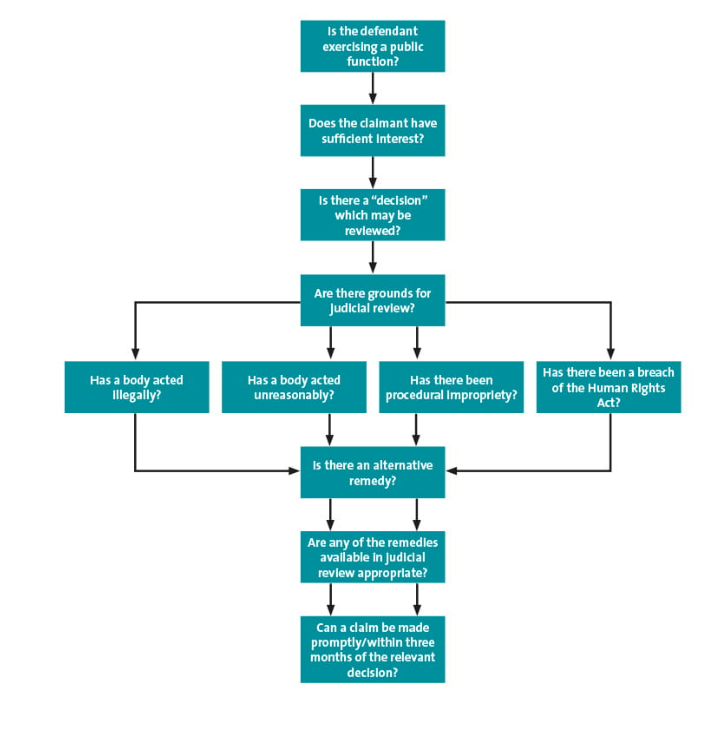
Step 1: Identify the public-law failure
AI helps convert scattered events into a clean chronology and isolate:
-
The decision (or failure to decide)
-
Who made it
-
When
-
Why it may be unlawful
Step 2: Evidence organisation
AI assists with:
-
OCR of emails, letters, orders
-
Chronological indexing
-
Identifying unanswered correspondence
-
Cross-referencing facts to exhibits
Step 3: Pre-Action Protocol (PAP)
Before issuing JR, you must send a formal Pre-Action Protocol letter.
AI helps:
-
Structure the letter
-
Keep tone neutral and judicial
-
Ensure legal elements are present
-
Avoid emotional or argumentative language
Many cases resolve here.
Step 4: Issuing Judicial Review (if necessary)
AI supports:
-
Drafting structured grounds
-
Ensuring procedural compliance
-
Managing the strict 3-month time limit
-
Preparing bundles for permission stage
The court will first decide permission. Most claims fail here — which is why structure and discipline matter.
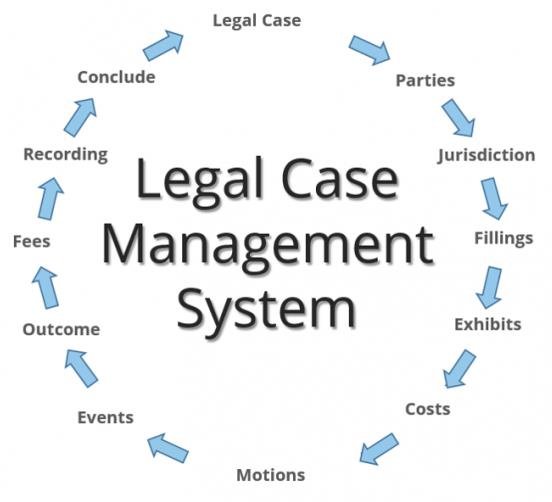
Risks and realities (please read this)
Judicial Review is:
-
Time-critical
-
Procedurally strict
-
Often refused at permission stage
-
Emotionally demanding
-
Potentially costly
AI helps reduce avoidable mistakes, not structural risk.
It will not turn a weak case into a strong one — but it will help you see the truth of your case sooner.
How this resource is structured
This page is the overview.
Below is a series of detailed blog posts that walk through the process step by step, written specifically for litigants in person using AI carefully, ethically, and realistically.
The Judicial Review & AI blog series (step-by-step)
- Judicial Review: when it is — and isn’t — the right route
The boring but essential foundations. - Appeals ignored by judges: identifying a true public-law failure
Silence, delay, and refusal — what legally matters. - Building a Judicial Review timeline using AI (without losing accuracy)
Chronology is everything. - Organising evidence for Judicial Review with AI
What the court expects — and what it won’t tolerate. - Drafting a Pre-Action Protocol letter with AI support
How pressure is applied before proceedings. - From PAP to permission: structuring Judicial Review grounds
Avoiding merits-based traps. - Managing deadlines, bundles, and compliance using AI
Procedural discipline for litigants in person. - Permission refused: analysing next steps with AI
When to renew — and when to stop.
Final note
Judicial Review is not about fighting harder.
It is about challenging unlawfulness with precision.
AI, used properly, gives litigants in person:
- Clarity instead of chaos
- Structure instead of overwhelm
- Control instead of panic
That is what this resource exists to support.