Content addressing practical support provided by McKenzie Friends to litigants in person during family court proceedings.

Posts

The “Vibe Lawyer” Moment: AI, Litigants in Person, and the Coming Shockwave for the Family Courts

Litigants in person are being called “vibe lawyers” for using AI to draft complaints and court documents. But behind the headlines lies a harder truth: people are turning to artificial intelligence because they cannot afford representation in an increasingly complex and overstretched justice system. Judges are right to be concerned about fake citations and procedural errors. Yet dismissing AI use outright misses the deeper issue — access to justice has been under strain for years, and technology is now filling the gap.

The “Vibe Lawyer” Moment: AI, Litigants in Person, and the Coming Shockwave for the Family Courts

By Jessica Susan Hill | JSH Law

Key Takeaways (Read This First)

  • AI is already changing litigation behaviour — the judiciary is explicitly preparing for a surge in AI-generated claims across civil, family and tribunals.
  • The risk isn’t “AI” — it’s unverified AI: fabricated authorities and confidently wrong submissions waste court time and damage credibility.
  • LiPs are not “wreaking havoc” for fun. Many are doing what they must to participate in a system they cannot afford to navigate with representation.
  • The solution is guardrails, not barriers: verification standards, procedural literacy, and responsible workflows that help the court as well as the litigant.
  • Family proceedings are high-stakes. Used properly, AI can improve clarity and evidence organisation; used badly, it can derail safeguarding analysis and case management.

1. Why this matters now

“Vibe lawyers” is a catchy label, but it risks obscuring a far more serious reality: litigants in person are using AI tools to draft complaints, defences, witness statements and skeleton arguments at scale — and the courts are already feeling the impact. The phenomenon is now so visible that Sir Geoffrey Vos (Master of the Rolls, Head of Civil Justice) has explicitly warned that the judiciary must prepare for an “AI revolution” that may vastly increase the number of civil, family and tribunal claims the justice system must manage. His speech is worth reading in full. :contentReference[oaicite:0]{index=0}

Let’s be direct: the justice system in England and Wales is already stretched. Many court users already experience the process as opaque, intimidating and unaffordable. That is not a personal failing of litigants — it is a structural reality. AI is entering a pressure-cooker and magnifying what was already there: information asymmetry, procedural complexity, delay and the gulf between a represented party and an unrepresented one.

So, yes — judges and practitioners are right to be concerned about inaccurate AI-generated material clogging lists and adding burden to judges who are already firefighting. But it is also true that, in the medium term, AI could become one of the most significant access-to-justice tools we have ever seen. Both truths can exist at once.

2. The judiciary is not guessing — it is responding to lived reality

We are past the point of theoretical debate. The judiciary has been issuing speeches and guidance precisely because AI use is now operationally relevant. Beyond speeches, the Judicial Office has published updated guidance addressing risks including confidentiality, bias and “hallucinations” — where AI produces plausible but incorrect information. The October 2025 judicial guidance explicitly flags the danger of fictitious citations and misleading legal content. :contentReference[oaicite:1]{index=1}

Sir Geoffrey Vos has also repeatedly articulated a simple “core rules” approach: understand what the tool is doing, do not upload private/confidential data into public tools, and check the output before using it for any purpose. He set that out again in October 2025. :contentReference[oaicite:2]{index=2}

This is not anti-technology. It is the judiciary doing what it should do: protecting the integrity of the process while acknowledging that new tools are changing behaviour.

3. The real problem: “confidently wrong” submissions

Generative AI tools can draft impressive text quickly. But they do not “know” the law. They predict language. That difference matters profoundly in litigation. A well-written paragraph that contains an invented case, a misquoted statute or an inaccurate procedural route is not merely unhelpful — it can actively undermine a party’s credibility and force the court to spend additional time cleaning up the mess.

The legal profession has already seen what happens when verification fails. In June 2025, the Divisional Court (Dame Victoria Sharp P and Johnson J) dealt with the now widely-reported “fake authorities” problem in Ayinde v London Borough of Haringey and Al-Haroun v Qatar National Bank, where false citations and inaccurate quotations were placed before the court, with suspected or admitted use of AI tools without proper checks. The judgment is publicly available and makes required reading for anyone tempted to treat AI output as “good enough”. :contentReference[oaicite:3]{index=3}

Importantly, that judgment is aimed at lawyers — because professionals are held to professional standards. But the underlying point applies to everyone: accuracy is non-negotiable in court work. You can be passionate, traumatised, exhausted, and still required to file documents that are factually and legally sound.

4. Why litigants in person are using AI (and why the “money pit” narrative is wrong)

Many litigants in person feel they are treated as an administrative inconvenience — or worse, as a “cost centre” rather than a rights-holder. I understand why that perception forms. The system can be brutal: forms, deadlines, practice directions, directions hearings, orders you must interpret and comply with under stress. In private law children proceedings, you may be trying to protect a child, manage safeguarding concerns, and preserve your own mental stability while preparing documents that lawyers train for years to produce.

For a growing number of people, AI has become the first accessible “translator” of legal language. It can explain terminology, propose a structure for a statement, generate headings for a skeleton argument, and help a person who feels overwhelmed take a first step. That is why it feels like a shake-up. It is not because LiPs are trying to harm the system. It is because they are trying to participate in it.

And here is the hard truth: if access to representation continues to shrink in practice — whether by cost, availability, or scope — more people will use AI. That is not something a press headline can reverse. It is a reality the system must incorporate.

5. Family court is the pressure point

Family proceedings are where AI misuse can become most dangerous, because the stakes are often immediate and human: the child’s living arrangements, contact, safeguarding, allegations of domestic abuse, coercive control, substance misuse, mental health, relocation, schooling — the list is endless.

Private law children cases are ultimately governed by the welfare principle in the Children Act 1989, section 1. The court’s job is not to reward the best writer. It is to determine what best meets the child’s welfare needs. But poor drafting can still distort the court’s understanding of what matters. :contentReference[oaicite:4]{index=4}

And family procedure is its own ecosystem. The Family Procedure Rules and associated Practice Directions are not optional reading; they are the architecture of how your case moves through the system. PD12J (domestic abuse and harm) is particularly critical where abuse is alleged, because it shapes fact-finding decisions, safeguarding analysis and protective measures. :contentReference[oaicite:5]{index=5}

Where AI is used badly in family court, I commonly see the same patterns (and judges see them too):

  • Misstating legal tests (e.g., confusing civil and criminal standards, or quoting the wrong threshold framework).
  • Over-inclusion: 30-page narratives where only a small percentage is evidentially relevant.
  • Inflammatory language that escalates conflict rather than centring the child.
  • Procedural fantasy: “applications” and “orders” that do not exist or are not procedurally available.
  • Fake authority: citations that sound real but are not verifiable.

Those problems do not just “waste time”. They can change outcomes. They can harden judicial perceptions. They can reduce a litigant’s credibility. And in safeguarding contexts, credibility matters.

6. But here is the opportunity: structured AI use can help the court

Now for the other side of the ledger, which the “vibe lawyer” framing often ignores.

Used properly, AI can reduce noise and increase clarity. It can help an overwhelmed litigant present their case in a way that judges can actually work with. It can support:

  • Chronology building (dates, events, orders, and key turning points).
  • Document organisation (indexes, exhibit lists, consistent naming).
  • Issue framing (what is the dispute actually about?).
  • Drafting clarity (headings, structure, neutral tone).
  • Summarising communications (WhatsApp/SMS/email) into court-usable bundles.

Those are not cosmetic benefits. They are directly aligned with what the court needs: efficient case management, focused evidence, and parties who can articulate relevant issues.

In other words: the best version of AI in litigation is not “AI replaces lawyers.” It is “AI helps people present usable material so the court can do its job.” That is the access-to-justice promise.

7. The non-negotiable: verification

The line between empowerment and chaos is verification.

Professional regulators have been clear that AI cannot be trusted to judge its own accuracy. The SRA has warned about hallucinations and the risk of plausible but incorrect outputs, including non-existent cases. :contentReference[oaicite:6]{index=6}

For court users, this translates into a simple operating standard:

  • If you cite it, you must be able to prove it exists (case name, neutral citation, and a reliable source).
  • If you quote a statute, check it on legislation.gov.uk (not in an AI chat box).
  • If you refer to rules or practice directions, check the official source (FPR/CPR/PD pages).
  • If it sounds “too perfect”, slow down — AI is very good at confidence, not always good at truth.

After the June 2025 “fake authorities” judgment, the direction of travel is obvious: courts will increasingly treat fabricated or careless citations as serious misconduct where professionals are involved, and as a significant credibility issue where litigants are involved. :contentReference[oaicite:7]{index=7}

8. A real-world cautionary tale: Mata v Avianca

Even outside the UK, courts have reacted strongly when lawyers filed AI-generated fake authorities. The widely-cited US case Mata v Avianca resulted in sanctions after fabricated case citations were submitted. It is not “UK law”, but it is a stark illustration of what happens when verification collapses. :contentReference[oaicite:8]{index=8}

Why mention it here? Because the underlying professional lesson travels: courts do not have time for invented law, and they should not have to spend scarce judicial time correcting avoidable errors.

9. What this means for litigants in person

What This Means for LiPs (Practical Guidance)

1) Use AI to organise, not to “source” law. AI is excellent for structure, headings, summaries, chronologies and drafting tone. It is unreliable as a sole source of legal authority.

2) Keep it child-focused (family cases). Remove insult, speculation and “character assassination”. Judges need facts, evidence, and impact on the child.

3) Treat every AI output as a draft. You are responsible for what you file. Read it. Edit it. Make sure it matches your evidence.

4) Verify every citation. If you cannot open the case or locate it on a reputable database, do not rely on it.

5) Don’t upload confidential material into public AI tools. Safeguarding details and private communications should be handled carefully. Follow the Judicial Office warnings on confidentiality. :contentReference[oaicite:9]{index=9}

6) Aim for shorter, clearer documents. Judges do not reward length. They reward relevance. A focused 6–10 pages often lands better than a sprawling 30.

7) If you’re stuck, get human oversight. A short consultation to sanity-check structure, compliance with directions, and relevance can prevent months of damage.

10. What this means for the justice system: guardrails, not barriers

If the system responds to AI by “closing ranks” and shaming litigants, it will fail. People will still use AI — but they will do so in worse, more chaotic ways. A better approach is to develop common standards that increase quality and reduce burden.

In practice, that means three things.

A) Judicial clarity

Courts and judiciary leadership can help by setting clear expectations about what is acceptable in written submissions — particularly around citation verification and disclosure of AI use where relevant. The Judicial Office guidance is already laying the foundation here. :contentReference[oaicite:10]{index=10}

B) Procedural literacy for court users

Most problems I see are not “bad people”. They are overwhelmed people. The system needs short, accessible, official pathways explaining (for example) what a directions hearing is, how to comply with an order, how to prepare a bundle, and how to draft a witness statement that is relevant rather than reactive.

C) Responsible support models

This is where the best “shake up” lies: hybrid support that uses AI to accelerate organisation and drafting, with human oversight to ensure compliance, accuracy, relevance and tone. That model benefits everyone: the litigant, the other party, and the court.

11. A note on professional standards (and why it still matters to LiPs)

When professionals file inaccurate material, the consequences can be severe, including regulatory referral. That was made explicit in the June 2025 judgment dealing with false citations. :contentReference[oaicite:11]{index=11}

LiPs are not held to the same professional code — but the practical consequences can still be harsh: credibility erosion, judicial impatience, adverse costs risks in some contexts, and (most importantly) a judge simply not trusting what they are reading. In family court, loss of credibility can be profoundly damaging.

This is why “AI literacy” is not an academic luxury. It is a procedural survival skill.

12. Conclusion: the future is responsible AI, not no AI

AI is in the courtroom ecosystem now. The judiciary is preparing for it. Regulators are warning about it. The profession is adapting to it. The question is not whether litigants in person will use AI — they already are.

The question is whether we will build a culture of responsible use.

Used recklessly, AI produces noise: invented authorities, misunderstood legal tests, and sprawling submissions that burden the court. Used properly, it can produce clarity: structured chronologies, coherent statements, and focused issues that help the court get to the real substance of the case.

If we care about access to justice, we cannot treat litigants in person as an administrative irritation. We should treat them as court users with rights and responsibilities — and we should equip them with tools and guardrails that allow them to participate meaningfully.

That is the “AI revolution” that matters: not chaos, but capability.


Useful Official Resources

If you want structured, responsible help using AI to prepare court documents (without risking accuracy or credibility), you can book a short consultation below:


Regulatory & Editorial Notice (JSH Law): This article is published for general information and public-interest commentary only. It does not constitute legal advice and should not be relied upon as such. Where this article refers to third-party sources (including court judgments, guidance, regulator publications, media reporting, or external organisations), those references are provided for context and convenience; JSH Law does not control or endorse third-party content and cannot guarantee its accuracy, completeness, or continued availability. Court users should always consult the original primary sources (including the Family Procedure Rules, Practice Directions, and judgments) and obtain appropriate professional advice for their specific circumstances.


“Is Any Thing Too Hard for the Lord?” — A Come, Follow Me Reflection for Litigants in Person in the Family Court

“Is Any Thing Too Hard for the Lord?” — A Come, Follow Me Reflection for Litigants in Person in the Family Court

By Jessica Susan Hill, Legal Consultant & McKenzie Friend (JSH Law Ltd)

Every Sunday, after I’ve been to church, I want to write something that’s both personal and practical: a long-form reflection that draws on my Come, Follow Me lesson in The Church of Jesus Christ of Latter-day Saints, and turns it into grounded encouragement for litigants in person navigating the family court. If you are in proceedings right now—especially where there is high conflict, safeguarding concern, or domestic abuse dynamics—this is for you.

Today’s lesson is Genesis 18–23, titled “Is Any Thing Too Hard for the Lord?” (official Come, Follow Me lesson page). It’s a sequence of stories about promise, delay, rescue, consequence, testing, and (interestingly, for a legal mind) the first formal land purchase recorded for Abraham’s family.

Key takeaways for Litigants in Person (LiPs)

  • Do not let “delay” trick you into despair. In Genesis, waiting is not absence—it is formation. Court delay can be brutal; build a system to survive it.
  • Be an advocate like Abraham. Calm, structured, principled advocacy wins credibility. Don’t rant. Don’t spiral. Build your case like a professional.
  • Get out—and stay out—of “Sodom” dynamics. If you’re leaving coercive control or chronic conflict, don’t look back emotionally. Protect your nervous system and your evidence.
  • God provides “means” in motion. If you take the next right step, you’ll often find the next tool, the next contact, the next document, the next insight (see 1 Nephi 17:3).
  • Your weakness is not disqualification. It can become the exact channel for strength (Ether 12:27)—including learning court process, building a bundle, and holding boundaries.
  • Anchor to purpose. You’re not doing this for drama. You’re doing this for safety, stability, and your child’s welfare. Keep that mission statement (Moses 1:39).

Why I’m writing this (and why faith belongs in a court-user toolkit)

Let me be plain: family court can feel like wilderness. It can be confusing, exhausting, and sometimes psychologically destabilising—particularly if you are facing a controlling, manipulative, or hostile other party, or if you’re trying to communicate safeguarding concerns clearly without being dismissed as “emotional” or “difficult.”

In the UK, a significant number of parents and parties appear without representation. Some do so by choice; many do so because they cannot access or afford legal advice. The system expects you to comply with process, deadlines, and evidence standards whether or not you have a lawyer. That is the reality.

Faith—properly understood—doesn’t replace competence. It fuels it. It gives meaning to disciplined action. It helps you hold your nerve, keep your integrity, and make decisions that protect your child long-term rather than “winning” the next argument.

The Church lesson this week is not “soft.” Genesis 18–23 contains joy, horror, fear, grief, and law-like transactions. It speaks directly to anyone trying to remain spiritually grounded while navigating a world that can be unjust, corrupt, or unsafe.

Genesis 18–23: a quick narrative map (and why it matters to LiPs)

The Come, Follow Me reading covers:

  1. Genesis 18 — Sarah is promised a child; Abraham intercedes for Sodom.
  2. Genesis 19 — Sodom falls; Lot’s family flees; Lot’s wife looks back.
  3. Genesis 20 — Abraham’s fear-driven misstep; God intervenes to protect the covenant promise.
  4. Genesis 21 — Isaac is born; conflict and separation happen; a treaty is made.
  5. Genesis 22 — Abraham is tested with Isaac (the “Akedah”).
  6. Genesis 23 — Sarah dies; Abraham negotiates and purchases land formally.

If you’re a litigant in person, you can read that and think: “What has this got to do with my case?” Plenty. This is a blueprint for how humans behave under pressure—and what it looks like to keep moving forward without being destroyed by the environment.

For additional Latter-day Saint commentary on this week’s reading, you may find this helpful: Church News: “What have Church leaders said about Genesis 18–23?”.

1) “Is any thing too hard for the Lord?” — when your case feels impossible

In Genesis 18, Sarah laughs at the idea of pregnancy in old age. It’s not a cartoonish laugh; it’s the laughter of someone whose lived experience tells her that the promise is implausible. And then comes the question: “Is any thing too hard for the Lord?”

In the New Testament, the angel says to Mary: “For with God nothing shall be impossible.” (Luke 1:37). In my own faith tradition, the Book of Mormon offers a parallel logic: God provides means to accomplish what He commands (1 Nephi 17:3).

For a litigant in person, “impossible” often means:

  • “I can’t afford representation.”
  • “I can’t do the paperwork.”
  • “I can’t face him/her in court.”
  • “No one will believe me.”
  • “The system is too slow; my child needs safety now.”

Here is the practical reframe: you may not be able to control the other party, the listing delays, or the court’s resourcing. But you can build a credible, organised, evidence-led case file and present it in a way that the court can act on. That is not “wishful thinking.” That is disciplined stewardship.

If you are applying for a child arrangements order (or related orders under section 8 Children Act 1989), the official application route and forms are here: Form C100 (GOV.UK) and the broader GOV.UK overview here: Making child arrangements if you divorce or separate.

What I want you to take from Genesis 18 is not “pretend it’s fine.” It’s this: God’s question challenges the assumption that your present limitation sets the ceiling for your future. It doesn’t.

2) Abraham’s intercession: what principled advocacy looks like

Abraham doesn’t scream at God about Sodom. He reasons. He appeals to justice. He negotiates down—50, 45, 40, 30, 20, 10—with humility but also firmness. He models something litigants in person desperately need: structured advocacy.

In family court, “structured advocacy” means:

  • Clarity: what orders are you seeking and why?
  • Relevance: what facts directly support the order you want?
  • Proportionality: are you asking for the minimum necessary to protect the child?
  • Evidence discipline: can you prove what you’re saying with dated documents, screenshots, logs, reports, or admissions?
  • Tone control: your credibility rises when you remain calm and factual.

This is not about being “nice.” It is about being effective.

One of the most important judicial frameworks in domestic abuse-related private law children proceedings is Practice Direction 12J (PD12J). PD12J sets out what the court must do where domestic abuse is alleged or admitted, including ensuring that any child arrangements order protects the safety and wellbeing of the child and the parent and does not expose them to further risk. For a plain-English explainer, this UK Parliament briefing is also useful: House of Commons Library: Child arrangements and domestic abuse.

Abraham’s “intercession” reminds me of something I tell clients constantly: you don’t win by being louder; you win by being clearer.

3) Sodom, corruption, and the psychology of “looking back”

Genesis 19 is uncomfortable reading. It is meant to be. It depicts a society with collapsed moral boundaries and a predatory, violent culture. Lot’s family is told to leave urgently. Lot’s wife looks back and becomes “a pillar of salt.”

In the context of modern family court cases, I often see a parallel dynamic—not because “the court is Sodom,” but because many litigants in person are trying to exit:

  • coercive control,
  • chronic conflict patterns,
  • high-conflict co-parenting dynamics,
  • or a wider environment of manipulation, intimidation, and narrative warfare.

The “look back” in real life is often psychological. It can look like:

  • re-reading abusive messages for hours and spiralling,
  • seeking closure from a person who thrives on withholding it,
  • breaking no-contact boundaries “just this once,”
  • arguing in circles to force an apology that will never come,
  • or clinging to the idea that “if I explain it differently, they’ll finally understand.”

If you are leaving a toxic environment, the first stage is physical safety; the second is emotional detachment. Court proceedings can accidentally keep you emotionally tethered because you must keep engaging. That is why you need a system.

A practical “don’t look back” protocol for LiPs

  • Communication boundaries: keep everything in writing and keep it child-focused. No essays. No emotional bait.
  • Evidence hygiene: screenshot, date-stamp, store, and then stop re-reading.
  • Nervous system protection: limit exposure windows. You don’t need to re-traumatise yourself to “prepare.”
  • External support: speak to a grounded friend, therapist, advocate, or support service—someone who brings you back to reality.

If you’re in private law proceedings, Cafcass explains the process and what to expect here: Cafcass: what happens in private law proceedings, and their overview of involvement (including safeguarding letters) is here: Cafcass: overview of our involvement.

4) Delay is not denial: Sarah, Abraham, and the long middle

One of the cruelest features of family court is time. Delay can feel like injustice, especially where there are safeguarding concerns, where children are distressed, or where one party uses process as a weapon.

Abraham and Sarah’s story is, in part, about the long middle: the space between promise and fulfilment. If you are a litigant in person, you may be living in a long middle right now:

  • between separation and stability,
  • between disclosure and findings,
  • between the first hearing and a final hearing,
  • between reporting harm and seeing meaningful safeguards.

Here is the hard truth: waiting will not become easier just because you “accept” it. Waiting becomes survivable when you build structure. A faith-based approach is not passive; it is disciplined.

A “wilderness routine” for court users

  • One admin block per week: evidence filing, chronology updates, statement drafting, or document requests.
  • One wellbeing anchor per day: prayer, scripture, exercise, journaling, a walk—something that brings you back to centre.
  • One support touchpoint: someone who reminds you who you are when the other party tries to rewrite you.
  • One “next right step” list: court is overwhelming when you treat it as one giant problem. Break it down.

If you are struggling to manage forms and process, two practical support resources worth knowing: Support Through Court (a charity helping people who face civil and family courts alone), and AdviceNow’s step-by-step guides: AdviceNow: child arrangements.

5) “Weak things become strong” — applying Ether 12:27 to court survival

The Book of Mormon verse that has carried many people through impossible seasons is Ether 12:27: weakness is given so that we may be humble, and if we come unto Christ, weak things can become strong.

In practice, for litigants in person, “weakness” may be:

  • lack of legal knowledge,
  • fear of cross-examination or confrontation,
  • trauma symptoms and overwhelm,
  • financial insecurity,
  • or the feeling of being “outmatched.”

The transformation often comes through very ordinary means:

  • learning the court vocabulary,
  • building a chronology,
  • identifying the key issues,
  • preparing a concise position statement,
  • and showing up consistently with integrity.

That is how weakness becomes strength: not by magic, but by grace meeting effort.

6) “Provide means” — 1 Nephi 17:3 and the logic of practical faith

1 Nephi 17:3 teaches a pattern I have seen repeatedly in real life: when God commands, He also provides “means” to accomplish it—often discovered after you begin.

For a litigant in person, the “means” may look like:

  • a template for a chronology,
  • a support service that helps you complete forms,
  • clarity from reading the official process guidance,
  • finding the right legal framework (e.g., PD12J) to structure safeguarding concerns,
  • or simply learning how to present your evidence in a coherent, restrained way.

Sometimes the “means” is financial too. If the application fee is a barrier, look at Help with Fees: Get help with court and tribunal fees and the EX160 guidance: Apply for help with fees (EX160).

Faith, in a court context, is not “hoping it all works out.” Faith is: taking the next right step even while you are scared.

7) Abraham’s “test” (Genesis 22): surrender, not self-destruction

Genesis 22 is one of the most confronting passages in scripture. It depicts Abraham’s willingness to obey God in relation to Isaac, the promised son. I won’t attempt to flatten this into a simplistic moral.

But there is a relevant principle for litigants in person: there is a difference between surrender and self-destruction.

In family court, people often destroy themselves trying to:

  • control the other party,
  • force vindication from a system that moves slowly,
  • or “win” every minor point.

Surrender is not giving up your child or tolerating harm. Surrender is releasing what you cannot control so that you can focus on what you can: your evidence, your conduct, your child’s needs, your boundaries, and your long-term stability.

This is where Moses 1:39 helps as a mission statement: God’s work and glory is “to bring to pass the immortality and eternal life” of His children. Translated into court-user language: the purpose is not to “defeat” the other party; it is to protect welfare, build stability, and keep your soul intact.

8) Genesis 23 and the power of paperwork: the first “land deal”

Genesis 23 can look like an anticlimax after the drama of earlier chapters. Sarah dies; Abraham grieves; then he negotiates and purchases the cave of Machpelah as a burial place. But notice the detail: this is formal, witnessed, priced, and legally secured.

That matters.

If you are a litigant in person, you are living in a world where: what is documented is what is real. You can have truth in your heart and still fail if you cannot evidence it. The court does not decide cases on vibes. It decides on evidence, credibility, welfare analysis, and statutory/legal frameworks.

What Genesis 23 teaches the LiP (in plain English)

  • Grief and administration can co-exist: you may be in pain and still need to do the forms.
  • Do it properly: accuracy, dates, copies, and receipts matter.
  • Secure what you can: focus on orders and safeguards that are enforceable and measurable.
  • Think long-term: Abraham was anchoring a future, not just reacting to a moment.

For practical process guidance on applications involving children, GOV.UK also provides a booklet-style explainer here: Making an application: children and the family courts.

A Litigant-in-Person “faith + strategy” checklist for the coming week

If you are reading this after a difficult Sunday—tired, anxious, and carrying the weight of a case—here is a practical checklist you can use this week. (Faith is not a substitute for action. Faith fuels action.)

  1. Define your core aim in one sentence: “I am seeking arrangements that protect X and meet Y need.” Keep it welfare-focused.
  2. Update your chronology: 10–20 lines, dates only, facts only. No commentary.
  3. Create an “evidence index”: label documents clearly, keep them in date order, avoid duplication.
  4. Read PD12J if domestic abuse is relevant: know the framework the court is meant to apply.
  5. Prepare for the first hearing: review Cafcass guidance so you know what to expect.
  6. Reduce reactive communication: shorter, calmer messages. Child-focused. No bait-taking.
  7. Anchor daily: one spiritual practice, one physical practice, one administrative step.

If you need form-filling and procedural support, consider: Support Through Court: how they help and AdviceNow’s practical guides (start here): AdviceNow: apply for a child arrangements order without a lawyer.

Work with me: 15-minute consultation

If you want a calm, strategic second pair of eyes on your case—especially around evidence structure, court-ready positioning, safeguarding framing, or preparing for hearings—you can book a 15-minute consultation below.

Alternatively, you can book via the contact page: https://jshlaw.co.uk/contact/

Final reflection: hope that doesn’t ignore reality

I am proud to be a member of The Church of Jesus Christ of Latter-day Saints. I don’t say that as a marketing device; I say it because my faith teaches me to treat people as eternal beings, and to take suffering seriously—not sentimentally.

Genesis 18–23 is not a fairy tale. It is a record of real human complexity: delay, fear, rescue, consequence, testing, grief, and legal reality. And the thread through it all is this: God is able to do what you cannot.

For the litigant in person: you may feel like you are walking through a wilderness you didn’t choose. But you can still become disciplined, credible, and strong. You can still tell the truth with restraint. You can still build a case file that the court can understand. You can still protect your child’s welfare and your own integrity.

“Is any thing too hard for the Lord?” does not mean everything will be easy. It means you are not limited to what you can currently see—and you are not alone in the work.


Exterior of York Magistrates’ Court used to illustrate a blog on school attendance orders and home education prosecution.

When Home Education Becomes a Criminal Prosecution

What Litigants in Person Need to Know About School Attendance Orders, Social Care Overreach, and Magistrates’ Court Proceedings

Across England and Wales, a growing number of parents are discovering — often too late — that a dispute about elective home education (EHE) can escalate into criminal prosecution.

Not because their child is unsafe.
Not because education is unsuitable.
But because process has gone wrong, power has been misused, or parents have been pressured into compliance without understanding their rights.

This article is written for Litigants in Person navigating the intersection of:

  • home education,
  • Children’s Social Care involvement,
  • School Attendance Orders (SAOs),
  • and Magistrates’ Court prosecutions under the Education Act 1996.

It is based on a real case (anonymised), and on patterns I see repeatedly in practice.

If you are facing — or fear you may face — similar action, this guide is for you.


1. The Scenario (Anonymised but Real)

A parent lawfully elects to home educate their child under section 7 of the Education Act 1996.

The child has anxiety. School is harming their wellbeing.
The parent has previously home educated successfully.

Children’s Social Care are already involved — not because of educational neglect, but because of domestic abuse by the other parent.

During a meeting, the parent raises home education as a safeguarding-led decision.

From that moment:

  • Professionals express opposition.
  • Education officers are involved prematurely.
  • The parent is told (incorrectly) that home education is not allowed due to child protection involvement.
  • A proposed Bill — not law — is repeatedly relied upon.
  • A positive EHE visit is later contradicted by a negative decision with no clear reasons.
  • A School Attendance Order is issued.
  • Threats of prosecution follow.
  • Eventually, a Single Justice Procedure Notice arrives.

The parent is now facing criminal charges.

This is not rare. And it is not inevitable.


2. The Legal Foundation: Your Right to Home Educate

Section 7, Education Act 1996

Parents must ensure their child receives an education that is:

  • efficient, and
  • suitable,
  • to the child’s age, ability, aptitude, and any special educational needs.

Crucially:

Education does not have to be provided at school.

There is no statutory requirement for:

  • a curriculum,
  • Ofsted-style inspection,
  • or adherence to school norms.

Local Authorities do not approve home education. They may only intervene if they have reason to believe education is unsuitable.


3. What a School Attendance Order (SAO) Actually Is

An SAO (sections 437–443 Education Act 1996) is not automatic.

Before issuing one, the Local Authority must:

  1. Have reasonable grounds to believe education is unsuitable.
  2. Serve a notice requiring information.
  3. Consider the parent’s response fairly and lawfully.
  4. Only then issue an SAO naming a school.

An SAO is a last resort, not a default enforcement tool.

If the LA:

  • relies on irrelevant considerations,
  • ignores positive evidence,
  • fails to give reasons,
  • or predetermines the outcome,

the SAO itself may be unlawful.


4. The Common Trap: “Just Fill in the Forms”

When an SAO is not complied with, councils often move straight to prosecution under section 443.

Parents receive a Single Justice Procedure Notice (SJPN) telling them:

  • they’ve been charged,
  • they have 21 days to plead,
  • and they can get a “discount” if they plead guilty.

This is where many parents make a fatal mistake.

A guilty plea:

  • can be decided on the papers,
  • leads to conviction, fines, and costs,
  • and removes the opportunity to challenge the process.

A not guilty plea does not mean you are refusing responsibility.
It means you are requiring the council to prove its case.


5. What the Magistrates’ Court Can — and Cannot — Decide

The Magistrates’ Court does not decide:

  • whether social workers behaved appropriately,
  • whether policy was fair,
  • or whether you are a “good parent”.

It decides:

  • whether a lawful SAO existed,
  • whether you failed to comply,
  • and whether any defence applies.

This is why procedure matters more than emotion.


6. Defences and Challenge Points Litigants in Person Should Look For

Without giving legal advice, there are recurring issues that often undermine SAO prosecutions:

1. Unlawful reliance on non-law

Proposed legislation (such as past Schools Bills) has no legal force.

If decisions are based on policy that does not exist in law, that is challengeable.


2. Predetermination

If:

  • opposition to EHE appears before assessment,
  • outcomes are decided before evidence is considered,
  • or professionals influence one another behind closed doors,

this may breach public law fairness.


3. Failure to give reasons

Parents are entitled to understand:

  • why education was deemed unsuitable,
  • and how the decision was reached.

Vague references to “home conditions” or “concerns” are insufficient.


4. Improper influence between departments

Children’s Social Care and Education are separate statutory functions.

Cross-contamination — particularly where safeguarding is used to pressure education compliance — must be scrutinised.


5. Welfare harm caused by enforcement

Evidence that:

  • the child’s anxiety worsened,
  • emotional distress increased,
  • or wellbeing declined due to forced school attendance,

is relevant to reasonableness and proportionality.


7. Policy and Guidance Local Authorities Must Follow

Key documents include:

  • Elective Home Education Guidance for Local Authorities (DfE)
  • Working Together to Safeguard Children
  • Public law principles of fairness, proportionality, and rational decision-making

Failure to follow guidance is not automatically unlawful — but it matters when combined with unfair process.


8. Why Social Care Involvement Does Not Remove EHE Rights

There is no law stating that:

  • a Child Protection Plan,
  • Child in Need plan,
  • or PLO process

automatically prevents home education.

Any restriction must be:

  • lawful,
  • evidence-based,
  • and proportionate.

Blanket policies are not lawful substitutes for individual assessment.


9. The Importance of Paper Control

One of the most damaging patterns I see is parents:

  • over-explaining,
  • sending emotional responses,
  • filling in every box,
  • and inadvertently making admissions.

In Magistrates’ Court proceedings:

  • less is often more,
  • timing matters,
  • and disclosure should be forced, not volunteered.

10. You Are Not “Difficult” for Challenging This

Parents are frequently told — explicitly or implicitly — that resisting enforcement means they are:

  • uncooperative,
  • obstructive,
  • or failing to put the child first.

In reality, lawful challenge is part of the system.

Courts exist precisely because decisions can be wrong.


11. Practical Advice for Litigants in Person

If you are facing an SAO or prosecution:

  • Do not plead guilty without understanding the consequences.
  • Do not assume the council’s paperwork is correct.
  • Ask for copies of the SAO, evidence of service, and decision records.
  • Keep communications factual and restrained.
  • Separate safeguarding issues from education law.
  • Get support early.

12. Final Thoughts

This area of law is emotionally charged because it sits at the intersection of:

  • parenting,
  • education,
  • safeguarding,
  • and criminal enforcement.

But emotion should not be confused with legality.

Many parents comply not because the law requires it, but because the process overwhelms them.

It does not have to be that way.


Litigant in Person Dealing with a SAO?

If you are a Litigant in Person dealing with:

  • a School Attendance Order,
  • threatened or active prosecution,
  • Children’s Social Care involvement affecting education decisions,
  • or pressure to comply without clear reasons,

you do not have to navigate this alone.

I provide McKenzie Friend support to help parents:

  • understand what is actually happening,
  • prepare paperwork properly,
  • challenge unfair process,
  • and remain focused and grounded in court.

Every case is different.
Your situation deserves to be looked at carefully, calmly, and lawfully.

📩 Get in touch via jshlaw.co.uk to discuss your situation and understand your options.

    🔗 Internal Links

    1. McKenzie Friend & Family Court Support
      https://www.jshlaw.co.uk/mckenzie-friend-support/
      Use when you explain how parents can get procedural support and help preparing court paperwork.
    2. Litigants in Person – Family Court Guidance
      https://www.jshlaw.co.uk/category/litigants-in-person-family-court-guidance/
      Link when discussing how unrepresented parents are often overwhelmed by process.
    3. Family Court Accountability
      https://www.jshlaw.co.uk/category/family-court-accountability/
      Link when addressing institutional overreach, unfair process, and misuse of power.

    🌐 External Links

    1. Education Act 1996 – Section 7 (Legislation)
      https://www.legislation.gov.uk/ukpga/1996/56/section/7
      Primary statutory basis for the right to home educate.
    2. Education Act 1996 – Sections 437–443 (School Attendance Orders)
      https://www.legislation.gov.uk/ukpga/1996/56/part/VI/chapter/II
      Statutory framework for SAOs and enforcement.
    3. DfE – Elective Home Education Guidance for Local Authorities
      https://www.gov.uk/government/publications/elective-home-education
      Key policy guidance councils are expected to follow.

    Regulatory & Editorial Notice

    This article is for general information only and does not constitute legal advice. Every case turns on its own facts. If you are involved in live proceedings, you should seek appropriate support before taking action.

    Safeguarding and Cafcass involvement in family court proceedings for litigants in person

    Safeguarding and Local Authority Involvement in Family Court: What It Means and How to Navigate the Process as a Litigant in Person

    Safeguarding concerns and local authority involvement can change the direction of family court proceedings very quickly. For many litigants in person, this is the point at which matters begin to feel frightening, opaque, and out of control.

    Often, safeguarding issues arise unexpectedly — through a Cafcass letter, a report, a professional referral, or information shared between agencies. What is particularly difficult is that the language used can feel serious and consequential, while the process itself is rarely explained clearly.

    This article explains:

    • what safeguarding and local authority involvement in family court usually means,
    • how such concerns commonly arise,
    • where litigants in person often struggle,
    • and how structured procedural support can help you engage with the process calmly and appropriately.

    What Is Safeguarding in the Family Court Context?

    In family court proceedings, safeguarding refers to concerns about a child’s welfare, safety, or emotional wellbeing. These concerns may relate to a wide range of issues, including parenting capacity, historical events, professional involvement, or risks identified by third parties.

    Safeguarding does not automatically mean that findings have been made, nor does it mean that conclusions have already been reached. However, once safeguarding concerns are raised, they can influence:

    • how the court manages the case,
    • whether Cafcass becomes involved,
    • the timing and structure of hearings,
    • and the type of information the court expects to see.

    For litigants in person, this shift can be disorientating — particularly if concerns are raised in a way that feels sudden or unclear.


    How Local Authority or Cafcass Involvement Usually Arises

    Safeguarding involvement may arise in several ways, including:

    • information shared by Cafcass following safeguarding checks,
    • references to previous local authority involvement,
    • professional reports or records,
    • concerns raised by one party during proceedings,
    • or issues identified by the court itself.

    In many cases, litigants in person are unclear about:

    • why safeguarding has been raised,
    • what information the court is relying on,
    • what stage the process is at,
    • and what they are expected to do in response.

    This lack of clarity often leads to anxiety, over-disclosure, or reactive responses that can complicate matters further.


    Common Difficulties for Litigants in Person

    When safeguarding or local authority issues arise, litigants in person frequently encounter the same difficulties.

    1. Not Understanding What the Court Is Actually Considering

    Safeguarding language can feel broad or alarming. Litigants often assume the court is deciding far more than it actually is at that stage.

    This can lead to unfocused responses or attempts to address issues that are not currently before the court.

    2. Providing Too Much Information

    In an effort to “explain everything”, litigants may submit large volumes of material, historic detail, or emotionally driven responses that obscure rather than clarify the key issues.

    Courts expect relevance and proportion, particularly where safeguarding is concerned.

    3. Reacting Emotionally Rather Than Procedurally

    Safeguarding concerns understandably feel personal. However, responding emotionally rather than procedurally can undermine credibility and make it harder for the court to identify what actually matters.

    4. Difficulty Organising Evidence and Records

    Local authority involvement often comes with reports, assessments, timelines, and professional records. Litigants in person may struggle to organise these coherently or understand how they should be presented.

    5. Uncertainty About What Happens Next

    Many people are unsure whether safeguarding concerns will lead to further assessments, additional hearings, or changes to arrangements — and no one explains this clearly.


    Anonymised Example of How These Issues Develop

    In one anonymised case, a litigant in person was involved in private law proceedings when safeguarding concerns emerged relating to historic professional involvement. Reports and records were referenced without clear explanation of their relevance or purpose.

    The litigant felt compelled to respond to everything at once, unsure what weight the court was placing on the material or how it would be used. As a result, preparation became reactive and overwhelming, rather than focused and strategic.

    What was missing was not effort or engagement, but procedural clarity — an understanding of what the court was addressing, what was background context, and what required a measured response.


    How Structured Procedural Support Can Help

    My role is not to assess safeguarding concerns or provide legal advice. Instead, I provide calm, structured support to help litigants in person engage with safeguarding and local authority involvement appropriately.

    This includes helping you to:

    • understand what stage the safeguarding process is at,
    • identify what the court is actually focusing on,
    • organise documents and reports clearly and proportionately,
    • prepare measured written responses,
    • avoid over-disclosure or unnecessary escalation,
    • and approach hearings with greater confidence and clarity.

    Importantly, support is focused on process, not outcomes.


    Why Structure and Proportion Matter

    Safeguarding issues require care, restraint, and clarity. Courts are concerned not only with the content of information, but with how litigants engage with the process.

    Structured preparation helps you:

    • protect your credibility,
    • demonstrate understanding of the process,
    • and ensure your position is presented calmly and coherently.

    This is particularly important where professional involvement or historical material is being considered.


    What This Support Is — and Is Not

    To be clear:

    • I do not provide legal advice.
    • I do not act as your solicitor.
    • I do not make representations on your behalf.

    Support is provided in a McKenzie Friend capacity only, subject to the court’s discretion, and focuses on preparation, understanding, and procedural confidence.


    Final Thoughts

    Safeguarding and local authority involvement can feel overwhelming, particularly when you are representing yourself. Much of the stress arises not from the concerns themselves, but from uncertainty about what they mean and how to respond.

    With calm, proportionate preparation and a clearer understanding of process, it is possible to engage with safeguarding issues in a way that supports rather than undermines your position.


    Call Me

    If safeguarding or local authority involvement has arisen in your family court case and you are representing yourself, structured procedural support may help you approach the situation with clarity and confidence.

    You are welcome to get in touch using the form below to discuss whether support may be appropriate in your circumstances.


      Regulatory & Editorial Notice

      This article is provided for general information purposes only and does not constitute legal advice. The content reflects procedural guidance and commentary based on experience supporting litigants in person within the family court system.

      Jessica Susan Hill does not act as a solicitor in these matters and does not provide legal advice or legal representation. Support is offered in a McKenzie Friend capacity only, subject to the court’s discretion.

      Any examples or scenarios referred to in this article are anonymised and are not intended to identify any individual case or person.

      Family law and court procedure are fact-specific and may change over time. Readers are encouraged to seek independent legal advice where appropriate.

      Complex Family Law Proceedings: What They Are and How to Navigate Them as a Litigant in Person

      Family court proceedings are rarely straightforward. However, some cases go beyond the ordinary and become complex family law proceedings, involving overlapping legal, procedural, and safeguarding issues that can be difficult to manage without structured support.

      For litigants in person, complexity does not arise because someone has done something “wrong”. It arises because multiple systems, concerns, or stages of proceedings intersect at the same time.

      This article explains:

      • what makes a family law case “complex”,
      • what such proceedings typically involve,
      • how complexity often develops in practice, and
      • how structured McKenzie Friend support can help you navigate the process calmly and effectively.

      What Are Complex Family Law Proceedings?

      A family law case may be considered complex when it involves more than a single issue or a single procedural track.

      Common indicators of complexity include:

      • multiple hearings across different stages of proceedings,
      • safeguarding or welfare concerns alongside private law disputes,
      • disputed factual histories,
      • involvement of third parties or professionals,
      • procedural irregularities or appeals,
      • or significant imbalance between the parties’ understanding of process.

      Complexity does not necessarily mean the case is high-conflict or dramatic. In many instances, complexity develops gradually as issues are not resolved early and procedural decisions compound over time.


      What Complex Family Law Proceedings Often Involve

      While every case is different, complex proceedings commonly include a combination of the following elements.

      1. Multiple Procedural Stages

      Rather than progressing smoothly from application to final hearing, complex cases often involve:

      • interim hearings,
      • adjournments,
      • directions hearings,
      • reviews,
      • or appellate steps.

      Understanding why each hearing is taking place — and what the court expects at each stage — becomes critical.

      2. Safeguarding and Welfare Issues

      Where safeguarding concerns are raised, proceedings may involve:

      • Cafcass reports or recommendations,
      • safeguarding letters,
      • professional involvement from social services or other agencies,
      • or disputes about how concerns have been assessed or recorded.

      These issues can significantly affect the direction and pace of proceedings.

      3. Disputed Narratives or Allegations

      Some cases involve sharply contested accounts of past events, communication breakdown, or allegations that affect decision-making.

      Even where findings are not being sought, how disputed material is handled procedurally can have lasting consequences.

      4. Appeals or Procedural Challenges

      Complexity may increase where:

      • a decision is challenged,
      • time limits have passed,
      • transcripts are required,
      • or procedural errors are alleged.

      Appeals introduce a different legal framework, stricter focus, and higher expectations of clarity.

      5. Litigants in Person Facing Represented Opponents

      When one party is legally represented and the other is not, complexity can arise from:

      • imbalance of knowledge,
      • unfamiliarity with procedural rules,
      • or difficulty understanding what is relevant versus what is emotionally significant.

      How Complexity Develops in Practice (Anonymised Example)

      In one anonymised case, a litigant in person entered family court proceedings expecting a limited dispute focused on child arrangements. Over time, the case became significantly more complex.

      Key features included:

      • repeated hearings addressing different procedural questions,
      • safeguarding concerns raised at various stages,
      • confusion about what issues had been determined and what remained live,
      • difficulties understanding why certain decisions were made,
      • and later, the need to challenge aspects of the process itself.

      The litigant was not struggling because of a lack of commitment or care — they were struggling because no one had helped them step back and understand the procedural landscape as a whole.

      Documents had been prepared in isolation rather than strategically. Emotional energy had been spent on issues the court was not addressing, while critical procedural points were being missed.

      This is a common pattern in complex family law cases involving litigants in person.


      Why Complexity Is Particularly Difficult for Litigants in Person

      Complex cases place additional strain on litigants in person because:

      • court documents assume procedural knowledge,
      • expectations are rarely explained in plain language,
      • hearings move quickly and are highly focused,
      • and misunderstandings can have cumulative effects.

      Many litigants attempt to manage by reacting to each new development in isolation. Unfortunately, this often increases stress and reduces clarity.

      What is usually missing is structure.


      How Structured McKenzie Friend Support Can Help

      My role is not to act as your solicitor or provide legal advice. Instead, I provide procedural, practical, and organisational support designed to help you navigate complexity with confidence and control.

      1. Clarifying What the Court Is Actually Dealing With

      In complex proceedings, clarity is often lost.

      I help you identify:

      • what the court is deciding now,
      • what has already been determined,
      • and what is not currently before the court.

      This prevents unnecessary argument and misplaced focus.

      2. Structuring Documents and Evidence

      Complex cases generate large volumes of material.

      I support you to:

      • organise documents chronologically and logically,
      • prepare clear statements or summaries,
      • ensure relevance and proportionality,
      • and avoid common procedural pitfalls.

      3. Preparing for Hearings Calmly and Strategically

      Rather than approaching hearings with anxiety or uncertainty, I help you prepare by:

      • understanding the purpose of the hearing,
      • identifying key points that matter procedurally,
      • and ensuring you are ready to engage appropriately.

      4. Supporting You Through Procedural Complexity

      Where cases involve appeals, reviews, or unusual procedural routes, I help you:

      • understand the process step-by-step,
      • prepare materials in line with expectations,
      • and maintain focus on clarity rather than emotion.

      5. Helping You Regain a Sense of Control

      Perhaps most importantly, structured support helps you move from reacting to events to actively managing your case.

      You remain in control at all times.


      What This Support Is — and Is Not

      It is important to be clear about boundaries.

      • I do not provide legal advice.
      • I do not act as your representative.
      • I do not promise outcomes.

      What I do provide is calm, proportionate support focused on preparation, understanding, and procedural confidence — particularly in cases that have become complex or difficult to manage alone.


      Final Thoughts

      Complex family law proceedings are challenging, but complexity does not mean chaos.

      With the right structure, clarity, and preparation, it is possible to navigate even difficult cases without becoming overwhelmed or losing sight of what matters to the court.

      If you are representing yourself in a family law case that feels increasingly complex, support may help you regain perspective and move forward more confidently.


      Contact Me

      If you are involved in complex family court proceedings and are representing yourself, you do not have to navigate the process alone.

      I offer calm, structured McKenzie Friend support to help litigants in person prepare clearly, understand procedure, and approach hearings with confidence.

      You are welcome to get in touch using the form below to discuss whether support may be appropriate in your circumstances.

        Jessica Susan Hill provides procedural McKenzie Friend support to litigants in person involved in family court proceedings across England and Wales.

        Regulatory & Editorial Notice

        This article is provided for general information purposes only and does not constitute legal advice. The content reflects procedural guidance and commentary based on experience supporting litigants in person within the family court system.

        Jessica Susan Hill does not act as a solicitor in these matters and does not provide legal advice or legal representation. Support is offered in a McKenzie Friend capacity only, subject to the court’s discretion.

        Any examples or scenarios referred to in this article are anonymised and are not intended to identify any individual case or person.

        Family law and court procedure are fact-specific and may change over time. Readers are encouraged to seek independent legal advice where appropriate.

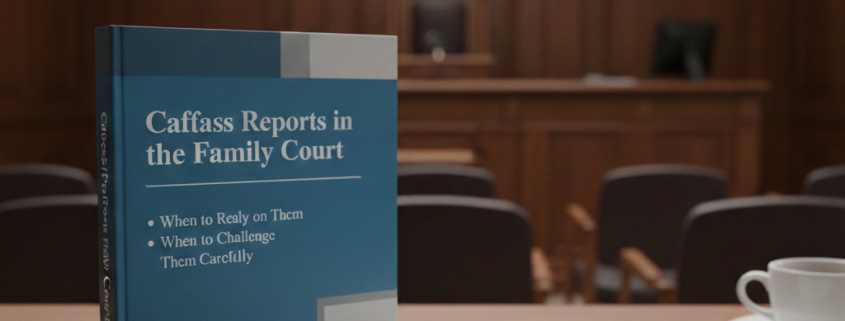
        Cafcass Reports in the Family Court: When to Rely on Them — and When to Challenge Them Carefully

        Introduction: Why Cafcass Reports Carry So Much Weight

        For many litigants in person, a Cafcass report can feel like the moment the case is decided.

        Recommendations are often treated as authoritative. Language used in early safeguarding letters or section 7 reports can shape judicial thinking long before a final hearing. And once a narrative has settled, it can be extremely difficult to shift.

        Yet Cafcass reports are not judgments, not findings of fact, and not immune from scrutiny.

        This article explains:

        • what Cafcass reports are (and are not)
        • how courts are meant to use them
        • common problems that arise in practice
        • when reliance is appropriate
        • when careful challenge may be necessary — and how to do so without damaging credibility

        The aim is not to undermine safeguarding, but to ensure that procedural fairness and accuracy are maintained, particularly for litigants in person.


        What Is Cafcass — and What Is Their Role?

        Cafcass (Children and Family Court Advisory and Support Service) exists to:

        • safeguard and promote the welfare of children
        • advise the court in private law proceedings
        • speak to parents and, where appropriate, children
        • provide analysis and recommendations

        Cafcass officers do not decide cases. They advise the court, which must then apply the law and exercise judicial discretion.

        Understanding this distinction is critical.


        Types of Cafcass Involvement You May Encounter

        Litigants in person commonly encounter Cafcass at several stages:

        1. Initial Safeguarding Letter

        Prepared after police and local authority checks and brief parental interviews.

        2. Early Recommendations

        Often included before the court has determined disputed facts.

        3. Section 7 Welfare Report

        A fuller report assessing welfare factors under the Children Act 1989.

        Each carries different weight — and different risks if misunderstood.


        Why Cafcass Reports Can Become Problematic

        Cafcass officers work under time pressure, with limited information, and often in high-conflict cases. Problems do not arise because of bad faith, but because of structural limitations.

        Common issues include:

        1. Reliance on Unresolved Allegations

        Cafcass may refer to allegations as background context without findings having been made.

        2. One-Sided Narratives

        Where one party is more articulate, organised, or emotionally persuasive.

        3. Incomplete Testing of Evidence

        Cafcass do not cross-examine or conduct fact-finding.

        4. Early Recommendations Becoming “Sticky”

        Interim views can harden into assumed truths.

        None of these invalidate a report — but all require careful handling.


        How the Court Is Meant to Treat Cafcass Reports

        Judges are required to:

        • consider Cafcass advice carefully
        • assess it alongside all evidence
        • apply the legal framework (including PD12J where relevant)
        • make independent decisions

        A Cafcass recommendation should inform, not replace, judicial reasoning.


        When It Is Appropriate to Rely on a Cafcass Report

        Cafcass reports are particularly helpful where:

        • both parties broadly agree on the facts
        • the dispute is about arrangements, not allegations
        • safeguarding issues are low-level or historic
        • the child’s wishes and feelings are clearly expressed

        In such cases, reliance is often proportionate and sensible.


        When a Cafcass Report May Need to Be Challenged Carefully

        Challenge may be appropriate where:

        • allegations are treated as established without findings
        • PD12J has not been applied
        • significant factual errors appear
        • key evidence has been overlooked
        • recommendations contradict earlier safeguarding positions

        The emphasis here is on careful challenge.


        How Litigants in Person Can Raise Concerns Without Backfiring

        This is where many cases go wrong.

        What Not to Do

        • accuse Cafcass of bias
        • re-argue relationship history
        • submit emotional rebuttals
        • personalise criticism

        What To Do Instead

        • identify specific inaccuracies
        • refer to procedural steps
        • ask clarifying questions
        • ground submissions in the welfare checklist

        For example:

        “I respectfully ask the court to consider whether the recommendation assumes facts that have not yet been determined.”

        This keeps the focus on process, not personalities.


        Why Timing Matters More Than Tone

        Concerns raised:

        • early
        • calmly
        • proportionately

        are far more likely to be heard than late, reactive challenges.

        Once a report has been relied upon repeatedly, the court’s tolerance for revisiting it narrows.


        The Role of Support for Litigants in Person

        Many litigants do not need to oppose Cafcass — they need help understanding:

        • what weight a report carries
        • how to frame responses
        • when silence is strategic
        • when clarification is essential

        Structured procedural support can prevent unnecessary escalation while preserving fairness.


        Final Thought: Cafcass Reports Are Influential — Not Infallible

        Cafcass plays an essential role in the family justice system. But their reports are one piece of a wider legal puzzle.

        For litigants in person, the goal is not to fight Cafcass, but to ensure that recommendations rest on a sound procedural footing.

        Clarity, restraint, and timing matter more than volume or force.

        Internal Links (place at end of blog)

        1. Domestic Abuse Allegations and PD12J: What the Court Must Do
        2. False Allegations in the Family Court: Protecting Credibility as a Litigant in Person
        3. Child Arrangements Orders (C100): Getting It Right From the Start

        External Links (authoritative)

        1. Cafcass — About Our Role in Private Law Cases
        2. Judiciary of England and Wales — Children Act 1989 Welfare Checklist

        Contact Me If You Need Me

        If a Cafcass report has been filed in your case and you are representing yourself, understanding how the court is likely to rely on it — and when clarification may be appropriate — can help you navigate proceedings with greater confidence.

        I provide calm, structured support to litigants in person dealing with Cafcass involvement, including understanding reports, identifying procedural issues, and preparing proportionate responses, subject to the court’s discretion.

        You are welcome to get in touch to discuss whether support may be appropriate in your circumstances.

          Domestic Abuse Allegations and PD12J:

          What the Court Must Do — and What Litigants in Person Need to Watch For.

          Introduction: Why PD12J Matters More Than Most Litigants Realise

          When allegations of domestic abuse are raised in family court proceedings, the legal framework that governs how the court must respond is not optional. It is mandatory.

          That framework is Practice Direction 12J (PD12J).

          Yet many litigants in person only discover PD12J after key decisions have already been made — sometimes after contact has been suspended, sometimes after findings have been implicitly assumed without a hearing, and sometimes after Cafcass recommendations have hardened into a narrative that is difficult to unwind.

          This article explains, in plain language:

          • what PD12J is and why it exists
          • what the court is required to do when abuse is alleged
          • the most common PD12J failures seen in practice
          • how litigants in person can spot procedural drift early
          • what practical steps can be taken to protect fairness without escalating conflict

          This is not about disputing safeguarding. It is about ensuring that safeguarding decisions are reached lawfully.


          What Is PD12J?

          PD12J is a Practice Direction attached to the Family Procedure Rules. Its purpose is explicit:

          To ensure that where domestic abuse is alleged, the court identifies the issues early, applies the correct legal framework, and does not make child arrangements decisions that expose a child or parent to risk.

          In other words, PD12J exists to prevent short-cuts, assumptions, and welfare decisions being made on an unsafe factual foundation.

          Crucially, PD12J applies whether or not allegations are disputed, and regardless of whether parties are represented.


          The Trigger Point: When PD12J Applies

          PD12J is engaged when:

          • allegations of domestic abuse are raised in a C1A
          • abuse is referred to in statements, position statements, or oral submissions
          • Cafcass identify safeguarding concerns linked to alleged abuse
          • the court itself raises concerns about past behaviour

          It does not require:

          • a criminal conviction
          • police action
          • corroboration at the outset

          Once triggered, the court must follow a structured analytical process.


          What the Court Is Required to Do Under PD12J

          At a minimum, PD12J requires the court to:

          1. Identify the allegations clearly
            Not vaguely, not by implication, but specifically.
          2. Determine whether findings of fact are necessary
            This is not optional. The court must ask: Can safe child arrangements be decided without resolving these allegations?
          3. Consider the impact of alleged abuse on the child and parent
            Including coercive control, emotional harm, and post-separation abuse.
          4. Avoid assuming allegations are true or false
            Interim decisions must not pre-judge the outcome.
          5. Record the analysis
            PD12J compliance must be visible on the face of the decision.

          Failure at any of these stages is not a technicality. It goes to procedural fairness.


          Common PD12J Failures Seen in Practice

          Litigants in person frequently encounter the same problems, often without realising they are legally significant.

          1. “We Don’t Need a Fact-Finding Hearing”

          Courts sometimes decline fact-finding on the basis that allegations are:

          • “historic”
          • “not directly relevant”
          • “too many”
          • “unlikely to change the outcome”

          PD12J is clear: the test is necessity, not convenience.

          If alleged abuse could affect:

          • contact safety
          • parental dynamics
          • a child’s emotional welfare

          the court must explain why findings are not required.


          2. Interim Restrictions Without Analysis

          Contact may be:

          • supervised
          • reduced
          • suspended

          without a PD12J-compliant analysis being articulated.

          Interim caution is lawful. Silent assumption is not.


          3. Cafcass Recommendations Treated as Determinative

          Cafcass play a vital role, but they:

          • do not make findings of fact
          • do not apply PD12J
          • rely on what they are told

          Where Cafcass recommendations are adopted without judicial analysis, PD12J risks being bypassed.


          4. Abuse Being Minimis ed or Over-Relied Upon

          Both errors occur:

          • genuine abuse dismissed as “relationship conflict”
          • untested allegations treated as established risk

          PD12J exists to prevent both extremes.


          Why Litigants in Person Are Particularly Vulnerable

          Represented parties often have PD12J raised for them. Litigants in person usually do not.

          This creates a structural imbalance where:

          • allegations are framed by one party
          • Cafcass narratives crystallise early
          • interim decisions harden into status quo

          Without intervention, procedural shortcuts can quietly become the foundation of final orders.


          What Litigants in Person Can Do — Practically

          This is not about confrontation. It is about calm procedural clarity.

          1. Name PD12J Explicitly (Once, Clearly)

          You are entitled to say:

          “I respectfully ask the court to confirm how PD12J has been applied in this case.”

          That sentence alone reframes the discussion.


          2. Separate Emotion From Structure

          Focus on:

          • process
          • sequence
          • recorded reasoning

          Avoid relitigating relationship history unless invited.


          3. Ask Procedural Questions, Not Substantive Arguments

          For example:

          • “Has the court determined whether findings are necessary?”
          • “Is the court satisfied that safe arrangements can be made without resolving these allegations?”

          These are lawful questions. They are not attacks.


          4. Preserve the Record

          If PD12J is not addressed:

          • ask for it to be noted
          • request clarification
          • keep contemporaneous notes

          This matters later.


          Why Getting PD12J Wrong Early Is So Difficult to Undo

          Once:

          • interim arrangements are in place
          • Cafcass reports are filed
          • children adapt to reduced contact

          courts are understandably cautious about disruption.

          This is why early procedural correctness matters more than later argument.


          The Role of Support for Litigants in Person

          Many litigants do not need a solicitor to understand PD12J — but they do need:

          • someone who knows the framework
          • someone who can keep submissions focused
          • someone who can identify drift early

          Structured McKenzie Friend support often plays a crucial role here, particularly where power imbalance or complexity is present.


          Final Thought: PD12J Is Not a Weapon — It Is a Safeguard

          PD12J protects:

          • children
          • alleged victims
          • accused parents
          • the integrity of the process

          It is not about winning. It is about ensuring decisions are made on a lawful foundation.

          If you are representing yourself and allegations are in play, understanding PD12J is not optional. It is essential.


          Suggested Internal Links


          External Links

          Call Me

          If domestic abuse allegations have been raised in your family court case and you are representing yourself, early procedural clarity can make a significant difference to how the court approaches the issues.

          I provide calm, structured support to litigants in person navigating PD12J-related concerns, including understanding the court’s obligations and identifying when procedural safeguards may not have been properly applied, subject to the court’s discretion.

          You are welcome to get in touch to discuss whether support may be appropriate in your circumstances.

            Regulatory & Editorial Notice

            This article is provided for general information purposes only and does not constitute legal advice. It is not a substitute for advice from a qualified solicitor or barrister. References to legislation, procedural rules, guidance, or third-party organisations are made for informational and public-interest purposes only. While care has been taken to ensure accuracy at the time of publication, the law and its interpretation may change. Readers are responsible for seeking appropriate legal advice specific to their circumstances.

            Portfolio Items