
Louis Theroux: Inside the Manosphere — What It Reveals About Narrative, Influence and Conflict
Recently I watched Louis Theroux: Inside the Manosphere on Netflix, and it is one of those documentaries that stays with you because it exposes not just a community, but a way of thinking. It offers a rare insight into how narratives are formed, reinforced and lived out — and why those narratives can have real-world consequences in relationships, conflict and the way people present their experiences.
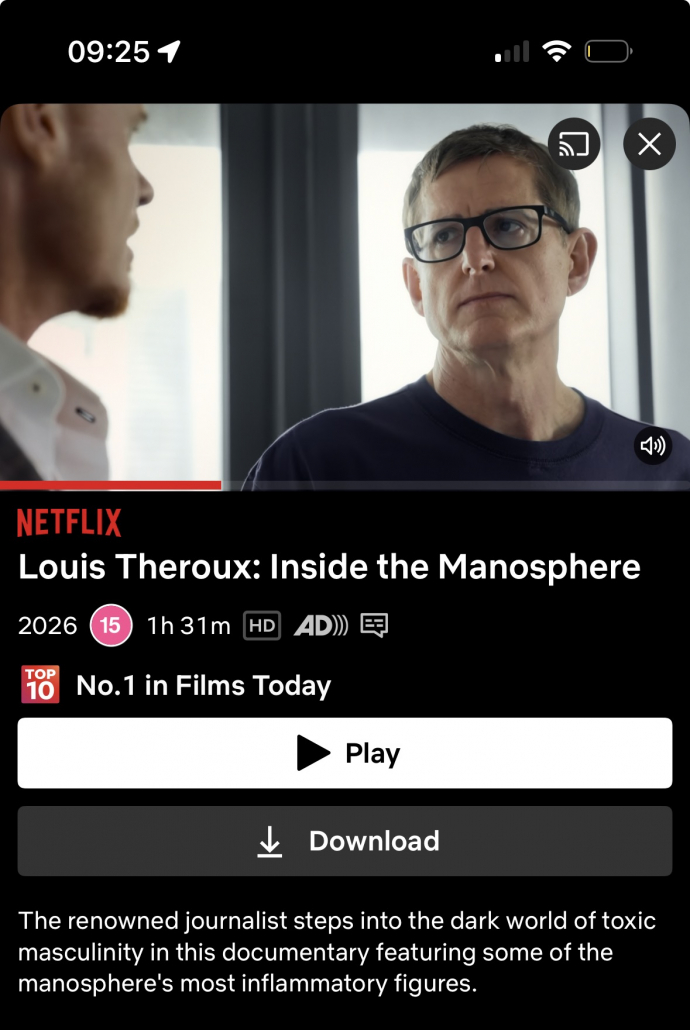
Louis Theroux: Inside the Manosphere — Understanding Influence, Narrative and the Risks of Unchallenged Belief Systems
Film Reflection | Behaviour, Influence, Masculinity and the Power of Narrative in Modern Culture
I recently watched Louis Theroux: Inside the Manosphere on Netflix, and it is one of those documentaries that is difficult to ignore once seen. It steps into a world that is often discussed in fragments but rarely observed directly: online communities built around identity, grievance, masculinity and perceived injustice.
This is not an easy watch. Nor is it intended to be. What it offers is something far more valuable than simple commentary — it provides access to belief systems, language, patterns of thinking and social dynamics that are shaping behaviour in real-world relationships, including those that ultimately find their way into the family courts.
For anyone working in or around conflict, particularly where relationships have broken down and narratives have hardened, the themes in this documentary are immediately recognisable. At its core, this is not simply a film about men or online culture. It is a film about influence, identity and the construction of narrative.
What Is the Manosphere?
The documentary explores a collection of online spaces often referred to as the “manosphere.” These include forums, influencers and communities that focus on male identity, dating dynamics, power, status and, in many cases, resentment towards women or wider society.
It is important to understand that this is not a single unified group. It is a spectrum. Within it are different ideologies, ranging from self-improvement messaging to far more extreme and harmful belief systems. What connects them is a shared language around grievance, perceived injustice and a re-framing of relationships as adversarial rather than collaborative.
Louis Theroux approaches these spaces in his usual way — calmly, curiously and without overt confrontation. That approach allows the viewer to see something that is often hidden: how these belief systems are presented from the inside, rather than described from the outside.
The Power of Narrative
One of the most striking aspects of the documentary is how powerful narrative can be in shaping belief.
The individuals featured are not simply expressing isolated opinions. They are participating in structured narratives that explain:
- why relationships fail;
- why they feel marginalised or rejected;
- who is to blame;
- and what behaviour is justified as a result.
These narratives are often internally consistent. That is what makes them compelling. Once accepted, they provide a framework through which all future experiences are interpreted.
This is a critical point. When someone adopts a fixed narrative, new information is rarely evaluated neutrally. Instead, it is filtered through that existing belief system. Evidence that supports the narrative is reinforced. Evidence that contradicts it is dismissed or reframed.
This is not unique to the manosphere. It is a broader human tendency. But the documentary shows how powerful and self-reinforcing these systems can become when they are amplified within closed communities.
Influence and Identity
The film also explores the role of influential figures within these spaces. Certain individuals act as leaders or authorities, shaping how others interpret their experiences. They provide language, explanation and direction.
This matters because identity is not formed in isolation. People look for frameworks that help them understand themselves and their place in the world. When those frameworks are provided in emotionally charged environments — particularly environments built around grievance — they can become deeply embedded.
For some individuals, these communities provide a sense of belonging and clarity. For others, they can reinforce negative thinking patterns, entitlement, hostility or distrust.
Again, the documentary does not shout this point. It shows it quietly, through conversation and observation. That is what makes it effective.
Behaviour, Responsibility and Externalisation
Another recurring theme is the externalisation of responsibility. Many of the viewpoints expressed in the documentary shift responsibility away from the individual and onto external factors — society, women, culture or systems perceived to be unfair.
This is psychologically significant. When responsibility is consistently externalised, it becomes more difficult for individuals to reflect on their own behaviour, choices or patterns.
That does not mean that wider social issues do not exist. They do. But when all outcomes are attributed externally, personal agency is reduced. Growth becomes harder. Conflict becomes more entrenched.
This dynamic is not limited to online communities. It can appear in many forms of conflict, including relationship breakdowns. When both parties feel wronged and neither feels responsible, resolution becomes significantly more difficult.
Why This Matters in Real Life
Although this documentary focuses on online spaces, its impact is not confined to the digital world. The attitudes, language and beliefs explored here do not remain online. They influence behaviour, communication and expectations in real relationships.
In some cases, they contribute to:
- breakdown in communication;
- entrenched conflict;
- hostility between parties;
- rigid and adversarial thinking;
- and difficulty in resolving disputes constructively.
For those involved in family proceedings, these dynamics can become particularly visible. The way individuals frame events, assign blame and interpret behaviour often reflects deeper belief systems that have developed over time.
Understanding those frameworks does not mean agreeing with them. But it can help explain why certain positions are held so strongly and why compromise may feel difficult.
The Role of Observation
One of the strengths of Louis Theroux’s approach is his willingness to observe without immediately judging. That does not mean endorsing what is said. It means creating space for it to be expressed fully so that it can be understood.
This is an important distinction. Immediate judgment can shut down insight. Careful observation allows patterns to emerge.
The documentary benefits from this approach. It gives the viewer time to notice inconsistencies, tensions and contradictions within the narratives presented. It allows the audience to draw their own conclusions rather than being told what to think.
That approach has value beyond documentary filmmaking. In any complex situation, particularly one involving strong emotion, stepping back to observe before reacting can reveal far more than immediate confrontation.
Complexity Over Simplicity
What becomes clear throughout the documentary is that the issues involved are not simple. It would be easy to reduce everything to good versus bad, right versus wrong. But reality is rarely that neat.
The individuals featured are not one-dimensional. They are shaped by experiences, frustrations, environments and influences. Some express harmful views. Some appear conflicted. Some are searching for meaning or direction.
Recognising complexity does not excuse harmful behaviour. But it does allow for a more accurate understanding of how such behaviour develops and why it can be so resistant to change.
Why This Documentary Is Important
This is an important documentary because it shines a light on something that is often discussed but not always understood. It shows how belief systems are formed, how they are reinforced and how they can shape behaviour over time.
It also raises important questions:
- How do people come to adopt certain narratives?
- What role does community play in reinforcing belief?
- How can conflicting perspectives be understood without escalating further division?
- And what happens when narratives become so fixed that they no longer allow for alternative viewpoints?
These are not easy questions, but they are important ones.
Key Takeaways for Litigants in Person
If you are navigating conflict or court proceedings, this documentary highlights several important realities:
- Be aware of narrative framing. The way events are described can significantly influence how they are understood.
- Focus on evidence, not assumption. Strong narratives can feel persuasive but must still be supported by clear evidence.
- Recognise entrenched positions. When someone is deeply invested in a particular viewpoint, changing that perspective may be difficult.
- Stay grounded in facts and structure. Courts rely on evidence, chronology and clarity rather than belief alone.
- Avoid escalation where possible. Responding calmly and clearly is often more effective than reacting emotionally.
In short: understanding how narratives are formed can help you present your case more clearly and avoid being drawn into unproductive conflict.
Final Reflections
Louis Theroux: Inside the Manosphere is not comfortable viewing, but it is valuable. It offers insight into how belief systems develop and how they influence behaviour in ways that extend far beyond the spaces in which they originate.
For anyone working in areas involving conflict, relationships or human behaviour, it serves as a reminder that what people say — and how they say it — is often rooted in deeper frameworks of understanding.
Recognising those frameworks does not mean accepting them. But it can provide clarity. And in complex situations, clarity is often the first step towards resolution.
Need Support Navigating Family Court?
If you are dealing with family court proceedings and finding the process overwhelming, you are not alone. Many people face complex situations involving conflicting narratives, emotional strain and unclear guidance.
I support litigants in person by helping structure evidence, clarify issues and present cases in a clear and organised way.
You can book a free 15-minute consultation below to discuss your situation.
Regulatory & Editorial Notice: This article is provided for general educational and commentary purposes only. It does not constitute legal advice or reserved legal activity. References to documentaries, individuals or wider social themes are included for public-interest commentary only.