
 JSH LAW LTD
McKenzie Friend Support in Private Law Children Cases
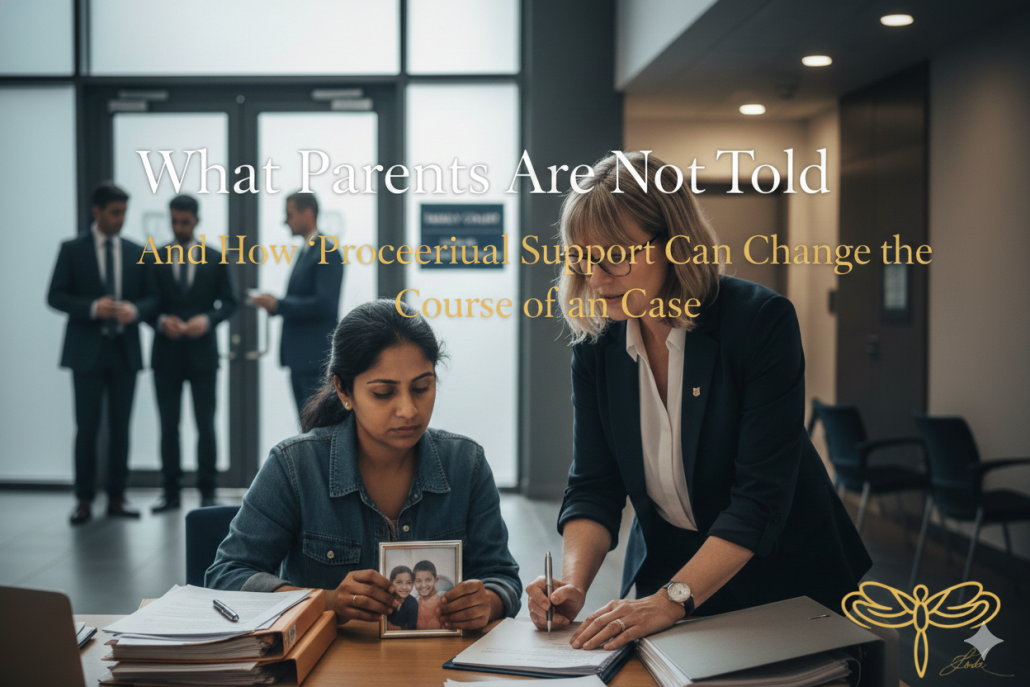
What parents are not told — and how procedural support can change the course of a case
When parents enter private law proceedings alone
Private law children cases are among the most emotionally charged proceedings in the family court. Parents come to court not as abstract legal actors, but as mothers and fathers fighting to remain present in their children’s lives.
Since the reduction of legal aid, increasing numbers of parents navigate these proceedings without representation. They do so while facing allegations, safeguarding concerns, and complex procedural expectations — often against a represented party.
In this context, McKenzie Friend support has become both more visible and more misunderstood.
This article explains what McKenzie Friend support properly is, how it operates in private law children cases, where it adds real value, and why it can be a crucial stabilising force for litigants in person.
What is a private law children case?
Private law children cases concern disputes between individuals — usually parents — about arrangements for a child. They commonly involve applications relating to:
- child arrangements (where a child lives and spends time)
- parental responsibility
- specific issues (education, medical treatment, travel)
- prohibited steps orders
- enforcement or variation of existing orders
Unlike public law cases, the state is not seeking intervention. However, safeguarding agencies such as Cafcass and local authorities may become involved if concerns are raised.
For litigants in person, this distinction is often poorly understood — yet procedurally critical.
Why private law cases are particularly difficult for litigants in person
Parents in private law proceedings face a unique combination of pressures:
- high emotional stakes
- ongoing relationships with the other party
- allegations that may be disputed but deeply damaging
- unfamiliar procedural frameworks
- limited opportunity to correct early errors
Unlike criminal or civil litigation, family court hearings are less structured in appearance — but no less demanding in substance. Judges still expect clarity, relevance, proportionality, and procedural compliance.
Parents often enter court believing that “telling their story” is enough. It rarely is.
What a McKenzie Friend is — and is not
A McKenzie Friend is not a solicitor, barrister, or advocate as of right. Their role is non-reserved and supportive.
Properly understood, a McKenzie Friend may assist a litigant in person by:
- providing moral support
- helping with paperwork and organisation
- taking notes during hearings
- quietly prompting issues or questions
- assisting with understanding court procedure
They do not have an automatic right to speak on a client’s behalf, conduct litigation, or give legal advice. Any further involvement is subject to the court’s permission.
This distinction matters — both ethically and practically.
Why McKenzie Friend support is often misunderstood
There remains a perception that McKenzie Friends are either unnecessary or disruptive. This perception usually arises from poor experiences, not from the concept itself.
When support is unstructured, adversarial, or oversteps boundaries, it can hinder rather than help. However, where support is disciplined, procedural, and court-respectful, it often improves hearings for everyone involved.
Judges are not opposed to assistance. They are opposed to disorder.
The real value of McKenzie Friend support in private law cases
The most effective support is quiet, focused, and strategic.
1. Helping parents stay on point
Many litigants lose focus under pressure. A McKenzie Friend can help ensure that key issues are not forgotten or drowned out by emotion.
2. Supporting document preparation
Private law cases live or die on written material. Poorly structured statements can undermine otherwise strong positions.
3. Evidence organisation
Chronologies, bundles, and supporting documents must be intelligible to the court. Disorganisation often leads to evidence being overlooked.
4. Managing courtroom pressure
Simply having a calm presence beside them allows many parents to remain composed and articulate.
5. Identifying procedural irregularities
Litigants in person frequently fail to spot procedural unfairness at the time it occurs. Support helps ensure such matters are noted and addressed appropriately.
Allegations and safeguarding: where support is most critical
Private law cases often involve allegations of domestic abuse, coercive control, or safeguarding risk. These allegations may be contested, historic, exaggerated, or misunderstood.
For litigants in person, responding effectively is extremely difficult. Emotional rebuttals can entrench concerns rather than dispel them.
Support in this context focuses on:
- understanding the purpose of safeguarding frameworks
- responding proportionately and evidentially
- avoiding language that escalates risk perceptions
- ensuring procedural fairness is preserved
This is not about minimising concerns. It is about ensuring they are handled correctly.
The importance of early support
By the time many parents seek assistance, damage has already been done:
- unfocused initial statements
- missed opportunities to challenge directions
- narratives established without rebuttal
- inappropriate concessions made under pressure
Early support does not guarantee outcomes, but it often prevents avoidable harm. It allows parents to enter proceedings with a clearer understanding of what lies ahead and how to engage productively.
Respecting the court’s discretion
A fundamental principle of effective McKenzie Friend support is respect for the court.
Permission is requested, not assumed. Boundaries are observed. The judge’s authority is acknowledged at all times.
Where further assistance is sought — such as addressing the court — this is done transparently and appropriately. There is no entitlement. There is only discretion.
This approach builds credibility rather than resistance.
When McKenzie Friend support may not be appropriate
Support is not suitable in every case. Situations where it may be limited include:
- where the litigant seeks legal advice beyond scope
- where conduct becomes adversarial or obstructive
- where the court determines assistance would not be helpful
Ethical support includes knowing when to step back.
How I support parents in private law children cases
My work with litigants in person is grounded in procedure, preparation, and proportionality.
I support parents by:
- helping them understand what the court is asking for
- assisting with the structure and clarity of written material
- supporting evidence organisation and case chronology
- preparing parents for hearings so they feel steady and informed
- attending court as a McKenzie Friend where appropriate and permitted
I do not promise outcomes. I do not inflame disputes. I do not replace legal representation.
I support parents to engage with the process in a way that protects their credibility and their children’s interests.
A message to parents navigating private law proceedings
If you are representing yourself in a private law children case, struggling does not mean you are failing. It means you are dealing with one of the most demanding processes in the legal system without training or support.
Seeking assistance is not an admission of weakness. It is a practical decision.
If you recognise the challenges described in this article, it may be time to ask whether structured support could help you navigate the process more effectively.
Contact Me
If you are a parent involved in a private law children case and representing yourself, support may help you approach the process with greater clarity and confidence.
I offer calm, procedural McKenzie Friend support for litigants in person, subject to the court’s discretion.
You are welcome to get in touch to discuss whether support would be appropriate in your circumstances.
Regulatory & Editorial Notice
This article is published for general information purposes only. It does not constitute legal advice and should not be relied upon as such. McKenzie Friend services are non-reserved and subject to the discretion of the court. Every family case turns on its own facts and procedural context. Where legal advice is required, readers should seek assistance from a suitably qualified legal professional.

 JSH LAW LTD
 JSH LAW LTD
 jsh law ltd






 jsh law ltd
 JSH LAW LTD
Leave a Reply
Want to join the discussion?Feel free to contribute!