

Managing Deadlines, Bundles, and Compliance with AI – Procedural discipline in Judicial Review (where cases are really lost)

Judicial Review & AI – Part 7


Introduction: most Judicial Review cases fail quietly

When Judicial Review claims fail, it is rarely dramatic.

There is no cross-examination.
No damning judgment.
No public vindication or condemnation.

Instead, the claim simply:

  • times out,
  • breaches a rule,
  • fails to comply with a direction,
  • or collapses under procedural non-compliance.

For litigants in person, this is often devastating — not because the issue lacked merit, but because process defeated substance.

This article explains:

  • why procedural discipline is critical in Judicial Review,
  • how deadlines and compliance operate in practice,
  • how AI can be used to prevent procedural failure,
  • and how to avoid the common traps that quietly end claims.

Judicial Review is procedural law, not just public law

Judicial Review sits at the intersection of:

  • public law principles, and
  • strict civil procedure.

It is governed by:

  • CPR Part 54,
  • the Administrative Court Practice Directions,
  • and specific court directions once proceedings are issued.

The High Court expects near-perfect compliance.

Latitude for litigants in person exists — but it is limited.

Courts will not:

  • extend time automatically,
  • rewrite non-compliant documents,
  • excuse repeated procedural failures.

This is why AI, used properly, can be invaluable — not as a strategist, but as a discipline enforcer.


The three procedural pressure points in Judicial Review

Judicial Review claims typically fail at one of three procedural stages:

  1. Time limits
  2. Bundles
  3. Compliance with directions

Each is unforgiving.
Each is manageable — with the right systems.


1. Time limits: the guillotine that does not move

Judicial Review claims must be brought:

  • promptly, and
  • in any event within three months of the decision or failure challenged.

This is not flexible.

Even a strong claim can be refused solely for delay.

Courts repeatedly emphasise this because:

  • delay undermines legal certainty,
  • public bodies must be able to rely on decisions.

Litigants in person often underestimate how quickly time runs — especially where silence or inaction is involved.


Where AI helps with time limits

AI can assist by:

  • calculating elapsed time from key dates,
  • flagging approaching deadlines,
  • distinguishing between:
    • continuing failures, and
    • single decisions with ongoing effects.

However, AI cannot decide when time starts to run.

You must determine:

  • the operative date,
  • whether there is a continuing duty,
  • whether delay is justifiable.

AI helps you see — it does not excuse lateness.


2. Bundles: why presentation equals credibility

Judicial Review is decided largely on the papers.

Judges expect:

  • clean,
  • paginated,
  • indexed bundles,
  • with only relevant material included.

A poor bundle signals:

  • lack of focus,
  • lack of seriousness,
  • lack of procedural understanding.

This affects outcomes — even subconsciously.


What courts expect from JR bundles

A compliant bundle typically includes:

  • the claim form,
  • statement of facts and grounds,
  • evidence (exhibits),
  • relevant correspondence,
  • any court directions.

It must be:

  • logically ordered,
  • consistently paginated,
  • clearly indexed.

Courts will not tolerate:

  • sprawling appendices,
  • duplicated documents,
  • emotional exhibits,
  • unexplained screenshots.

How AI helps with bundles (and where it must stop)

AI is excellent at:

  • ordering documents,
  • checking pagination consistency,
  • generating draft indices,
  • identifying duplicates.

AI must not:

  • decide what is legally relevant,
  • exclude documents without review,
  • alter originals.

Think of AI as your bundle manager, not your legal editor.


3. Compliance with directions: the silent killer

Once proceedings are issued, the court will issue directions.

These may include:

  • deadlines for acknowledgements of service,
  • limits on evidence,
  • formatting requirements,
  • page limits.

Failure to comply is taken seriously.

Courts expect:

  • directions to be read carefully,
  • complied with precisely,
  • or varied formally if impossible.

“I didn’t understand” is rarely enough.


Where AI adds value here

AI can:

  • summarise court directions,
  • convert them into task lists,
  • flag inconsistencies,
  • track compliance status.

This is one of the safest and most valuable uses of AI.

What AI must not do:

  • interpret directions creatively,
  • assume flexibility,
  • replace careful reading.

The role of court administration and compliance reality

Judicial Review cases often involve interaction with court systems operated under HMCTS.

This adds complexity:

  • electronic filing systems,
  • automated acknowledgements,
  • varying administrative practices.

AI can help track:

  • what has been submitted,
  • what has been acknowledged,
  • what remains outstanding.

But responsibility remains yours.


Common procedural failures litigants in person make

Judicial Review claims often fail because:

  • documents are filed late,
  • bundles exceed page limits,
  • directions are misunderstood,
  • amendments are made without permission,
  • informal correspondence replaces formal steps.

These failures are rarely cured.

AI helps by enforcing checklists, not by improvising.


Procedural discipline vs flexibility: the court’s view

Courts balance:

  • access to justice,
  • against fairness to public bodies,
  • and efficient use of court resources.

Litigants in person are not expected to be perfect — but they are expected to be organised and serious.

Repeated non-compliance erodes goodwill rapidly.

AI, used properly, helps demonstrate:

  • respect for the process,
  • reliability,
  • proportionality.

Using AI as a procedural “second pair of eyes”

One of the best uses of AI is review, not drafting.

Examples:

  • “Have I complied with every direction?”
  • “Are there any inconsistencies in dates or pagination?”
  • “Is anything missing that the court expects?”

AI excels at spotting patterns and omissions.

It should be used before, not after, filing.


What AI must never be used to do procedurally

AI must not:

  • decide to ignore directions,
  • guess court expectations,
  • file documents autonomously,
  • substitute legal judgment.

Courts expect human responsibility.

AI is invisible to them — your compliance is not.


Key Takeaways (for litigants in person)

  • Judicial Review claims often fail on procedure, not law.
  • Time limits are unforgiving.
  • Bundles signal credibility.
  • Directions must be complied with precisely.
  • AI is most useful as a:
    • deadline tracker,
    • bundle organiser,
    • compliance checker.
  • AI does not excuse lateness or non-compliance.

Procedural discipline is not optional — it is the case.


Preparing for the final stage

After permission decisions, litigants face:

  • permission refusal,
  • conditional grants,
  • or limited permission.

The final article in this series addresses:

  • how to respond rationally,
  • how to assess next steps,
  • and how AI can help avoid throwing good money after bad.

Call to Action

If you are:

  • struggling to manage Judicial Review deadlines,
  • concerned about bundle compliance,
  • or unsure how to interpret court directions,

You may wish to seek structured support before procedural errors become irreversible.


Regulatory & Editorial Notice (JSH Law)

This article is provided for general information only and does not constitute legal advice.

Judicial Review proceedings are governed by strict procedural rules and judicial discretion.
Failure to comply with time limits, directions, or bundle requirements may result in refusal of permission or dismissal of the claim.

Readers should obtain independent legal advice where appropriate.
From Pre-Action Protocol to Permission – Structuring Judicial Review grounds with AI — and avoiding merits traps

Judicial Review & AI – Part 6


Introduction: permission is the real battlefield

Most Judicial Review claims never reach a full hearing.

They fail — quietly and decisively — at the permission stage.

For litigants in person, this can feel bewildering. Everything may feel unfair. The process may have stalled. Appeals may have been ignored. And yet the court refuses permission in a few short paragraphs.

The reason is usually not lack of injustice.

It is poor framing.

This article explains:

  • what the permission stage is actually testing,
  • how Judicial Review grounds must be structured,
  • why merits-based arguments are fatal,
  • and how AI can help enforce discipline, not inflate claims.

What the permission stage is for (in reality)

Under CPR Part 54, the Administrative Court must decide whether a claim is:

  1. Arguable, and
  2. Suitable for Judicial Review.

This is not a mini-trial.
It is a filtering exercise.

Judges are asking:

  • Is this a genuine public-law issue?
  • Is there an alternative remedy?
  • Is the claim focused and lawful?
  • Is it proportionate for the High Court?

If the answer to any of these is “no”, permission is refused.


Why litigants in person struggle most at this stage

Litigants in person often:

  • understand the facts deeply,
  • experience the injustice personally,
  • know exactly what feels wrong.

But Judicial Review does not operate on feelings.

It operates on:

  • duties,
  • legality,
  • jurisdiction,
  • restraint.

The hardest shift is moving from:

“This decision was wrong”
to
“This decision-making process was unlawful.”

AI can help enforce that shift — if used correctly.


The structure of Judicial Review grounds (what the court expects)

Judicial Review grounds are not free-form.

They are expected to follow a disciplined structure:

  1. The decision (or failure) challenged
  2. The legal duty or power
  3. The public-law ground
  4. How the duty was breached
  5. Why Judicial Review is appropriate
  6. The remedy sought

If any of these are missing or muddled, permission is at risk.


Ground 1: identifying the correct target

Your grounds must clearly identify:

  • what is being challenged,
  • when it occurred,
  • who is responsible.

This may be:

  • a refusal,
  • a failure to determine,
  • a procedural decision,
  • or a constructive refusal.

Vague formulations (“the court has ignored me”) almost always fail.

AI can assist by:

  • enforcing specificity,
  • flagging ambiguity,
  • aligning grounds with your chronology.

Ground 2: identifying the legal duty

This is where many claims collapse.

Judicial Review requires:

  • a legal duty,
  • not just a power,
  • and not just an expectation.

The question is:

Was the public body required by law to act — and did it fail to do so lawfully?

Without a duty, there is no unlawfulness.

AI can help:

  • check whether you are assuming a duty,
  • flag where a duty needs to be evidenced,
  • prevent overstatement.

But you must verify the law.


Ground 3: choosing the correct public-law ground

Most JR claims rely on one (sometimes two) grounds:

Illegality

The decision-maker:

  • misunderstood the law,
  • failed to exercise a required power,
  • or acted outside jurisdiction.

Procedural unfairness

The process was unfair because:

  • no reasons were given where required,
  • no opportunity to be heard was provided,
  • mandatory procedure was not followed.

Irrationality

A very high threshold — rarely appropriate for litigants in person.

AI can help prevent the common mistake of:

  • pleading all grounds “just in case”.

Courts view that as lack of focus.


The single biggest mistake: merits drift

Merits drift occurs when:

  • arguments about fairness,
  • disagreement with reasoning,
  • or dissatisfaction with outcomes

creep into what should be a process challenge.

Examples of merits drift:

  • arguing evidence should have been weighed differently,
  • asserting bias without procedural basis,
  • challenging findings of fact.

These are appeal issues — not Judicial Review issues.

AI is particularly useful here:

  • it can flag evaluative language,
  • identify opinion-based phrasing,
  • and force re-framing into procedural terms.

Keeping law and fact separate (critical discipline)

Judicial Review requires:

  • facts to be stated neutrally,
  • law to be applied to those facts,
  • not blended together.

A common error is embedding argument into factual narrative.

AI can help by:

  • separating factual chronology from legal analysis,
  • highlighting where language crosses the line,
  • enforcing neutral drafting.

This separation builds judicial trust.


Alternative remedy: the silent killer of JR claims

Even where unlawfulness exists, Judicial Review may still fail if:

  • an appeal route exists,
  • or another adequate remedy is available.

Courts are firm on this.

You must:

  • identify the appeal route,
  • explain whether it exists in reality,
  • and justify why JR is still appropriate.

This is where litigants in person often underestimate the burden.

AI can help:

  • structure this justification,
  • but cannot invent a lack of remedy where one exists.

Remedy: what you can (and cannot) ask for

Judicial Review remedies are limited.

You may ask for:

  • a decision to be quashed,
  • a matter to be reconsidered lawfully,
  • a duty to be performed.

You cannot ask the High Court to:

  • decide the underlying appeal,
  • substitute its own view of the facts,
  • grant compensation (save in rare cases).

AI can help test whether the remedy sought aligns with JR principles.


How AI should be used at the permission stage

AI is best used as a quality-control tool, not a generator.

Proper uses include:

  • checking internal consistency,
  • identifying merits drift,
  • ensuring each ground maps to evidence,
  • testing whether each ground answers the “so what?” question.

AI should not:

  • expand arguments,
  • multiply grounds,
  • add speculative claims,
  • generate case law without verification.

Permission-stage discipline is about less, not more.


The court’s perspective: what judges scan for first

Judges reviewing permission applications often:

  • skim first,
  • assess focus,
  • test plausibility quickly.

They are alert to:

  • scattergun pleading,
  • emotional language,
  • disproportionate claims.

A tight, restrained set of grounds signals seriousness.


Key Takeaways (for litigants in person)

  • The permission stage is the real test in Judicial Review.
  • Grounds must challenge lawfulness, not outcomes.
  • Identify a legal duty — or the claim fails.
  • Merits drift is the most common fatal error.
  • AI is most useful as a:
    • discipline tool,
    • clarity enforcer,
    • consistency checker.
  • Fewer, stronger grounds beat many weak ones.

If you cannot state your grounds in calm, procedural language, Judicial Review is unlikely to succeed.


Preparing for the final stages

If permission is granted, the case moves into:

  • full pleadings,
  • possible disclosure,
  • and substantive hearing.

But many litigants will face:

  • permission refusal,
  • or a conditional grant.

The final article in this series addresses that moment — and how to respond rationally.


Call to Action

If you are:

  • preparing Judicial Review grounds,
  • unsure whether your case has drifted into merits,
  • or worried about permission-stage refusal,

You may wish to seek structured support before issuing proceedings.

Regulatory & Editorial Notice (JSH Law)

This article is provided for general information only and does not constitute legal advice.

Judicial Review claims are subject to strict procedural requirements and judicial discretion.
Improperly framed grounds may result in refusal of permission and adverse costs consequences.

Readers should seek independent legal advice where appropriate.

Drafting a Pre-Action Protocol Letter with AI Support – Applying lawful pressure before Judicial Review proceedings

Judicial Review & AI – Part 5


Introduction: most Judicial Review cases should never be issued

This may sound counterintuitive, but it is true:

A well-drafted Pre-Action Protocol letter is often more powerful than a Judicial Review claim itself.

For litigants in person, the Pre-Action Protocol (PAP) stage is frequently misunderstood. Some see it as a formality. Others treat it as an emotional complaint.

Both approaches are mistakes.

In Judicial Review, the PAP letter is:

  • a legal warning shot,
  • a compliance test,
  • and a credibility filter.

This article explains:

  • what the Pre-Action Protocol is for,
  • what the court expects from it,
  • how AI can assist without undermining trust,
  • and how to draft a PAP letter that actually changes behaviour.

The legal status of the Pre-Action Protocol in Judicial Review

Judicial Review claims are governed by CPR Part 54 and the Judicial Review Pre-Action Protocol.

Compliance is not optional.

Before issuing proceedings, a claimant is expected to:

  • identify the decision or failure challenged,
  • set out the legal basis of the claim,
  • state the remedy sought,
  • give the proposed defendant a reasonable opportunity to respond.

Failure to comply can result in:

  • refusal of permission,
  • adverse costs consequences,
  • or the court questioning the claimant’s credibility.

For litigants in person, courts will allow some latitude — but not a complete absence of discipline.


What the PAP stage is actually testing

The PAP stage tests four things:

  1. Clarity
    Can you identify the public-law issue precisely?
  2. Legality
    Are you challenging lawfulness, not outcomes?
  3. Proportionality
    Are you seeking a realistic remedy?
  4. Seriousness
    Do you understand the gravity of Judicial Review?

AI can help with all four — if used properly.


What a Judicial Review PAP letter is not

A PAP letter is not:

  • a complaint,
  • a witness statement,
  • a narrative of injustice,
  • a threat-filled ultimatum,
  • a re-argument of the merits.

Letters that read like grievances are often ignored — or responded to defensively.

Judicial Review requires cool precision.


The anatomy of an effective JR Pre-Action Protocol letter

A proper PAP letter has a predictable structure. Courts expect it.

1. Identification of the claimant and proposed defendant

This must be precise.

The letter should clearly identify:

  • who is bringing the claim,
  • which public body is responsible,
  • whether the issue lies with:
    • a court,
    • court administration,
    • or systems operating under HMCTS.

AI can help ensure consistency — but you must choose the correct defendant.


2. The decision or failure being challenged

This is the most important section.

You must state:

  • whether you are challenging:
    • a decision,
    • a refusal,
    • or a failure to act,
  • the date (or period) of that decision or failure,
  • how it arose procedurally.

Vague statements like “my appeal has been ignored” are not sufficient.

AI is useful here to:

  • extract precise dates,
  • strip out emotive language,
  • enforce specificity.

3. The factual background (short and neutral)

This section should:

  • summarise the relevant chronology,
  • refer to documents,
  • avoid argument.

It is not the place for case law or submissions.

AI can help condense longer timelines into a tight factual summary — but it must be reviewed carefully for accuracy.


4. The legal basis of the claim

This is where discipline matters.

You must identify:

  • the public-law ground relied upon:
    • illegality,
    • procedural unfairness,
    • irrationality,
  • and the duty said to have been breached.

You do not need to cite every case.

Over-citation is often counterproductive.

AI can help:

  • ensure the correct ground is identified,
  • prevent drift into merits-based argument,
  • maintain a judicial tone.

5. The remedy sought

This must be realistic and lawful.

Common remedies include:

  • determination of an appeal,
  • reconsideration in accordance with law,
  • provision of reasons,
  • ending an unlawful delay.

You are not asking the court to decide the underlying case.

AI can help test whether the remedy aligns with Judicial Review principles.


6. Timeframe for response

The Protocol suggests 14 days in most cases.

Shorter periods may be justified where:

  • delay is ongoing,
  • rights are being prejudiced.

AI can help flag proportionality risks here.


7. Warning of intended proceedings (without aggression)

The letter should state calmly that:

  • Judicial Review proceedings will be issued if the issue is not resolved,
  • subject to the response received.

Threatening language weakens credibility.


Tone: why neutrality wins

Judicial Review correspondence is often read by:

  • government lawyers,
  • legal advisers,
  • senior officials.

They are trained to assess risk.

A neutral, legally framed PAP letter signals:

  • seriousness,
  • competence,
  • procedural awareness.

AI can help remove:

  • emotional phrasing,
  • accusatory language,
  • rhetorical flourishes.

This is one of its greatest strengths.


Common PAP mistakes litigants in person make

Judicial Review PAP letters often fail because they:

  • argue the merits,
  • accuse judges of bias,
  • demand apologies or compensation,
  • include excessive attachments,
  • misstate the legal basis,
  • threaten media exposure.

AI can help identify and strip these out — if you let it.


How AI should be used in PAP drafting (properly)

AI should be used to:

  • structure the letter,
  • ensure completeness,
  • check tone consistency,
  • cross-reference facts to evidence,
  • flag missing elements.

AI should not:

  • invent legal duties,
  • escalate tone,
  • add speculative arguments,
  • generate case law without verification.

The final letter must always be human-approved.


What happens after the PAP letter is sent

Three things usually happen:

  1. The issue is resolved
    The appeal is listed, reasons are given, or delay ends.
  2. A reasoned refusal is issued
    This clarifies whether JR is viable.
  3. No adequate response
    This strengthens the JR claim.

AI can assist in analysing the response — but it cannot decide next steps for you.


Why courts care about PAP compliance

At the permission stage, judges often ask:

  • Was the issue raised properly?
  • Was the public body given a chance to respond?
  • Was litigation proportionate?

A good PAP letter answers these questions before they are asked.

A poor one raises doubts immediately.


Key Takeaways (for litigants in person)

  • The Pre-Action Protocol stage is substantive, not procedural.
  • Most JR cases should resolve here.
  • A PAP letter must challenge lawfulness, not fairness.
  • Tone matters as much as content.
  • AI is most valuable for:
    • structure,
    • neutrality,
    • consistency,
    • error prevention.
  • A strong PAP letter often determines the outcome before court.

If you cannot clearly articulate the public-law failure in a PAP letter, Judicial Review is unlikely to succeed.


Preparing for the next step

If the PAP stage does not resolve matters, the next step is:

  • issuing Judicial Review proceedings,
  • drafting Statement of Facts and Grounds,
  • and preparing for the permission stage.

That process is unforgiving.

AI can help — but only if everything so far has been done properly.


Call to Action

If you are considering Judicial Review and want help:

  • drafting a compliant Pre-Action Protocol letter,
  • ensuring your case is framed correctly,
  • or understanding whether proceedings are proportionate,

You may wish to seek structured support before issuing any claim.


Regulatory & Editorial Notice (JSH Law)

This article is provided for general information only and does not constitute legal advice.

Judicial Review proceedings are governed by strict procedural rules.
Failure to comply with the Pre-Action Protocol may result in refusal of permission or adverse costs consequences.

Readers should obtain independent legal advice where appropriate.

Organising Evidence for Judicial Review with AI – What the Court Expects — and What It Will Not Tolerate

Judicial Review & AI – Part 4


Introduction: evidence is where Judicial Review succeeds or collapses

By the time a Judicial Review claim reaches the court, the law is usually not the problem.

Most claims fail because:

  • evidence is disorganised,
  • assertions are not supported,
  • documents are missing, duplicated, or mislabelled,
  • or the court cannot see — quickly — what matters.

For litigants in person, this stage is often overwhelming. Evidence arrives in dozens (sometimes hundreds) of emails, PDFs, screenshots, portal messages, and letters.

AI can help — dramatically — but only if used with discipline.

This article explains:

  • what evidence the Administrative Court actually expects,
  • how evidence is assessed at the permission stage,
  • how to organise evidence using AI without breaching trust,
  • and the common mistakes that cause otherwise viable claims to fail.

The legal role of evidence in Judicial Review

Judicial Review is decided primarily on:

  • documents, not testimony,
  • procedure, not credibility contests,
  • records, not recollections.

This is reflected in CPR Part 54 and the Practice Directions governing Administrative Court proceedings.

Unlike many other proceedings:

  • witness statements are limited,
  • cross-examination is rare,
  • the court expects evidence to be self-explanatory.

Your evidence bundle must allow the judge to understand the case without detective work.


The permission stage: why evidence clarity matters so much

Most Judicial Review claims fail at the permission stage.

At this point, the judge typically has:

  • limited time,
  • a short bundle,
  • no oral argument.

They are asking:

  1. Is there an arguable public-law case?
  2. Is it properly evidenced?
  3. Is it procedurally clean?

If the evidence is confusing, incomplete, or bloated, permission is often refused — even where issues exist.

AI’s value lies in reducing friction at this stage.


What counts as evidence in Judicial Review

Evidence in Judicial Review usually includes:

  • court orders,
  • appeal notices,
  • acknowledgements,
  • correspondence with the court,
  • procedural emails,
  • automated responses,
  • screenshots of portals,
  • letters before action (if already sent),
  • relevant policy documents (where applicable).

What it does not usually include:

  • opinion,
  • speculation,
  • emotional narrative,
  • extensive witness evidence (unless strictly necessary).

AI must be used to organise, not embellish.


The court’s evidence mindset

The Administrative Court expects evidence to be:

  • Relevant
    Does it prove or disprove a fact that matters?
  • Chronological
    Does it align cleanly with the timeline?
  • Traceable
    Can each assertion be located in a document?
  • Proportionate
    Is unnecessary material excluded?

Courts are particularly alert to over-inclusion, which often signals lack of focus.


Common evidence failures in JR claims (and why they are fatal)

Before looking at AI workflows, it is worth being blunt about recurring problems.

Judicial Review claims often fail because:

  • screenshots are not dated,
  • emails are partial or cropped,
  • documents are duplicated,
  • key letters are missing,
  • evidence is embedded inside narrative statements,
  • bundles are unpaginated or misindexed.

The court will not “piece it together”.

This is not hostility — it is volume and practicality.


Where AI fits into evidence organisation

AI is exceptionally good at:

  • sorting,
  • grouping,
  • deduplicating,
  • indexing,
  • cross-referencing.

It must never:

  • decide relevance for you,
  • remove context without review,
  • alter original documents.

Think of AI as a junior clerk, not a decision-maker.


Step-by-step: organising JR evidence using AI (safely)

Step 1: Evidence ingestion — create a single source of truth

All evidence must be:

  • gathered into one workspace,
  • clearly labelled,
  • preserved in original form.

AI can help detect:

  • duplicates,
  • near-duplicates,
  • inconsistent filenames.

But originals must remain untouched.


Step 2: Categorise evidence by function, not emotion

Evidence should be grouped by role, for example:

  • filing evidence,
  • acknowledgements,
  • responses,
  • non-responses,
  • procedural decisions.

AI can assist by:

  • clustering documents by content,
  • identifying recurring phrases (“acknowledged”, “will be listed”).

This supports clarity — not argument.


Step 3: Anchor every document to the timeline

Each document should be linked to:

  • a specific date,
  • a specific event in the chronology.

AI can cross-check:

  • whether any timeline entry lacks a document,
  • whether any document is unused.

Unused evidence should usually be removed.


Step 4: Identify what the evidence proves

This is subtle but crucial.

Evidence does not exist to tell a story — it exists to prove facts such as:

  • an appeal was lodged,
  • correspondence was sent,
  • no response was received,
  • time elapsed.

AI can help summarise what each document demonstrates — but the summary must be verified.


Step 5: Create an evidence index the court can scan in minutes

A proper JR evidence index includes:

  • exhibit number,
  • date,
  • short neutral description,
  • page reference.

AI excels here:

  • generating draft indices,
  • checking numbering,
  • ensuring consistency.

The final index, however, must be human-approved.


Step 6: Reduce — then reduce again

This is where discipline matters.

Courts prefer:

  • fewer documents,
  • clearly relevant,
  • cleanly indexed.

AI can help flag:

  • repetitive correspondence,
  • documents that add nothing new.

Removing material is often the hardest — and most important — step.


Evidence of silence: how to prove “nothing happened”

Silence is central to many JR claims — and difficult to evidence.

Courts expect:

  • proof of what did happen,
  • followed by demonstrable gaps.

AI helps by:

  • calculating time between events,
  • showing unanswered chasers,
  • mapping inactivity periods.

What you must not do:

  • assert silence without showing the surrounding activity.

Absence must be structurally visible.


Targeting the correct public body through evidence

Evidence should make clear whether:

  • the issue lies with a judge,
  • court administration,
  • listing processes,
  • or systems operated under HMCTS.

This matters because:

  • Judicial Review must be directed at the correct defendant,
  • misidentification leads to refusal.

AI can help trace patterns of response and responsibility.


What judges look for in JR evidence bundles

Judges assessing permission typically ask:

  • Can I see what happened quickly?
  • Are the documents reliable?
  • Is the bundle proportionate?
  • Does the evidence support the alleged failure?

A clean bundle signals seriousness and credibility.

A chaotic one signals risk.


What AI must not be used to do with evidence

AI must not:

  • alter documents,
  • “clean up” screenshots,
  • infer missing content,
  • summarise without verification,
  • replace originals with generated text.

Any hint of document manipulation can destroy trust instantly.


Key Takeaways (for litigants in person)

  • Judicial Review is document-driven.
  • Evidence must be relevant, chronological, and proportionate.
  • Silence is proved through structure, not assertion.
  • AI is best used for:
    • sorting,
    • indexing,
    • consistency checking,
    • gap detection.
  • Every document must earn its place in the bundle.
  • Courts will not fix evidence problems for you.

A strong evidence bundle often determines permission before law is considered.


Preparing for the next stage

Once evidence is organised, you are ready for:

  • formal engagement with the public body,
  • the Pre-Action Protocol stage.

This is where many Judicial Review cases resolve — without issuing proceedings.


Call to Action

If you are:

  • overwhelmed by court correspondence,
  • unsure what evidence matters,
  • or concerned about preparing a JR-ready bundle,

You may wish to seek structured support before taking further steps.


Regulatory & Editorial Notice (JSH Law)

This article is provided for general information only and does not constitute legal advice.

Judicial Review proceedings are governed by strict procedural rules.
Improperly organised evidence may result in refusal of permission or adverse costs consequences.

Readers should seek independent legal advice where appropriate.

Building a Judicial Review Timeline Using AI – Without losing accuracy, credibility, or the court’s trust

Judicial Review & AI – Part 3


Introduction: why timelines decide Judicial Review cases

In Judicial Review, chronology is not background material.

It is the case.

Before the court considers:

  • grounds,
  • unlawfulness,
  • remedies,

it asks a far more basic question:

What actually happened — and when?

For litigants in person, this is often the hardest part. Court processes generate:

  • fragmented emails,
  • automated notices,
  • partial acknowledgements,
  • long silences,
  • overlapping procedures.

AI can help enormously — but only if used with discipline.

This article explains:

  • why timelines are decisive in Judicial Review,
  • what a JR-ready chronology looks like,
  • how to use AI to build one without introducing error,
  • and how courts assess credibility through structure.

Why Judicial Review timelines are different from ordinary case histories

In most litigation, timelines support argument.

In Judicial Review, timelines establish unlawfulness.

They are used to show:

  • a failure to act,
  • an unreasonable delay,
  • a procedural breach,
  • or a decision taken (or avoided) at a specific moment.

The Administrative Court does not tolerate:

  • vagueness,
  • reconstructed guesswork,
  • emotional narrative.

It expects forensic precision.

That expectation applies equally to litigants in person.


The legal role of chronology in Judicial Review

Under CPR Part 54, claimants must file:

  • a Statement of Facts and Grounds, and
  • evidence supporting those facts.

Facts come first.
Law comes second.

Courts repeatedly emphasise that:

  • arguments cannot float free of dates,
  • unlawfulness must be anchored in time,
  • delay must be measurable, not rhetorical.

A Judicial Review without a clear timeline is usually refused at the permission stage.


Common chronology errors that sink JR claims

Before we look at AI, it is important to understand what not to do.

Courts routinely reject claims where:

  • dates are inconsistent,
  • events are out of sequence,
  • filings are assumed rather than proven,
  • silence is alleged without evidence,
  • timelines mix facts with argument.

A chronology is not:

  • a witness statement,
  • a complaint letter,
  • a narrative of injustice.

It is a neutral factual map.


What a JR-ready timeline actually looks like

A proper Judicial Review timeline has five characteristics:

1. Strict chronology

Events are ordered by date, not importance.

2. Documentary anchoring

Every entry can be traced to evidence.

3. Procedural clarity

Each step is linked to a rule, duty, or process.

4. Neutral language

No argument, no emotion, no speculation.

5. Gap visibility

Silence and delay are shown by absence, not assertion.

AI is excellent at supporting these — if controlled correctly.


Where AI adds real value (and where it doesn’t)

AI is most effective before drafting begins.

At this stage, AI is a:

  • sorting engine,
  • pattern detector,
  • consistency checker.

It is not a fact-creator.


Step-by-step: building a Judicial Review timeline using AI

Step 1: Gather everything (before analysis)

Before using AI at all, you must gather:

  • appeal notices,
  • acknowledgements,
  • emails,
  • court orders,
  • automated responses,
  • postal records,
  • screenshots of portals,
  • chasing correspondence.

If it isn’t documented, it doesn’t exist for JR purposes.

AI cannot rescue missing evidence.


Step 2: Convert documents into machine-readable text

AI works best when documents are:

  • OCR-converted,
  • clearly labelled,
  • date-stamped.

At this stage, AI can assist with:

  • extracting dates,
  • identifying senders,
  • detecting references to procedures.

However, you must manually verify every extracted date.

OCR errors are common — and fatal if unchecked.


Step 3: Create a neutral event list (no interpretation)

This is the most important discipline.

Each timeline entry should follow a simple structure:

  • Date
  • Actor (e.g. appellant, court, listing office)
  • Action
  • Document reference

Example (neutral):

12 March 2025 – Appeal lodged by claimant via online portal. Acknowledgement email received same day.

Not:

The court ignored my appeal.

AI can help strip out loaded language and enforce neutrality.


Step 4: Separate facts from legal significance

At this stage, do not label anything as unlawful.

AI can help you create two parallel views:

  • a pure factual chronology, and
  • a working analysis layer (for your eyes only).

Courts must see only the first.

This separation is critical.


Step 5: Identify silence and delay structurally

Silence is not a single event.

It is a gap between events.

AI can help calculate:

  • elapsed time between steps,
  • number of chasers sent,
  • periods of complete inactivity.

This is where patterns emerge — and where many litigants realise:

  • delay is shorter than they thought, or
  • longer — and more serious.

Both outcomes are valuable.


Step 6: Link events to procedural expectations

Once the factual timeline exists, AI can assist you in mapping:

  • procedural rules,
  • expected next steps,
  • legal duties.

For example:

  • Was acknowledgment required?
  • Was listing discretionary?
  • Was a decision required within a reasonable time?

This is analysis — not evidence — and should remain separate.


Step 7: Identify the moment of failure

Judicial Review usually crystallises around a specific point:

  • a refusal,
  • a deadline missed,
  • a failure to respond after repeated engagement.

AI can help test different candidates:

  • Is the claim premature?
  • Has the duty actually arisen yet?
  • Has time started to run?

This prevents issuing JR too early or too late.


Who is the timeline for?

Your JR timeline serves three audiences:

  1. You
    To understand whether you actually have a public-law issue.
  2. The court
    To assess permission quickly and confidently.
  3. The defendant public body
    Particularly during the Pre-Action Protocol stage.

AI helps align all three.


Targeting the correct public authority

A frequent JR failure is naming the wrong defendant.

Your timeline should make clear whether the issue lies with:

  • a judge’s decision,
  • court administration,
  • listing systems,
  • or processes operated under HMCTS.

AI can help detect where actions (or inaction) originate — but you must decide the legal target.


The court’s perspective: what judges look for

When judges review JR chronologies, they ask:

  • Are dates consistent?
  • Are events evidenced?
  • Is delay objectively shown?
  • Is the claim focused or sprawling?

A clean timeline:

  • builds trust,
  • shortens hearings,
  • increases permission prospects.

A messy one undermines credibility immediately.


What AI must not be used to do at this stage

AI must not:

  • infer facts not in evidence,
  • assume reasons for silence,
  • compress time inaccurately,
  • replace human verification.

The fastest way to lose the court’s confidence is to present a timeline that collapses under basic scrutiny.


Key Takeaways (for litigants in person)

  • In Judicial Review, chronology is the case.
  • Timelines must be neutral, evidenced, and precise.
  • Silence is shown through gaps, not complaints.
  • AI is best used as:
    • a sorting tool,
    • a gap detector,
    • a consistency checker.
  • Every date must be manually verified.
  • A strong timeline often reveals whether JR is viable before you issue.

If your timeline does not clearly show what duty arose, when, and how it was breached, Judicial Review will fail.


How this prepares you for the next step

Once a Judicial Review-ready timeline exists, you can:

  • organise evidence properly,
  • prepare a Pre-Action Protocol letter,
  • apply pressure without issuing proceedings.

That is where AI’s organisational strengths really come into play.


Call to Action

If you are struggling to:

  • organise complex court correspondence,
  • identify whether delay is legally significant,
  • or build a clean Judicial Review chronology,

You may wish to seek structured assistance before taking further steps.


Regulatory & Editorial Notice (JSH Law)

This article is provided for general information only and does not constitute legal advice.

Judicial Review is subject to strict procedural rules and time limits.
Chronology errors can be fatal to claims.

Readers should seek independent legal advice where appropriate before issuing proceedings.

Appeals Ignored by Judges – Identifying a True Public-Law Failure (and not a bad decision)

Judicial Review & AI – Part 2

Silence feels like injustice — but the law is stricter

For litigants in person, one of the most distressing experiences in the court system is silence.

You file an appeal correctly.
You receive confirmation.
Weeks pass.
Months pass.
Nothing happens.

No listing.
No refusal.
No reasons.
No response.

At that point, many people quite reasonably ask:

“If the court won’t deal with my appeal, isn’t that unlawful?”

Sometimes, the answer is yes.
Very often, however, the legal position is more complicated — and this is where Judicial Review cases are won or lost.

This article explains how to tell the difference between:

  • a true public-law failure, and
  • a situation that feels unfair but does not meet the legal threshold.

It also explains how AI can help litigants in person identify the difference early, before time limits expire or energy is wasted.


Why “ignored” does not always mean “unlawful”

The High Court does not intervene simply because a process is slow, confusing, or poorly explained.

Judicial Review is concerned with lawfulness, not service standards.

Courts recognise that:

  • judges have discretion,
  • listings depend on resources,
  • delays occur.

The key question is not:

“Has this taken too long?”

It is:

“Has the court failed to perform a legal duty it was required to perform?”

That distinction matters.


The legal anatomy of a “failure to act”

In public law, a challenge may arise from:

  • a decision, or
  • a failure to make a decision.

A failure to act can be unlawful where:

  • there is a legal duty to act, and
  • the failure is more than mere administrative delay.

This principle has long been recognised, including in Padfield v Minister of Agriculture [1968] AC 997, where the House of Lords confirmed that discretion must be exercised lawfully and not to frustrate statutory purpose.

However, not every delay or silence amounts to unlawfulness.


The critical question: is there a duty to decide?

Judicial Review only engages where there is:

  1. a public body,
  2. exercising a public function,
  3. under a legal duty (express or implied),
  4. which it has failed to discharge lawfully.

In the context of appeals, this means asking:

  • Does the court have a duty to determine the appeal?
  • Or only a power to do so, subject to discretion?
  • Is the appeal procedurally valid?
  • Has the appeal been stayed, struck out, or filtered in a way permitted by law?

Without a duty, there is no unlawful failure.


Categories of “ignored appeals” — and what they mean legally

Not all silence is the same. For Judicial Review purposes, it is essential to categorise what is happening.

1. Administrative delay (usually not JR-worthy)

Examples:

  • backlog in listings,
  • staff shortages,
  • routine delays without refusal.

Courts have repeatedly held that delay alone, without more, is rarely enough.

Unless delay becomes so excessive that it defeats the purpose of the process, it is unlikely to ground Judicial Review.

This is frustrating — but it is the reality.


2. Procedural limbo (potentially JR-relevant)

Examples:

  • appeal lodged correctly but never progressed,
  • repeated chasing with no substantive response,
  • documents acknowledged but no procedural step taken.

Here, the question becomes:

  • has the system effectively stalled the appeal without decision?

This is where patterns matter — and where AI becomes useful.


3. Refusal without reasons (often JR-relevant)

Courts are not always required to give reasons.

However, where:

  • a decision finally disposes of a right of appeal, or
  • fairness requires explanation,

a failure to give reasons can amount to procedural unfairness.

This principle is discussed in cases such as R v Secretary of State for the Home Department, ex parte Doody [1994] 1 AC 531.

If an appeal is refused — explicitly or effectively — without reasons where reasons are required, Judicial Review may be engaged.


4. Constructive refusal (high-value JR category)

Sometimes, there is no express refusal — just silence that functions as one.

This is known as constructive refusal.

Examples:

  • repeated correspondence ignored,
  • no listing after prolonged periods,
  • no explanation, no escalation route, no decision.

In such cases, the court may treat inaction as a decision in itself.

However, this requires evidence, not assumption.


Why courts are cautious about intervening in other courts’ processes

Judicial Review of courts is exceptional.

The High Court is acutely aware of:

  • judicial independence,
  • separation of functions,
  • the dangers of satellite litigation.

This caution was emphasised in R (Cart) v Upper Tribunal [2011] UKSC 28, where the Supreme Court limited the circumstances in which higher courts will intervene in decisions of specialist tribunals.

As a result, JR claims alleging court failure must be:

  • tightly framed,
  • procedurally clean,
  • clearly about lawfulness, not disagreement.

This is why vague claims that an appeal has been “ignored” almost always fail.


The difference between “not listed yet” and “refused to be heard”

This distinction is subtle but crucial.

SituationLegal Character
Appeal awaiting listingUsually administrative
Appeal stayed lawfullyNot JR
Appeal filtered under rulesNot JR (unless unlawful)
Appeal refused without reasonsPotential JR
Appeal never determined at allPossible JR
Systemic obstructionPossible JR

Judicial Review turns on what has actually happened, not how it feels.


How AI helps identify a true public-law failure

At this stage, AI should be used as a diagnostic tool, not a drafting engine.

AI can help litigants in person to:

1. Build an accurate chronology

AI can assist in ordering:

  • filing dates,
  • acknowledgements,
  • chasers,
  • responses (or lack of them).

This matters because patterns of silence are more persuasive than isolated delays.


2. Distinguish decision from non-decision

AI can help flag:

  • whether any document actually constitutes a decision,
  • whether procedural rules have been engaged,
  • whether a lawful stay or filter applies.

Many people discover here that a decision has been made — just not understood.


3. Test whether delay defeats purpose

AI can help compare:

  • elapsed time,
  • statutory or procedural expectations,
  • impact on rights.

This supports — or undermines — any argument that delay is unlawful.


4. Identify who the correct target is

Sometimes the issue is not the judge at all, but:

  • court administration,
  • listing officers,
  • procedural systems operating under HMCTS.

Judicial Review must be directed at the correct public authority.


What AI cannot do here

AI cannot:

  • decide whether a duty exists,
  • override procedural rules,
  • convert frustration into unlawfulness.

Crucially, AI cannot change the fact that courts are allowed to prioritise cases.

AI helps you see clearly, not win automatically.


Evidence that matters in JR claims about ignored appeals

Courts look for:

  • proof of proper filing,
  • evidence of acknowledgment,
  • repeated attempts to engage,
  • absence of lawful explanation,
  • length and impact of delay.

They do not respond well to:

  • emotional language,
  • assumptions,
  • speculation.

AI is useful because it forces structure and neutrality.


Key Takeaways (for litigants in person)

  • Silence alone is not automatically unlawful.
  • Judicial Review requires a failure of legal duty, not poor service.
  • Distinguish:
    • delay,
    • refusal,
    • constructive refusal.
  • Evidence patterns, not impressions.
  • AI is most valuable before issuing proceedings.

If you cannot articulate what legal duty has been breached, Judicial Review will fail — however unfair the situation feels.


How this sets up the next step

If — and only if — you have identified:

  • a procedural failure,
  • linked to a legal duty,
  • supported by evidence,

the next step is to build a Judicial Review-ready chronology.

That is where AI becomes genuinely powerful.


Call to Action

If you are experiencing prolonged silence or procedural obstruction and want to understand:

  • whether this is merely delay,
  • or a genuine public-law failure,

You may wish to seek structured support in analysing your case before any Judicial Review steps are taken. Contact Us.


Regulatory & Editorial Notice (JSH Law)

This article is provided for general information only and does not constitute legal advice.

Judicial Review is fact-specific, discretionary, and subject to strict time limits and procedural rules.
Readers should obtain independent legal advice where appropriate.

References to statutes, case law, court procedures, and public bodies are accurate at the time of publication but may change.

Judicial Review: When It Is — and Isn’t — the Right Route

A foundational guide for litigants in person (and how AI fits safely)

Introduction: why this distinction matters

Judicial Review is often misunderstood.

For litigants in person, it can feel like the last remaining door when appeals are ignored, delayed indefinitely, or dismissed without explanation. That emotional reality is entirely understandable — but Judicial Review is not a general remedy for unfairness.

It is a narrow, technical public-law mechanism designed to correct unlawful decision-making, not to re-argue the merits of a case.

This article exists for one reason:
to help you decide correctly whether Judicial Review is even available to you before time, money, and emotional energy are spent.

It also explains — at a high level — how AI can assist responsibly, without misleading the court or yourself.


What Judicial Review actually is (in law)

Judicial Review is a supervisory jurisdiction of the High Court.

Its statutory foundation lies in section 31 of the Senior Courts Act 1981, with procedure governed by CPR Part 54.

At its core, Judicial Review asks a single question:

Did a public body act lawfully?

That is all.

It does not ask:

  • whether the decision was fair in a general sense,
  • whether the judge was right or wrong on the facts,
  • whether the outcome feels unjust.

The High Court does not substitute its own decision.
It supervises the legality of the process.

This distinction is not technical nit-picking — it is everything.


The three classic grounds of Judicial Review

The orthodox formulation comes from Council of Civil Service Unions v Minister for the Civil Service [1985] AC 374 (“the GCHQ case”).

Judicial Review may lie where a decision is:

  1. Illegal
    The decision-maker:
    • misunderstood the law,
    • acted outside their powers,
    • failed to exercise a duty they were legally required to exercise.
  2. Procedurally unfair
    The process was unfair, for example:
    • failure to give reasons where reasons are required,
    • failure to hear a party,
    • failure to follow mandatory procedure.
  3. Irrational
    The decision is so unreasonable that no reasonable decision-maker could have reached it
    (the Wednesbury threshold: Associated Provincial Picture Houses v Wednesbury Corporation [1948] 1 KB 223).

This is a very high bar.

Later developments have added concepts such as:

  • legitimate expectation,
  • proportionality (in limited contexts),
    but the core discipline remains the same.

Judicial Review is about lawfulness, not correctness

This principle was reinforced repeatedly, including in:

  • O’Reilly v Mackman [1983] 2 AC 237
    (public law challenges must be brought by Judicial Review, not disguised private actions)
  • Anisminic Ltd v Foreign Compensation Commission [1969] 2 AC 147
    (errors of law can render a decision unlawful)

But crucially, courts have also emphasised restraint.

Judicial Review is not an appeal in disguise.

If you are asking:

  • “the judge misunderstood the evidence”
  • “the judge preferred the other side’s account”
  • “the judge was wrong”

…you are almost certainly outside JR territory.


Appeals vs Judicial Review: the non-negotiable hierarchy

Courts are clear:
where an appeal route exists, Judicial Review will usually be refused.

This principle was strongly restated in R (Cart) v Upper Tribunal [2011] UKSC 28, where the Supreme Court emphasised that Judicial Review is exceptional, not a parallel route.

Judicial Review may only become available where:

  • the appeal route does not exist, or
  • the appeal route exists in theory but is not functioning in reality.

That distinction matters enormously for litigants in person.


When Judicial Review may be appropriate if appeals are ignored

Judicial Review may be viable where the problem is not how the judge decided — but that no lawful decision is being made at all.

Examples include:

  • an appeal lodged correctly but never listed,
  • months (or years) of silence from the court,
  • refusal to consider an appeal without reasons,
  • administrative obstruction that prevents access to a lawful determination,
  • systemic failure by court administration.

In such cases, the target of Judicial Review is often inaction, delay, or procedural refusal — not the underlying merits.

This can engage duties of fairness and legality owed by public bodies, including courts and court administration operating under HMCTS.


When Judicial Review is not appropriate (and often fails)

Judicial Review is not appropriate where:

  • you simply disagree with the judge’s reasoning,
  • you believe the judge misunderstood the law but an appeal route exists,
  • you missed an appeal deadline,
  • the case is fact-heavy rather than process-focused,
  • the application is late and delay cannot be justified.

The High Court is ruthless on this point.

Delay alone can defeat a claim, even if the underlying issue has merit.
Judicial Review must be brought:

  • promptly, and
  • in any event within three months of the decision or failure complained of.

Why litigants in person often misidentify JR issues

This is not a failing — it is structural.

Litigants in person experience:

  • silence as injustice,
  • delay as obstruction,
  • confusion as hostility.

But the court sees:

  • jurisdictional boundaries,
  • procedural gateways,
  • alternative remedies.

Judicial Review succeeds only where the legal framing is correct.

This is where careful use of AI can help — and where careless use can be fatal.


How AI fits properly at this stage

At this early stage, AI is not about drafting claims.

It is about clarity and triage.

Used responsibly, AI can help litigants in person to:

  • turn scattered events into a clean chronology,
  • distinguish decisions from disagreements,
  • identify whether the problem is:
    • delay,
    • refusal,
    • silence,
    • or merits dissatisfaction,
  • map facts against public-law grounds,
  • identify whether an alternative remedy still exists.

AI is especially useful at helping you answer the hardest question:

Is this actually a Judicial Review issue — or am I trying to use JR to fix something it cannot fix?


What AI must not be used for

It is critical to be clear.

AI must never be used to:

  • invent facts,
  • invent case law,
  • generate unverified legal authority,
  • file documents without human review,
  • present speculation as evidence.

Courts are increasingly alert to misuse of AI.
Judicial Review — a jurisdiction grounded in trust and precision — is unforgiving of errors.

AI is a support tool, not a substitute for legal responsibility.


Key Takeaways (for litigants in person)

Judicial Review is about process, not outcomes.

  • If an appeal route exists and functions, JR will almost always fail.
  • JR may be viable where appeals are ignored, blocked, or never determined.
  • Delay is often fatal — time limits matter.
  • The court will not rescue poorly framed claims.
  • AI can help you see the legal shape of your problem, but it cannot change the law.

If this first boundary is misunderstood, everything that follows collapses.


Where this fits in the wider series

This article is the foundation.

Every subsequent post in this series assumes:

  • you understand what JR is for,
  • you understand what it is not for,
  • you are prepared to abandon JR if it is the wrong route.

The next article builds directly on this.


Call to Action

If you are a litigant in person facing ignored appeals, unexplained delay, or procedural obstruction, the most important step is early, accurate framing.

If you would like structured support in:

  • assessing whether Judicial Review is viable,
  • organising your chronology and evidence,
  • understanding where AI can safely assist (and where it cannot),

You may wish to make an enquiry for support >


Regulatory & Editorial Notice (JSH Law)

This article is provided for general information only.
It does not constitute legal advice and does not create a solicitor-client relationship.

Judicial Review is highly fact-sensitive, time-critical, and procedurally complex.
Readers should seek independent legal advice where appropriate before taking action.

Any references to statutes, case law, public bodies, or procedures are accurate at the time of publication but may change.

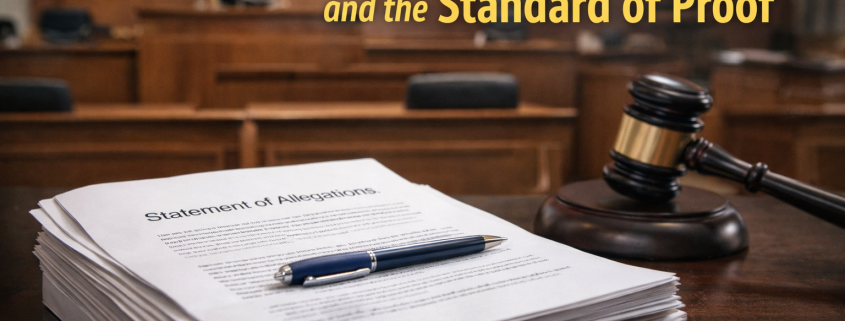
Documents and courtroom setting illustrating how family courts assess disputed allegations using the balance of probabilities.

Should an Ex-Partner’s Allegations Be Taken at Face Value in Family Court?

What happens when there isn’t “clear and convincing” evidence?

A real Facebook question that comes up every day

“Should my ex’s allegations be taken at face value?
What if there isn’t clear and convincing evidence of abuse?”

This question is asked constantly in private children proceedings, safeguarding disputes, and high-conflict separations.

It usually comes from someone who is:

  • Shocked by allegations they dispute
  • Alarmed by how seriously professionals are treating them
  • Afraid that a lack of early evidence means the court will simply “believe” the other parent

The short answer is this:

No — allegations are not automatically accepted as fact.
But no — they are not ignored just because evidence is not immediately available either.

Understanding that distinction is critical.


The biggest misconception: “clear and convincing evidence”

One of the most common misunderstandings I see is the belief that the family court requires “clear and convincing evidence” before it will act.

That is not the test in England & Wales family proceedings.

That phrase comes from:

  • US family law
  • Criminal law discussions
  • Internet misinformation

It is not the legal standard applied by UK family courts when deciding allegations of abuse.


What standard of proof does the Family Court use?

The balance of probabilities

In England & Wales, the family court determines disputed allegations on the civil standard of proof:

Is it more likely than not that the alleged behaviour occurred?

This is known as the balance of probabilities.

It applies to:

  • Domestic abuse allegations
  • Coercive and controlling behaviour
  • Incident-based allegations
  • Fact-finding hearings

There is no higher evidential threshold simply because an allegation is serious.

That does not mean the court is casual or careless — quite the opposite.


The court’s role: careful evaluation, not blind acceptance

Judges and magistrates are required to:

  • Assess allegations with care
  • Avoid assumptions
  • Consider the totality of the evidence

In many family cases, especially abuse cases, the court is dealing with:

  • “Word against word” accounts
  • Little or no independent corroboration
  • Evidence that only emerges over time

In those situations, the court may:

  • Order fact-finding hearings
  • Require schedules of allegations and responses
  • Seek third-party disclosure (police, schools, GP records, social services)
  • Weigh consistency, plausibility, and surrounding context

Allegations are therefore tested, not simply believed — but they are also not dismissed at the door.


Why allegations can still affect interim decisions

This is the part many people find hardest to accept.

Even where allegations are disputed and unproven, the court may still:

  • Act cautiously
  • Limit or supervise contact
  • Delay making certain orders

Why?

Because at interim stages the court is not deciding guilt — it is assessing risk.

Child welfare comes first

Where allegations raise potential safeguarding concerns:

  • The court must ensure interim arrangements do not expose a child or parent to unmanageable risk
  • The absence of findings does not equal the absence of risk

This is why you may hear:

  • “These matters are yet to be determined”
  • Followed by cautious interim directions

That is not the court “believing everything”.
It is the court holding the ring until evidence is tested.


What this means in practice (for both parents)

If you are accused

  • Allegations are not treated as proven facts
  • You are entitled to challenge them
  • The court must decide them on evidence, not emotion
  • How you respond procedurally matters enormously

Poorly structured responses, emotional statements, or failing to engage with the process often cause more damage than the allegation itself.


If you are raising concerns

  • You do not need “perfect evidence” at the outset
  • The court understands abuse often occurs in private
  • Safeguarding decisions can still be made while facts are determined
  • You must still present allegations clearly and properly

The real risk: misunderstanding the process

Where things go wrong is not usually because of the law — but because people misunderstand it.

Common mistakes include:

  • Assuming allegations are automatically believed
  • Assuming nothing will happen without “proof”
  • Treating interim decisions as final judgments
  • Failing to prepare properly for fact-finding

Family proceedings are procedural.
Those who understand the procedure fare better — regardless of which side they are on.


How JSH Law helps in these situations

I regularly support litigants in person who are dealing with:

  • Disputed abuse allegations
  • Fact-finding hearings
  • Safeguarding-heavy private law cases
  • Interim arrangements shaped by unresolved concerns

Support includes:

  • Structuring allegation schedules and responses
  • Explaining what the court is actually deciding at each stage
  • Preparing for fact-finding properly
  • Helping clients avoid procedural missteps that escalate risk

This is not about “winning”.
It is about navigating the process safely, fairly, and strategically.

If you are dealing with disputed allegations in family court — whether you are responding to them or raising safeguarding concerns — early procedural handling matters. I support litigants in person with allegation schedules, fact-finding preparation, and safeguarding-focused case strategy.

If you need calm, practical support, you can read more about how I work or get in touch.


    Legal Basis & External References

    Issue

    Whether an ex-partner’s allegations should be accepted at face value, and what standard of proof applies in family proceedings.

    Rule

    • Standard of proof:
      The family court determines disputed allegations on the balance of probabilities.
      (Courts and Tribunals Judiciary; Cafcass)
    • Court’s evaluative role:
      Judges and magistrates must assess whether allegations are proved with appropriate care, often relying on third-party evidence where cases are “word against word”.
    • Evidence and fact-finding:
      The court may require schedules, witness statements, and third-party disclosure to determine allegations, including coercive control and incident-based abuse.
    • Interim child arrangements:
      Where domestic abuse allegations are unresolved, the court should not make interim child arrangements orders unless satisfied they are in the child’s best interests and do not expose the child or parent to unmanageable risk.

    Application

    • “Clear and convincing evidence” is not the test applied in UK family proceedings.
    • The court may still take cautious interim steps pending fact-finding, because safeguarding and welfare drive decision-making.

    Conclusion

    Allegations are not accepted at face value, but are assessed on evidence using the balance of probabilities.
    Disputed issues may require fact-finding, and interim safeguarding decisions may be made while facts are determined.


    External Sources

    1. Domestic Abuse and the Family Court
      Courts and Tribunals Judiciary (2019)
      https://www.judiciary.uk/wp-content/uploads/2019/11/PSU-domestic-abuse-FINAL.pdf
    2. Cafcass Domestic Abuse Practice Policy
      Cafcass (current)
      https://www.cafcass.gov.uk/domestic-abuse-practice-policy
    3. Fact-Finding Hearings and Domestic Abuse Guidance
      Courts and Tribunals Judiciary (current)
      https://www.judiciary.uk/guidance-and-resources/fact-finding-hearings-and-domestic-abuse-in-private-law-children-proceedings-guidance-for-judges-and-magistrates/
    4. Family Procedure Rules 2010 & Practice Directions (incl. PD12J)
      Ministry of Justice (current)
      https://www.justice.gov.uk/courts/procedure-rules/family

    Regulatory & Editorial Notice

    This article is for general information only and does not constitute legal advice.
    Family law outcomes depend on individual facts and circumstances.
    Nothing in this article creates a solicitor-client relationship.

    He Raised His Fist While We’re Still Living Together — What Do I Do Now?

    A real Facebook comment, and the urgent legal steps that follow

    **“HELP!
    Going through divorce / domestic abuse / living under the same roof / completing financial forms for a consent order / have a 6-year-old child.

    This morning my ex raised his fist to me and squared up to me earlier this week.

    School know and have referred to MASH. I’ve been told to log it with the police.

    What do I do?
    Do I move out to protect myself and my child?
    How does this impact the divorce?

    Should he be moving out?
    Do I apply for a non-molestation order and an occupation order?
    How quickly does this happen?”*

    This is not a theoretical question.
    This is a live safeguarding situation.

    If this is you, or someone you support, the priority is simple and non-negotiable:

    Safety comes first — always.

    Everything else (divorce paperwork, finances, consent orders) comes second.


    Step 1: Immediate safety comes first

    If someone has raised their fist, squared up, or made you fear violence:

    • That is domestic abuse
    • You do not have to wait for physical injury
    • You do not have to “see what happens next”

    If there is immediate risk

    • Call the police
    • Get yourself and your child to a safe place if you can
    • Do not worry about “over-reacting” — courts and safeguarding agencies take threats of violence seriously

    The school has already referred to MASH. That means:

    • Professionals are concerned about risk to a child
    • You should keep records of all school communications
    • This strengthens the need for formal protective steps

    Step 2: What protective orders are available (England & Wales)

    The Family Court has emergency powers designed for exactly this situation.

    1. Non-Molestation Order (NMO)

    A non-molestation order is a protective injunction that:

    • Prohibits threats, intimidation, harassment or violence
    • Can protect you and your child
    • Is a criminal offence to breach

    This is the primary legal tool where there are threats or fear of harm.


    2. Occupation Order

    An occupation order deals with the home. It can:

    • Decide who stays and who must leave
    • Exclude the abusive party from the property or part of it
    • Be made even if both names are on the tenancy or mortgage

    This is how the court answers the question:

    “Who should move out — me or him?”

    You do not have to decide that alone.


    3. Domestic Abuse Protection Orders (DAPOs)

    DAPOs exist but are currently:

    • Only available in pilot areas
    • Not yet the main route for most people

    For most litigants in person, non-molestation + occupation orders remain the correct route.


    Step 3: How quickly can this be done?

    Emergency (without-notice) applications

    If there is risk of significant harm, the court can:

    • Make orders without telling him first
    • Act the same day or within days
    • Rely on your sworn written evidence

    The law explicitly allows this where it is “just and convenient” to do so.

    This is not unusual.
    It exists because waiting can be dangerous.


    On-notice hearings

    If the court decides notice is appropriate:

    • A hearing should normally be listed within 21 days
    • Interim protection can still be put in place

    Step 4: What form is used?

    Protective injunctions are applied for using:

    Form FL401

    This form can include:

    • A non-molestation order
    • An occupation order
    • Both together

    It must be supported by a clear witness statement setting out:

    • What has happened
    • Why you fear harm
    • Why urgent protection is needed

    Step 5: Evidence and documentation — do this now

    You do not need perfect evidence.
    You need clear, contemporaneous records.

    Start immediately:

    • Write down dates, times, words used, actions
    • Note who saw or heard what
    • Keep copies of:
      • School emails
      • MASH correspondence
      • Police reference numbers
    • Save messages, voicemails, or threats

    This is not about proving everything beyond doubt.
    It is about showing risk.


    “Do I move out? How does this affect the divorce?”

    This is one of the most common — and most misunderstood — questions.

    The honest answer:

    • Your safety and your child’s safety come first
    • The Family Court has specific powers (occupation orders) to decide housing without you having to flee
    • Whether leaving affects finances depends on the wider facts — and cannot be safely answered in a Facebook comment

    What matters right now is this:

    Do not stay somewhere unsafe out of fear of “damaging your case.”

    The court’s primary concern in protective injunctions is risk, not tactical advantage.


    Costs and enforcement

    • There is no court fee to apply for a non-molestation or occupation order
    • Legal aid may be available depending on eligibility
    • Breaching a non-molestation order is a criminal offence and can result in arrest

    These orders have teeth.


    What you can do today (practical checklist)

    If you are in this position today, do the following:

    1. Contact police if there is immediate risk
    2. Keep yourself and your child safe
    3. Start a written incident log
    4. Preserve school and MASH communications
    5. Prepare an FL401 application
    6. Seek urgent support with drafting if needed — this is not the time for guesswork

    How JSH Law can help immediately

    I support litigants in person who are:

    • Living under the same roof as an abusive ex
    • Navigating divorce alongside safeguarding risk
    • Preparing urgent FL401 applications
    • Unsure whether to seek a non-molestation order, an occupation order, or both

    I can help with:

    • Structuring your witness statement
    • Risk-focused drafting for without-notice applications
    • Explaining what the court is likely to prioritise
    • Helping you act quickly, calmly, and strategically

    You do not need to handle this alone.


      Links

      1. Get an injunction: Overview

        UK Government · GOV.UK · 2025

        2. FJC Best Practice: Protective Injunctions

        Family Justice Council (Judiciary) · Guidance PDF · 2025

        3. Form FL401 page

        HM Courts & Tribunals Service · GOV.UK · 2025

        4. Family Law Act 1996 § 42

        UK Parliament · legislation.gov.uk · 1996 (as amended)

        Regulatory & Editorial Notice

        This article is provided for general information only and does not constitute legal advice.
        Family-law outcomes depend on individual facts and circumstances.
        Nothing in this article creates a solicitor-client relationship.
        If you are in immediate danger, contact the police or emergency services without delay.

        Freelance family court support offered remotely on an hourly basis for solicitors, barristers, law firms and litigants in person.

        Freelance Family Court Support | Remote | Hourly

        Over the past few months, a number of solicitors, barristers, and litigants in person have approached me informally for practical family court support — particularly where cases are complex, safeguarding-heavy, or procedurally messy.

        I am now making this explicit.

        I offer freelance, remote family-court support on an hourly basis, working in a McKenzie / paralegal / litigation-support capacity, including:

        • Procedural guidance in private law children matters
        • Case chronology building and issue-mapping
        • Review and structuring of evidence and bundles
        • Support around Cafcass, Section 7 reports, and safeguarding concerns
        • Drafting assistance (statements, schedules, position notes, chronologies)
        • Strategic preparation for hearings and appeals
        • Support for litigants in person navigating court processes
        • Overflow or ad-hoc support for solicitors and counsel

        This is not advocacy and not legal advice where prohibited — it is experienced, hands-on court navigation and case support, delivered calmly, precisely, and with a strong procedural focus.

        I work:
        • Remotely
        • Flexibly
        • Confidentially
        • On an hourly rate

        I am currently building my website and publishing daily practical guidance and case-based commentary here:
        👉 https://jshlaw.co.uk/

        If you are:
        • A solicitor or barrister needing reliable freelance support
        • A law firm managing capacity pressure
        • A litigant in person facing a complex family-court process

        You are welcome to DM me directly for a brief, no-pressure conversation.

        Clarity matters in family court. I help people get there.


        Book a 15-Minute Consultation

        If you are unsure whether your evidence supports your case effectively, book a short consultation to review your position.


        Internal Links

        Hoping these are useful for my reader:

        1. Family Court Procedure (Guidance Hub)
          https://jshlaw.co.uk/category/family-court-procedure-uk/
        2. Litigants in Person – Family Court Guidance
          https://jshlaw.co.uk/category/start-here/litigants-in-person-family-court-guidance/
        3. Cafcass & Reports (Section 7, safeguarding, analysis)
          https://jshlaw.co.uk/category/cafcass-reports-cluster/

        External Links

        These are also quite useful so i thought i’d post them here for you:

        1. Cafcass – understanding reports and safeguarding roles
          https://www.cafcass.gov.uk/
        2. Family Procedure Rules – procedural framework governing family proceedings
          https://www.justice.gov.uk/courts/procedure-rules/family
        3. HM Courts & Tribunals Service – court processes and listings
          https://www.gov.uk/government/organisations/hm-courts-and-tribunals-service

        Regulatory & Editorial Notice

        Regulatory & Editorial Notice

        JSH Law provides procedural support, litigation support, and McKenzie Friend assistance.
        Nothing on this website constitutes legal advice, legal representation, or advocacy where prohibited by law.

        Content is provided for general informational and educational purposes only and should not be relied upon as a substitute for independent legal advice from a qualified solicitor or barrister regulated by the Solicitors Regulation Authority (SRA) or the Bar Standards Board (BSB).

        Where references are made to third-party organisations, public bodies, legislation, guidance, or reported cases, these are included for context and public-interest commentary only. JSH Law is not affiliated with, endorsed by, or responsible for the content or actions of any external organisation.

        Each case turns on its own facts. If you require legal advice, you should seek assistance from a suitably qualified legal professional.