
 © 2026 JSH Law Ltd. All rights reserved.
Could Your Case Be Invalid? The Hidden Risk After Mazur
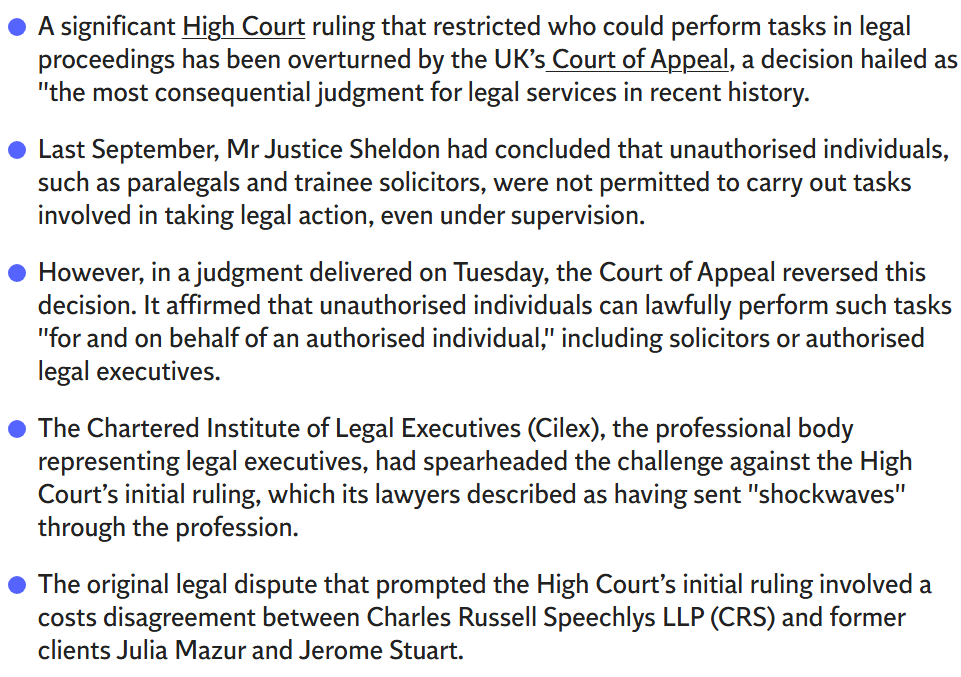
Most litigants in person focus on the evidence in their case—what happened, what can be proven, and what outcome they are asking the court to make. But following the High Court decision in Mazur v Charles Russell Speechlys LLP, there is another issue that is now just as important: who is actually running your case. If that line is blurred, it can create risks that go beyond the facts themselves—affecting how your case is viewed, how it is challenged, and ultimately how strong your position really is.
- If someone else is effectively running your case, it may create legal risk.
- Only authorised or exempt individuals can conduct litigation.
- The court is increasingly alert to who is actually in control of a case.
- Opponents may use this issue tactically against you.
- You must remain visibly and practically in control at all times.
Could Your Case Be Invalid? The Hidden Risk After Mazur
Most litigants in person are focused on the facts of their case.
What happened. What the evidence shows. What outcome they are asking the court to make.
But following the High Court decision in Mazur v Charles Russell Speechlys LLP [2025] EWHC 2341 (KB), there is another issue that cannot be ignored:
Who is actually running your case?
Because if the answer is “not you”, there may now be risks that many people simply haven’t considered.
—Why This Issue Matters More Than Ever
The court in Mazur made it clear that “conduct of litigation” is a reserved legal activity. Only authorised or exempt individuals can carry it out.
This is not new law.
What has changed is how clearly—and how strictly—the courts are now prepared to apply it.
That means the question of who is in control of a case is no longer just technical. It can become a live issue.
—What Could Go Wrong?
If someone else is effectively running your case—making decisions, sending correspondence on your behalf, or managing the process—you may face:
- Challenges from the other side about how your case has been conducted
- Increased scrutiny from the court
- Arguments that your case has not been properly managed
This does not automatically mean your case is “invalid”.
But it does mean that your position may be more open to challenge than you expect.
—The Tactical Reality
Family proceedings are often hard-fought.
Where an opportunity exists to challenge the other party’s position, it is often taken.
Following Mazur, one such line of challenge may be:
“This case has not been conducted properly.”
Even raising that argument can:
- Shift focus away from your core case
- Create additional pressure
- Undermine how your case is perceived
That is a risk worth managing carefully.
—The Most Common Misunderstanding
Many litigants assume that as long as they have help, they are protected.
That is not the test.
The test is control.
Are you the one making the decisions and taking the steps in your case?
If the answer is unclear, that is where problems can begin.
—What a Safe Structure Looks Like
A properly structured case will always show that:
- You make the decisions
- You approve all documents
- You send communications in your own name
- You sign and file everything
Support can sit behind that.
It can be strong, detailed, and strategic.
But it must remain support.
—Red Flags to Watch For
If any of the following are happening, it is worth stepping back and reassessing:
- Someone else is emailing the court or the other side on your behalf
- Documents are being sent without your clear approval
- Decisions are being made “for you”
- You feel like you are not fully in control of your case
These are not just practical concerns—they may now carry legal significance.
—Staying in Control Strengthens Your Case
This is not just about avoiding risk.
When you are clearly in control of your case:
- Your credibility improves
- Your position is harder to challenge
- Your case presentation becomes more coherent
Structure is not a limitation.
It is an advantage.
—Final Thoughts
The decision in Mazur does not mean you should face proceedings alone.
It means that how your support is structured now matters more than ever.
The strongest position is one where you are clearly in control, supported by the right structure behind you.
Get that right, and your case remains focused where it should be—on the outcome for you and your family.
—Need Structured Support With Your Case?
If you are a litigant in person and want support that strengthens your case without exposing you to unnecessary risk, you can book an initial consultation below.
—Regulatory & Editorial Notice: JSH Law Ltd is not a firm of solicitors and does not provide regulated legal services. This article is for general information and commentary only and does not constitute legal advice. Any references to legal cases or third-party practices are provided for public interest analysis and educational purposes.

 © 2026 JSH Law Ltd. All rights reserved.
 © 2026 JSH Law Ltd. All rights reserved.
Leave a Reply
Want to join the discussion?Feel free to contribute!