

If Victims Need Legal Advisers in Crown Court, Why Are Parents Still Facing Family Court Alone?
Every victim of domestic abuse deserves to feel supported, informed and heard. This week the UK Government announced a £5 million pilot scheme bringing independent legal advisers into Crown Court domestic abuse cases, alongside enhanced support for victims of rape and serious sexual violence. It is a welcome recognition that navigating the justice system can be overwhelming. But for many parents involved in family court proceedings, a difficult question remains: if independent legal support is essential in criminal courts, why is it still largely absent from the family justice system where life-changing decisions about children are made every day?
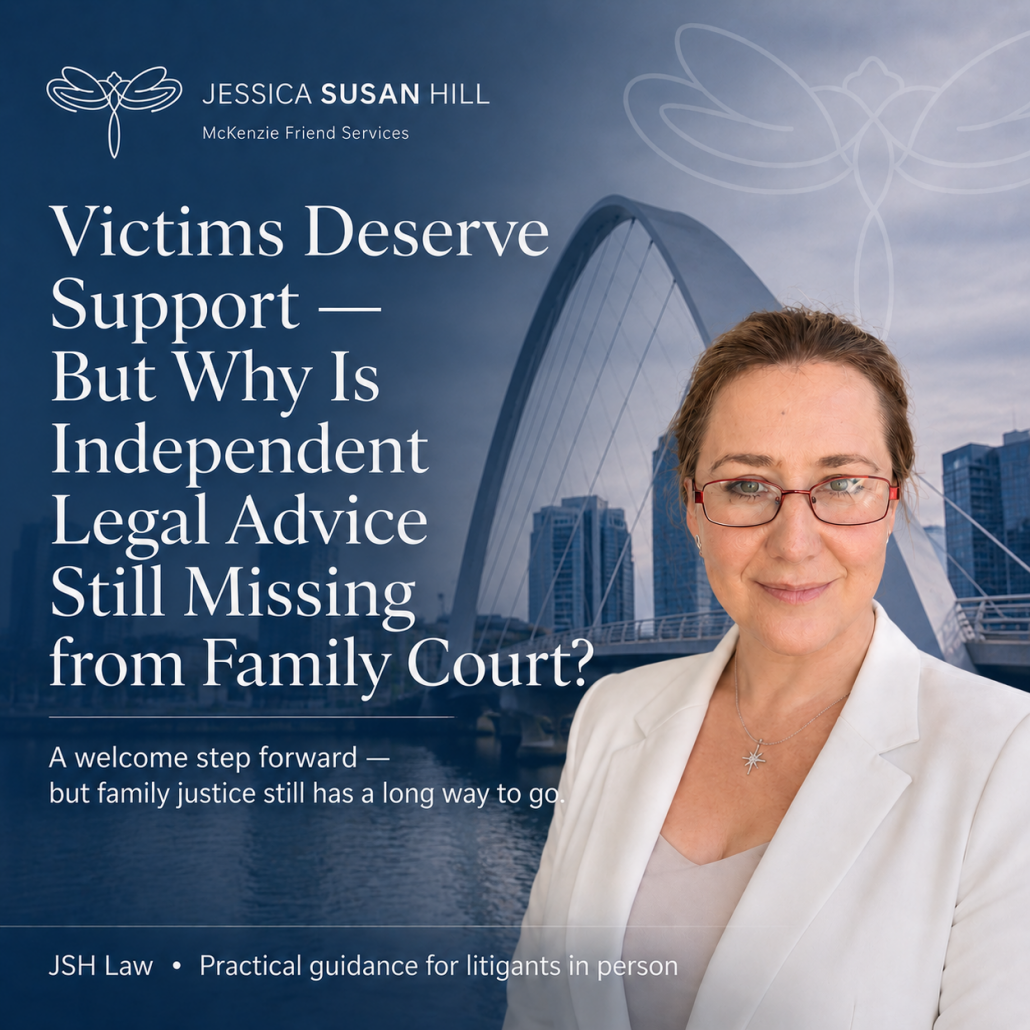
Victims Deserve Support — But Why Is Independent Legal Advice Still Missing from Family Court?
Victims of domestic abuse often describe the justice system as confusing, intimidating and difficult to navigate.
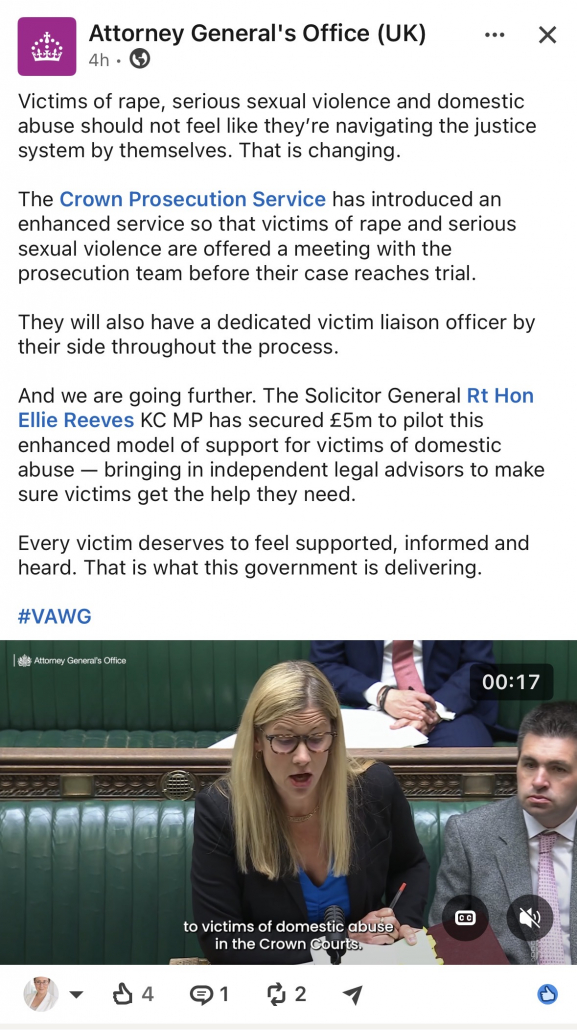
This week, the Attorney General’s Office announced new measures intended to improve support for victims involved in criminal proceedings. The reforms include enhanced Crown Prosecution Service engagement with victims of rape and serious sexual violence before trial, dedicated victim liaison officers, and a £5 million pilot programme introducing independent legal advisers for victims of domestic abuse appearing in Crown Court cases.
The announcement reflects a growing recognition that vulnerable individuals should not be expected to navigate complex legal processes entirely alone.
That principle is difficult to argue with.
What Has Been Announced?
According to the Government announcement, victims of rape and serious sexual violence will now be offered meetings with prosecution teams before their case reaches trial.
Victims will also have access to dedicated victim liaison officers throughout the criminal process.
Alongside this, the Solicitor General has secured funding for a pilot scheme bringing independent legal advisers into domestic abuse cases before the Crown Court.
A Positive Development
For many victims, criminal proceedings can feel overwhelming.
They may be asked to provide statements, review evidence, attend conferences, understand special measures, respond to disclosure issues and prepare for trial.
Having access to a dedicated adviser who can explain procedures, answer questions and provide practical support is likely to improve both engagement and confidence in the justice process.
These reforms recognise something that many legal professionals have known for years:
People are better able to participate in legal proceedings when they understand what is happening and what is expected of them.
The Family Court Gap
However, the announcement also highlights a stark contrast between criminal and family justice.
In the family courts, thousands of parents continue to represent themselves following reductions in legal aid and increasing difficulty finding affordable legal representation.
Many litigants in person are expected to:
- Prepare witness statements
- Understand safeguarding procedures
- Analyse Section 7 reports
- Review disclosure evidence
- Comply with court directions
- Cross-examine witnesses
- Understand complex legal tests and case law
- Present their case before a judge
Yet many receive little or no legal assistance.
The irony is difficult to ignore.
If independent legal advice is considered necessary to help vulnerable individuals navigate Crown Court proceedings, it raises legitimate questions about why similar support remains so limited within family proceedings where decisions can fundamentally affect relationships between parents and children.
What Litigants in Person Tell Us
At JSH Law, we regularly hear from parents who feel overwhelmed by the process.
Many describe spending evenings trying to understand court orders, procedural rules, safeguarding reports and evidence requirements after searching online for answers.
Others struggle to identify relevant issues within lengthy court bundles or understand how to challenge professional reports they believe are inaccurate.
The problem is not simply legal knowledge.
It is navigating a highly specialised system during one of the most stressful periods of a person’s life.
It is about understanding the process well enough to participate effectively within it.
Could This Be the Beginning of Wider Reform?
The Government’s pilot scheme may prove successful.
If it does, policymakers may need to consider whether similar models could benefit family court users, particularly victims of domestic abuse, vulnerable parties and litigants in person navigating complex private law proceedings.
Independent legal advice does not replace judicial independence.
Nor does it guarantee outcomes.
But it can help ensure that individuals understand their rights, obligations and options before critical decisions are made.
For many families currently navigating the family justice system alone, that support remains difficult to access.
Final Thoughts
The Government deserves credit for recognising that victims should not face complex legal proceedings without meaningful support.
The question now is whether that same principle should apply more broadly across the justice system.
For thousands of litigants in person involved in family proceedings, the answer may seem obvious.
Need help understanding family court documents, safeguarding reports or upcoming hearings?
JSH Law provides practical litigation support, document review and strategic guidance for litigants in person navigating family court proceedings.

 jsh law ltd













Leave a Reply
Want to join the discussion?Feel free to contribute!