Many litigants in person enter family court believing the hardest part will be understanding the law. In reality, what often breaks people first is the relentless emotional and psychological pressure of trying to manage proceedings alone. The paperwork, allegations, deadlines, CAFCASS involvement, statements, evidence gathering and constant uncertainty can quickly become overwhelming — especially when combined with work, parenting, financial strain and trauma. Behind closed doors, many litigants in person are quietly experiencing anxiety, insomnia, exhaustion and burnout while trying to navigate one of the most emotionally charged systems in the country without professional support.
The Hidden Mental Health Crisis in Family Court
There is a growing conversation in workplaces, leadership circles and healthcare settings about burnout, chronic stress and mental health exhaustion. Yet one group is rarely included in that conversation: litigants in person navigating family court proceedings.
Every day across England and Wales, parents are attempting to manage highly emotional and procedurally complex cases entirely alone. Many are responding to C100 applications, safeguarding allegations, CAFCASS involvement, non-molestation proceedings or disputes over contact with their children without legal representation.
On paper, they are simply “litigants in person.”
In reality, many are frightened, exhausted and overwhelmed people trying to survive one of the most stressful periods of their lives while simultaneously acting as their own case manager, administrator, strategist and advocate.
The Emotional Reality for Many Litigants in Person
Constant anxiety about saying or filing the wrong thing
Fear of losing time with children
Sleep deprivation and racing thoughts
Emotional exhaustion from repeated allegations and conflict
Difficulty concentrating at work or while parenting
Isolation and lack of emotional support
Panic caused by court deadlines and legal language
Hypervigilance while waiting for CAFCASS reports or hearings
Family Court Becomes a Second Full-Time Job
One of the most underestimated aspects of family court proceedings is the sheer administrative burden placed on litigants in person.
Most people enter the process believing they simply need to “tell the judge what happened.”
Very quickly, they discover they are expected to understand:
court procedure and directions
how to draft statements
how to organise evidence
what is relevant or admissible
how to prepare a chronology
how to respond to allegations
what CAFCASS does
how hearings operate
court deadlines and filing requirements
All while continuing to work, parent, pay bills and attempt to maintain emotional stability.
For many litigants in person, family court proceedings become a second full-time job — except one with enormous emotional stakes attached to it.
The Cost of “Doing It Alone”
Many people avoid seeking support because they believe they cannot afford legal help.
That concern is understandable. Family law representation can be extremely expensive, particularly following the widespread removal of legal aid from private family proceedings.
But there is another cost that often goes unrecognised: the cost to physical and mental health.
Trying to carry every aspect of a family court case alone can lead to:
burnout
chronic stress
panic attacks
insomnia
depression
decision fatigue
emotional dysregulation
difficulty functioning day-to-day
Many litigants in person find themselves permanently “on edge,” checking emails obsessively, unable to switch off mentally, and struggling to focus on anything outside the proceedings.
Important Reality Check
Saving money by handling proceedings entirely alone may sometimes come at a significant personal cost. Practical support at the right stage of proceedings can reduce pressure, improve organisation and help litigants regain some emotional breathing space.
Why Procedural Support Matters
A McKenzie Friend or litigation support service is not the same as instructing a solicitor to conduct litigation. However, practical procedural support can make a substantial difference to litigants in person who are struggling to cope with the process.
Many litigants do not necessarily need full legal representation throughout an entire case. Often, what they need most is structured support at critical moments.
That may include:
understanding court papers
help structuring a witness statement
preparing a position statement
organising evidence
creating a chronology
understanding CAFCASS recommendations
preparing for a hearing
understanding procedural next steps
Reducing confusion can significantly reduce panic.
Helping litigants feel organised and prepared can improve not only their presentation in court, but also their overall wellbeing during proceedings.
The System Often Underestimates the Human Impact
Family court proceedings are often discussed purely in terms of legal process and outcomes.
But behind every case number is a human being attempting to function under prolonged stress.
Some litigants are simultaneously dealing with:
relationship breakdown
domestic abuse allegations
financial hardship
housing instability
trauma
co-parenting conflict
social services involvement
fear of losing meaningful time with their children
The cumulative psychological pressure can be enormous.
Yet many litigants feel they must simply “push through” because there is no realistic alternative available to them financially.
You Do Not Have to Carry Everything Alone
Seeking support does not mean weakness.
It means recognising that family court proceedings are emotionally demanding and procedurally complex — particularly for those navigating them without representation.
Litigants in person often place enormous pressure on themselves to understand everything immediately and manage every aspect of proceedings alone.
That is not always realistic or sustainable.
Practical procedural support can help shoulder part of the burden.
Sometimes the most valuable thing for a litigant in person is simply having someone calm, experienced and organised helping them work through the process step-by-step.
JSH Law Ltd Supports Litigants in Person With:
Procedural guidance
Statement and position statement support
Chronologies and evidence organisation
CAFCASS and safeguarding process guidance
Hearing preparation support
Document drafting assistance
Practical litigation support for family proceedings
Final Thoughts
The family court system places extraordinary emotional pressure on litigants in person.
Burnout, anxiety and emotional exhaustion are not signs of weakness. In many cases, they are predictable responses to prolonged uncertainty, conflict and procedural overwhelm.
There should be far greater recognition of the mental health impact of navigating family proceedings alone.
If you are struggling with the pressure of family court proceedings, practical support may help you regain clarity, structure and confidence in the process.
You do not have to navigate it entirely alone.
https://jshlaw.co.uk/wp-content/uploads/2026/02/ChatGPT-Image-Feb-3-2026-03_26_42-AM.png10241536Jessica Susan Hillhttps://jshlaw.co.uk/wp-content/uploads/2026/01/jsh-law-logo-new-black-300x67.pngJessica Susan Hill2026-05-19 20:02:072026-05-19 20:02:08Family Court Burnout: The Hidden Mental Health Crisis Facing Litigants in Person
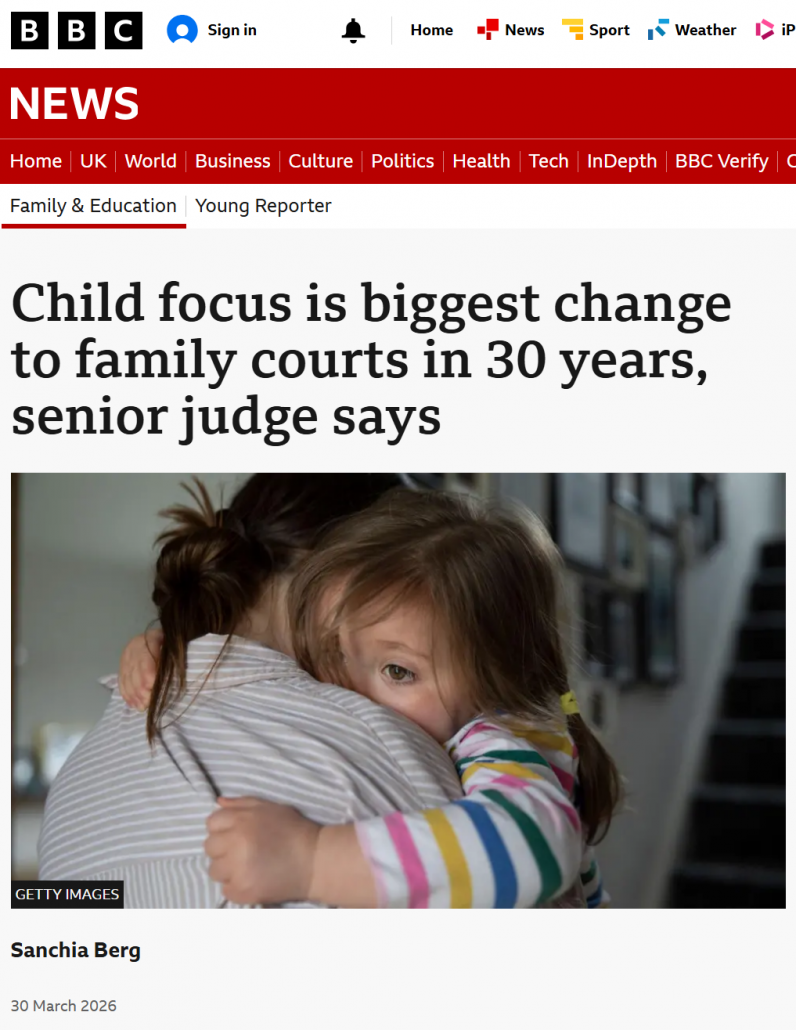
There are moments when the family justice system pauses and admits—quietly but clearly—that something isn’t working as it should. The recent announcement, widely reported by BBC News, that Child Focused Courts will be rolled out across England and Wales is one of those moments. It is being described as the most significant change in a generation. But for parents navigating proceedings right now, the real question is not what the reform promises—it is what it actually changes in practice, and whether it will make any meaningful difference to the outcome of your case.
Child-Focused Courts: What the New Family Court Model Really Means for Parents and Litigants in Person
For years, many parents have walked into the family court believing the system would carefully examine what was happening to their child, weigh the evidence properly, and then make decisions that were truly centred on welfare.
Too often, that has not been the lived experience.
Delay has been normalised. Parents have been drawn into adversarial litigation. Serious allegations have sometimes taken too long to assess properly. Children have been left waiting while adults, professionals and institutions move at a pace that bears little resemblance to a child’s sense of time.
That is why the latest announcement reported by the BBC matters.
The government has now confirmed that the newly named Child Focused Courts model, previously known as the Pathfinder approach, will be rolled out across England and Wales. Senior family judge Sir Andrew McFarlane has described the shift as the biggest change in this area of family justice in 30 years. It is being presented as a major structural reset: less adversarial, more front-loaded, more alert to domestic abuse, and more focused on what the child is actually experiencing.
Key takeaways for litigants in person
1. The family court process is changing. In many areas, the court will be expected to focus much earlier on the child’s actual lived experience, not just the parents’ competing positions.
2. Early information is becoming more important. If your case is poorly prepared at the beginning, you may lose ground quickly.
3. Allegations of harm, especially domestic abuse, are supposed to be identified and explored sooner.
4. A child-focused system does not mean parents can relax. It means you need to be more disciplined, more evidence-led, and more careful about how you present your case.
5. The label sounds positive, but litigants in person should still approach the system with clear eyes. A new model is only as good as its day-to-day implementation.
Why this change is happening
The official explanation is straightforward: the existing family court process has too often been too slow, too conflict-driven, and too damaging for children. The Ministry of Justice says the pilot areas showed cases being resolved up to seven and a half months faster, with backlogs reduced and agencies working together earlier where domestic abuse or other forms of harm were alleged.
That matters. In private children proceedings, delay is not administrative inconvenience. It is lived instability. For a child, months of uncertainty about where they will live, who they will see, and whether adults will stop fighting can feel enormous.
The judiciary has also been unusually clear in its support for the reform. Sir Andrew McFarlane has said the key change is the production of a Child Impact Report by Cafcass, Cafcass Cymru or the local authority at a much earlier stage. In simple terms, the idea is to stop leaving meaningful welfare analysis until later in the process and instead bring it forward, so the first hearing is better informed and more child-centred from the outset.
That is a significant cultural shift. The President of the Family Division has even said that the model “turns the old approach on its head”.
What is a Child Focused Court?
In practical terms, Child Focused Courts are intended to move the family court away from a parent-versus-parent battle model and towards a problem-solving model centred on child welfare and safety.
That sounds obvious. Family courts should already be child-focused. The welfare of the child is already the court’s paramount consideration under section 1 of the Children Act 1989. But anyone with real experience of the system knows that what the law says on paper and what proceedings feel like in practice are not always the same thing.
The significance of this reform is that it tries to change the process, not just repeat the principle.
Under the model being rolled out, there is supposed to be earlier gathering of information, earlier risk identification, earlier attention to domestic abuse, earlier engagement with the child’s situation, and fewer unnecessary hearings. The first hearing is not meant to be a vague holding exercise. It is meant to be a better-informed decision point.
That is the theory. And the theory is sensible.
The Child Impact Report: why this matters so much
The Child Impact Report is one of the most important features of the new model.
Traditionally, many parents have experienced the family court process as something in which the adults speak first, argue first, accuse first, file statements first, and only later does a proper welfare-focused assessment begin to shape the case. By then, narratives may already have hardened. Interim positions may already have influenced the direction of proceedings. The emotional temperature may already be high.
The Child Impact Report is intended to change that.
According to the judiciary, this report is designed to give the court an early understanding of the impact the dispute is having on the child. The first hearing can then focus on the real question: what needs to happen to make things better for this child?
For litigants in person, that should be a wake-up call.
If the case is going to be framed earlier around impact, welfare and safety, then your preparation cannot just be a list of what the other parent has done wrong. You need to be able to explain, clearly and calmly:
What is happening for the child?
What is the child currently experiencing?
What are the risks, if any?
What arrangements are working or not working?
What practical outcome are you asking the court to put in place, and why is it better for the child?
That is a more disciplined question than many parents are used to answering.
Will this help victims of domestic abuse?
This is one of the most important questions, and also one of the most sensitive.
The government and judiciary have both emphasised that the new model is intended to improve the family court’s handling of domestic abuse. Official statements say that risks should be identified sooner, support should come in earlier, and the process should be less retraumatising. The President of the Family Division has also noted the regular involvement of domestic abuse professionals in the model.
That is positive. It is also long overdue.
For years, one of the deepest criticisms of private children proceedings has been that abuse allegations were too often forced into adversarial structures that did not feel safe, coherent or humane. Some parents have felt disbelieved. Others have felt that serious issues were minimised in the rush to restore or preserve parental involvement. Still others have experienced proceedings as a form of continuing control.
If the Child Focused Courts model genuinely improves early identification of harm, early risk assessment, and the quality of the court’s understanding of abuse dynamics, that is a meaningful step forward.
But parents should also be realistic. Structural reform is not the same thing as guaranteed safety. A new model does not automatically produce good professional judgment. It does not eliminate poor evidence, minimisation, or misunderstanding. And it certainly does not remove the need for careful preparation.
In other words: this reform may help, but it does not remove the burden on parties to present their case properly.
What litigants in person need to understand right now
If you are representing yourself in private children proceedings, the biggest mistake you can make is to hear the phrase “child-focused” and assume the court will now do all the work for you.
It will not.
The system may become better structured. It may become better front-loaded. It may become quicker in some areas. But the pressure on litigants in person to be organised, relevant and evidence-led is not going away. If anything, it may increase.
Why? Because when information is gathered earlier, first impressions become even more important. The shape of the case may settle faster. The issues may crystallise sooner. Weak pleading, muddled allegations, emotional overstatement and disorganised evidence can do real damage at the beginning of a case.
That means you should be thinking in the following way from day one:
1. Build a proper chronology
If you cannot explain the sequence of events clearly, the court may never properly understand your case. Dates matter. Incidents matter. Changes in arrangements matter. Police involvement, school issues, safeguarding concerns, messages, missed contact, medical issues and prior agreements all need to be set out in an organised way.
2. Distinguish fact from feeling
Your emotional experience matters. But family courts still make decisions by reference to evidence, welfare and risk. Try to separate what you can prove from what you believe. The clearer you are about that distinction, the more credible you become.
3. Focus on impact on the child
Do not simply repeat what the other parent has done to you. Explain what effect it has had on the child. Has the child become anxious? Withdrawn? Distressed at transitions? Exposed to conflict? Confused about routines? Losing educational stability? Struggling emotionally after contact? Those are the types of questions that fit a genuinely child-focused analysis.
4. Be solution-led
The court is not only interested in the problem. It wants to know what order, structure or safeguard you say should be put in place. That could mean a phased reintroduction plan, indirect contact moving to supported contact, a handover arrangement, a no-discussion-of-adult-issues condition, an information-sharing provision, a defined holiday schedule, or a section 7 report if more assessment is needed.
5. Do not assume “child-focused” means “I automatically win”
That is especially important. Some parents will hear the rhetoric around child welfare and assume the system will naturally validate their position. That is dangerous thinking. The court still decides cases on evidence, proportionality and welfare evaluation. You still need to prove what you say. You still need to engage with the weaknesses in your own case. And you still need to be careful not to present adult grievances as though they are automatically child harm.
The promise of this reform — and the reality check
There is a lot to welcome here.
Earlier welfare-focused information is better than later welfare-focused information.
Earlier identification of domestic abuse risk is better than allowing those issues to drift.
Fewer hearings can be better, provided the case is being understood properly.
Listening to children earlier is better than treating their voices as an afterthought.
Trying to reduce conflict rather than inflame it is plainly sensible.
But there is also a reality check that needs to be said out loud.
Family justice reforms often sound excellent in principle. The real question is always implementation.
Will Child Impact Reports be consistently high quality?
Will Cafcass and local authorities have the time, training and resources to do this well?
Will judges across all areas apply the model with consistency?
Will litigants in person understand what is expected of them?
Will the system really become safer for those raising domestic abuse, coercive control and child harm concerns?
Those are not cynical questions. They are necessary questions.
It is entirely possible for a reform to be both promising and imperfect. That is probably the most realistic position to take.
What this may mean for McKenzie Friend support and litigation support
For those supporting litigants in person, this change also matters.
A more front-loaded process means early case analysis becomes even more valuable. Parents will need help identifying the real issues, preparing chronologies, organising exhibits, structuring safeguarding concerns properly, and avoiding the common trap of filing long emotional material that lacks legal or evidential focus.
That is where good litigation support can make a real difference.
A litigant in person who is left to navigate a supposedly more sophisticated process without proper help may still be badly disadvantaged. A system can be child-focused on paper and still feel overwhelming to the parent trying to present their case coherently.
So while this reform may improve the architecture of proceedings, it does not remove the need for practical support, strategic preparation and clarity of presentation.
A word of caution for parents reading headlines
Media headlines can make legal change sound more immediate, more dramatic, or more complete than it really is.
Parents should therefore be careful about two things.
First, not every court area will change in exactly the same way overnight. The rollout is national, but it is being implemented over time.
Second, a change in model does not mean every individual decision will suddenly feel fair. The day-to-day experience of family proceedings still depends on the quality of the evidence, the quality of the professionals involved, the judge hearing the case, and the extent to which the issues are properly identified and managed.
So yes, this is a major development. But no, it is not a magic fix.
What a genuinely child-focused approach should look like
In truth, a genuinely child-focused court should do more than use child-centred language.
It should:
Identify harm early.
Recognise abuse properly.
Reduce delay.
Hear children appropriately.
Avoid unnecessary adversarial escalation.
Make proportionate orders grounded in evidence.
Support arrangements that are safe, workable and emotionally realistic for the child.
It should also resist lazy assumptions. It should not confuse adult assertion with proof. It should not reduce complex children’s cases to slogans. And it should not force a child to carry the emotional burden of a process designed by adults but badly experienced by children.
That is the standard by which this reform will need to be judged.
Final thoughts
The BBC report is right to treat this as a major moment in family justice. It is a serious development, and one that could improve outcomes for many children and families if it is implemented well.
But litigants in person should approach it with both hope and discipline.
Hope, because a court process that listens earlier, assesses sooner, and focuses more clearly on the child is plainly preferable to one that does not.
Discipline, because no reform removes the need to prepare your case properly.
If you are in private children proceedings now, the message is simple: do not wait for the system to become perfect before you become organised.
Build the chronology. Clarify the issues. Focus on the child. Gather the evidence. Make a realistic proposal. Say what the court needs to know, not just what you most want to say.
That has always mattered.
Under a Child Focused Court model, it may matter earlier than ever.
Regulatory & Editorial Notice: This article is published by JSH Law Ltd for general information, commentary and public legal education only. JSH Law Ltd is not a firm of solicitors and does not provide reserved legal activities or regulated legal services. Nothing in this article constitutes legal advice, representation, or the formation of a solicitor-client relationship. Family court cases turn on their own facts, evidence, judicial evaluation and procedural history. Readers should obtain advice tailored to their own circumstances before taking or refraining from any step in litigation. Commentary on public reporting, court reform, institutions or third-party materials is editorial in nature and is presented in good faith on the basis of sources believed to be reliable at the time of publication.
Need help preparing for family court?
If you are facing private children proceedings and need clear, strategic support, book a
15-minute initial consultation to discuss your case, your next steps, and how to approach proceedings with greater confidence.
Practical litigation support. Clear strategy. Confidence before your next hearing.
https://jshlaw.co.uk/wp-content/uploads/2026/02/ChatGPT-Image-Feb-3-2026-03_26_42-AM.png10241536Jessica Susan Hillhttps://jshlaw.co.uk/wp-content/uploads/2026/01/jsh-law-logo-new-black-300x67.pngJessica Susan Hill2026-04-03 13:44:042026-04-03 14:36:48Child-Focused Courts: What the New Family Court Model Really Means for Parents and Litigants in Person
Advocacy is not about being loud, emotional, or argumentative. It is about presenting your case clearly, calmly, and strategically so the judge can make a decision that serves your child’s welfare. In this guide for litigants in person, we break down the structure of effective advocacy in Family Court — from opening submissions and referencing evidence properly to cross-examination skills and closing arguments. If you are representing yourself, this is the framework you need.
Advocacy Skills for Litigants in Person: How to Present Your Case Clearly and Effectively in Family Court
Court Skills for Litigants in Person | England & Wales | Practical, strategic and structured
Key takeaways for litigants in person
Advocacy is clarity under pressure — not performance or volume.
The court wants structure: issue, law, evidence, proposed order.
Judges respond to proportionate, child-focused reasoning — not emotional narrative.
Preparation matters more than confidence.
Short, focused submissions are stronger than long, unfocused ones.
Credibility is built through restraint, accuracy and respect for the process.
Advocacy is not about being the loudest person in the room.
It is not about delivering a speech.
And it is not about “winning the argument”.
Advocacy in Family Court is the disciplined presentation of your case in a way that assists the judge.
If you are a litigant in person, you are doing two jobs at once:
You are a party to emotionally difficult proceedings.
You are your own advocate.
That is not easy.
But it is manageable if you understand what good advocacy actually looks like.
If your submission does not answer those questions, it will feel unfocused — even if it is heartfelt.
2. The Core Structure of Effective Advocacy
Whether you are addressing the court at a First Hearing Dispute Resolution Appointment (FHDRA),
a directions hearing, or a final hearing, use this structure:
Identify the issue.
State the legal framework.
Refer to the key evidence.
Propose a clear order.
Example (Child Arrangements Case)
Issue: The current informal arrangement is unstable and leading to conflict at handovers.
Law: The child’s welfare under s.1 Children Act 1989; harm suffered and risk of harm.
Evidence: Three missed handovers (bundle pages X–Y); school letter confirming child distress.
Proposed Order: Defined alternate weekend contact with school-based handovers.
That is advocacy.
Short. Structured. Focused.
3. Tone and Demeanour: How You Present Matters
Judges expect:
Respectful language.
No interruptions.
No personal attacks.
Calm responses under challenge.
Losing composure undermines credibility.
Even if the other party provokes you.
Advocacy is controlled discipline.
4. Dealing with Evidence in Oral Submissions
Refer to page numbers.
Be precise.
Avoid phrases like:
“It’s all in there somewhere.”
Instead:
“Bundle page 142 shows the police reference number confirming the incident.”
Precision builds authority.
5. Cross-Examination Skills (If Applicable)
If you are permitted to question the other party (and subject to Domestic Abuse Act restrictions),
questions must be:
Short.
Specific.
Non-argumentative.
Example:
“On 4 March, did you cancel contact at 7:45pm?”
Not:
“You always manipulate contact to control me, don’t you?”
The first invites a factual answer.
The second invites conflict.
6. Common Advocacy Mistakes
Reading a 20-page statement aloud.
Re-arguing past points repeatedly.
Interrupting the judge.
Speaking over the other party.
Failing to propose a clear outcome.
Judges are time-pressured.
Clarity helps them help you.
https://jshlaw.co.uk/wp-content/uploads/2026/02/ChatGPT-Image-Feb-3-2026-03_26_42-AM.png10241536Jessica Susan Hillhttps://jshlaw.co.uk/wp-content/uploads/2026/01/jsh-law-logo-new-black-300x67.pngJessica Susan Hill2026-02-19 15:53:252026-02-19 15:53:29Advocacy Skills for Litigants in Person: How to Present Your Case Clearly and Effectively in Family Court
For decades, the family courts have operated in a space that is both necessary and uncomfortable: decisions of the highest consequence, made largely out of public view. On 30 January 2023, that began to shift. As reported by BBC News, a new transparency pilot allowed journalists to report on family court proceedings in a way that had not previously been possible. It was presented as a step towards accountability. But for parents and litigants in person, the real significance runs deeper—because scrutiny is not just about visibility, it is about whether the system can be properly trusted.
Why Family Court Transparency Matters: What the 30 January 2023 Reporting Pilot Meant for Parents and Litigants in Person
For years, one of the deepest frustrations for families caught up in the family justice system has been this: life-changing decisions are made behind closed doors, yet the people most affected often come away feeling unheard, disoriented, and unable to explain what has happened to them. That is why the 30 January 2023 transparency pilot in the family courts mattered so much. It was not simply a procedural reform for journalists. It was a recognition that secrecy, however well-intentioned, can also shield poor process, weak accountability, and profound injustice. For parents and litigants in person, that moment marked something important: the beginning of a more serious public conversation about what really happens in family court.
Key takeaways for litigants in person
1. Greater transparency in family court is not about sensationalism. It is about accountability, scrutiny and public confidence.
2. The family court deals with some of the most serious and intimate decisions the state can make about children and families.
3. For too long, many parents have felt unable to challenge what happened because the system has been too closed for meaningful scrutiny.
4. Journalists being allowed to report from family court was an important step, but it was never a complete answer on its own.
5. Litigants in person still need to be organised, informed and strategically prepared. Transparency helps, but it does not remove the need to present your case properly.
If you need strategic support with your family court case, chronology, statement, position statement, bundle preparation or hearing preparation, you can book a short initial call below.
What changed on 30 January 2023?
On 30 January 2023, a reporting pilot began in family courts in Leeds, Carlisle and Cardiff. Accredited journalists were to be allowed to report on proceedings in a way that had not previously been possible in any meaningful sense. The intention was to enable closer scrutiny of the family courts, the conduct of local authorities, and the broader decision-making machinery operating in cases involving children.
That may sound modest. In reality, it was significant.
The family courts decide some of the most sensitive issues the law can ever touch: whether a child should be removed from their family, whether parents should be restricted in seeing their children, whether allegations of neglect, abuse, coercion or risk are made out, and whether the state should intervene permanently in family life. These are not minor procedural questions. They are fundamental decisions with lifelong consequences.
Yet despite the seriousness of those decisions, family proceedings have long existed in a space where privacy and secrecy have become difficult to disentangle. Privacy for children is essential. That is not in dispute. But privacy for children is not the same thing as insulation of institutions from scrutiny.
Why this mattered so much
The strongest part of the reporting around the pilot was not simply that a rule was changing. It was the explanation of why scrutiny mattered in the first place.
One of the families referenced in the coverage was that of Liz Anstey, who described the family court process as surreal, traumatic and deeply confusing. She spoke of not knowing who was who, of hearings being adjourned, and of struggling to understand what was going on. That description will resonate with far too many parents.
It should not be normal for people to come out of proceedings affecting their children feeling as though they have fallen into a procedural rabbit hole. Yet many do.
For litigants in person especially, family court can feel like a system with its own language, its own hidden rules, and its own hierarchy of professionals speaking over the lives of ordinary people. Even where the legal process is attempting to do justice, the lived experience can still be one of disempowerment.
That is why scrutiny matters. Not because every complaint made by every parent will be justified. Not because every judicial decision is wrong. But because a justice system that cannot be properly observed will always struggle to command confidence.
The long road to transparency
The 2023 pilot did not appear out of nowhere. It followed decades of pressure, criticism and frustration.
There have been repeated calls over many years for family courts to be opened up to greater scrutiny. Those calls grew louder after cases in which serious errors or alleged miscarriages of justice became publicly known. The concern was never simply that family proceedings were private. The concern was that a private system can become a system in which accountability is too weak, patterns are too difficult to identify, and public understanding is distorted by the absence of real information.
As the article explains, there were previous attempts to increase transparency. In 2009, journalists were allowed into family court hearings, but the practical effect was limited. The rules were too unclear. Reporting remained heavily constrained. Journalists could attend, but not in a way that made meaningful public reporting realistic in most cases.
That distinction is important.
There is a world of difference between being nominally allowed into a courtroom and being able to report in a way that actually informs the public. If a journalist cannot identify the local authority, cannot speak to the family, cannot explain the core facts, and cannot describe the decision in a coherent way, then what exists is not real open justice. It is a carefully managed appearance of it.
Why “private” should never mean “beyond scrutiny”
Family cases are heard in private for good reason. Children must be protected. Their identities, welfare and futures must not be exposed to public harm. That principle is sound and necessary.
But there has always been a dangerous slippage in public debate: the assumption that because proceedings are private, detailed scrutiny is somehow inappropriate or impossible.
That is wrong.
The justice system should be capable of doing two things at once: protecting children’s anonymity while also allowing the conduct of professionals and institutions to be examined. Those aims are not contradictory. In fact, they should sit together. If anything, a system making decisions about vulnerable children should attract more careful scrutiny, not less.
The transparency debate has never really been about whether children should be named. They should not. It has been about whether the operation of the system itself should remain largely shielded from view.
That is where the reporting pilot mattered. It accepted, at least in principle, that anonymity for the child can coexist with proper public-interest reporting.
Why this issue matters to litigants in person
For litigants in person, the transparency issue is not abstract. It affects confidence, fairness and the perceived legitimacy of the whole process.
Parents representing themselves often feel that professionals enter the room with authority already attached to them. Cafcass officers, local authority social workers, experts, guardians, counsel and judges all operate within a system they understand. The parent may be the only person in the room trying to navigate it in real time.
When that process is then almost entirely shielded from outside scrutiny, the parent’s sense of powerlessness can intensify. Even where there are legal remedies, appeals or complaint routes, those mechanisms can be difficult, expensive, slow and procedurally complex. Many families do not have the resources to pursue them.
Transparency does not solve that problem entirely. But it changes the climate. It creates at least the possibility that poor practice, inconsistency, or systemic patterns may be seen and discussed.
And that matters, because courts and agencies behave differently when they know their conduct may be observed and reported.
The limits of transparency
It is also important to be realistic. Transparency is not a cure-all.
Allowing journalists to report on cases does not automatically prevent bad decisions. It does not guarantee that all families will be treated fairly. It does not eliminate the structural disadvantages faced by litigants in person. And it does not remove the emotional and procedural pressure of family proceedings.
In some respects, transparency may even expose a further uncomfortable truth: that the problem was never only secrecy. It was also resources, culture, delay, evidential inconsistency, and the enormous discretionary power exercised within a stressed and overburdened system.
But transparency still matters because without it, those deeper problems are easier to ignore.
A closed system can always reassure itself that it is functioning well. A scrutinised system has to show its workings.
The human cost of family court decisions
One of the most powerful features of the earlier article was its reminder that family court reporting is not simply about legal principle. It is about human consequence.
There is a tendency in legal systems to become desensitised to process. Adjournments become routine. bundles become routine. directions become routine. expert reports become routine. But for the family living through the case, none of it is routine.
When a child is removed, when contact is suspended, when allegations are made, when a case drags on, when a hearing ends in tears outside court, those events are not procedural footnotes. They are pivotal moments in people’s lives.
That is one of the reasons meaningful reporting matters. It restores some human visibility to a system that can otherwise become dominated by anonymised process and professional shorthand.
It forces a wider public to confront what family justice actually does.
The issue of confidence in the system
Sir Andrew McFarlane’s observation at the time that there was “an absence of confidence” in the family courts due to a “vacuum of information” was, in my view, a strikingly honest one.
Confidence in family justice cannot be manufactured by insisting that the public should simply trust it. Trust has to be earned. And in any justice system, trust depends in part on visibility.
Where information is too scarce, rumour fills the gap. Where reporting is too constrained, suspicion hardens. Where people are told that everything is being done properly but cannot see how, confidence erodes.
That does not mean every criticism is well-founded. It means opacity is a poor foundation for legitimacy.
What parents should take from this
If you are a parent or grandparent involved in family proceedings, this issue should matter to you even if no journalist ever attends your hearing.
It matters because it signals a broader recognition that the family justice system cannot remain culturally closed if it wants public trust.
It matters because it validates something many families have been saying for years: that the system can feel inaccessible, confusing and unaccountable.
And it matters because it underlines the importance of presenting your case in a way that is clear, disciplined and evidence-led. In a more transparent system, the quality of process becomes more visible. That means your own preparation matters too.
If you are self-representing, ask yourself:
Can I explain my case clearly?
Do I have a proper chronology?
Have I distinguished fact from allegation?
Have I focused on the child’s welfare rather than only my own grievances?
Do I understand what order I am asking the court to make and why?
Transparency may shine more light on the system, but you still need to be ready to stand in that light with a properly prepared case.
My own view
I have long taken the view that privacy for children must be preserved, but that this should never be used as a reason to avoid examination of how the family courts actually operate.
The stakes are simply too high.
When the state intervenes in family life, when children are removed, when contact is curtailed, when professional opinions shape outcomes, and when judicial discretion carries lifelong consequences, accountability is not optional. It is essential.
The 30 January 2023 pilot was important because it represented a serious move away from the idea that family justice can rely on closed-room legitimacy. It accepted that if the public is to have confidence in the system, the system must be prepared to be seen.
That does not weaken justice. It strengthens it.
Final thoughts
The family courts deal with some of the most painful and consequential decisions in the legal system. They will never be easy places. Nor should they become spectacles.
But neither should they remain so closed that only fragments of truth emerge, and only after years of campaigning, appeals, or extraordinary effort.
The 2023 transparency pilot mattered because it recognised that accountability and child protection can coexist. It recognised that secrecy is not the same as safety. And it offered, at least in part, a route towards a family justice system that could be better understood, better scrutinised and, perhaps in time, better trusted.
For litigants in person, that was and remains a development worth paying close attention to.
Need help preparing for family court?
If you are facing private children proceedings and need clear, strategic support, book a
15-minute initial consultation to discuss your case, your next steps, and how to approach proceedings with greater confidence.
Practical litigation support. Clear strategy. Confidence before your next hearing.
Regulatory & Editorial Notice: This article is published by JSH Law Ltd for general information, commentary and public legal education only. JSH Law Ltd is not a firm of solicitors and does not provide reserved legal activities or regulated legal services. Nothing in this article constitutes legal advice, representation, or the formation of a solicitor-client relationship. Family court cases turn on their own facts, evidence, judicial evaluation and procedural history. Readers should obtain advice tailored to their own circumstances before taking or refraining from any step in litigation. Commentary on public reporting, court reform, institutions or third-party materials is editorial in nature and is presented in good faith on the basis of sources believed to be reliable at the time of publication.
https://jshlaw.co.uk/wp-content/uploads/2026/02/ChatGPT-Image-Feb-3-2026-03_26_42-AM.png10241536Jessica Susan Hillhttps://jshlaw.co.uk/wp-content/uploads/2026/01/jsh-law-logo-new-black-300x67.pngJessica Susan Hill2025-04-03 14:49:002026-04-03 14:51:43Why Family Court Transparency Matters: What the 30 January 2023 Reporting Pilot Meant for Parents and Litigants in Person

 © 2026 JSH Law Ltd. All rights reserved.