
Access to justice refers to the ability of individuals to understand, engage with, and effectively use legal systems to protect their rights and resolve disputes. In practice, this includes access to clear information, fair procedures, proportionate costs, reasonable timeframes, and decision-making processes that are intelligible to those without legal representation.
Content under this tag examines how court processes, procedural design, resource imbalance, and the rise of litigants in person affect real-world access to legal remedies. It also explores the responsible use of technology, including AI, as a support tool to improve clarity, organisation, and procedural compliance — without replacing legal advice or judicial discretion.
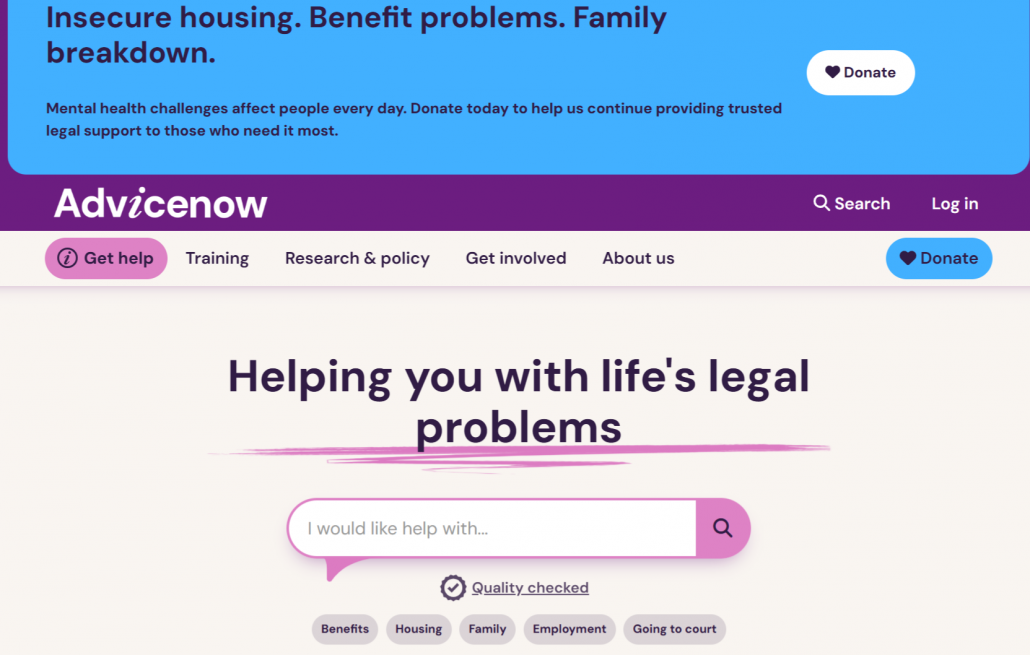
For many litigants in person, the hardest part of family court is not simply the law itself — it is understanding the process. Court forms, procedural terminology, safeguarding issues, bundles, deadlines and hearings can quickly become overwhelming for people without legal representation. In that landscape, free practical resources have become increasingly important. Advicenow is one of the best-known access-to-justice platforms in the UK, providing plain-English legal guidance designed specifically for ordinary people navigating the justice system without lawyers.
Advicenow Review for Litigants in Person: One of the Best Free Legal Resources in the UK?
Part 2 of the JSH Law Legal Tech & AI for Litigants in Person Series
By Jessica Susan Hill | JSH Law
When people think about legal technology, they often imagine artificial intelligence, futuristic software and automated legal robots.
But some of the most valuable tools available to litigants in person are not AI-powered at all.
Sometimes the most important thing is simply clear, reliable, practical guidance written in plain English by people who genuinely understand how overwhelming the court system can be.
That is where Advicenow has become one of the most important access-to-justice resources in the UK.
For many litigants in person, Advicenow quietly fills a gap that the justice system itself often leaves wide open.
It does not replace legal advice.
It does not replace representation.
But it does something increasingly valuable in modern family court:
It helps ordinary people understand what is happening to them.
What Is Advicenow?
Advicenow is a UK-based public legal education platform run by Law for Life, a charity focused on improving access to justice and legal capability.
The platform provides practical legal guidance designed specifically for ordinary people rather than lawyers.
Its resources cover areas including:
family law;
children arrangements;
domestic abuse;
housing;
employment;
benefits;
debt;
consumer rights;
small claims;
court preparation;
and representing yourself in court.
Unlike many legal websites, Advicenow is not written primarily to impress professionals.
It is written to help people survive legal problems.
Why Advicenow Matters More Than Ever
The rise in litigants in person has fundamentally changed the landscape of family court.
Large numbers of people now find themselves navigating:
child arrangements proceedings;
safeguarding allegations;
fact-finding hearings;
non-molestation applications;
enforcement proceedings;
CAFCASS involvement;
court bundles;
position statements;
and procedural deadlines — alone.
At the same time:
legal aid remains heavily restricted;
family law representation is expensive;
court systems are increasingly digital;
and procedural expectations remain extremely high.
The result is that many litigants in person enter court with little understanding of:
what documents they need;
what the court expects;
what a hearing will look like;
how evidence should be presented;
or even what the legal language means.
Advicenow directly addresses that gap.
What Advicenow Does Exceptionally Well
1. Plain-English Explanations
This is probably Advicenow’s greatest strength.
Many legal resources unintentionally assume prior legal knowledge.
Advicenow generally does not.
Its guides explain:
court terminology;
legal processes;
procedural stages;
and practical steps
in language ordinary people can realistically understand.
That sounds simple.
In reality, it is one of the hardest things to do well in legal communication.
2. Practical Court Preparation Guidance
Advicenow is at its strongest when it focuses on practical litigation support.
Particularly for overwhelmed litigants trying to make sense of unfamiliar processes.
3. Emotional Accessibility
This is an underrated point.
Many legal websites feel cold, intimidating or transactional.
Advicenow often feels written by people who understand:
stress;
fear;
confusion;
and procedural overwhelm.
That tone matters.
Especially in family proceedings involving children, safeguarding and domestic abuse.
4. It Helps Reduce Procedural Chaos
One of the biggest problems litigants in person face is not necessarily legal argument.
It is procedural chaos.
Missed deadlines.
Wrong forms.
Disorganised evidence.
Poorly structured statements.
Bundles without pagination.
Irrelevant material.
Emails sent emotionally rather than strategically.
Advicenow helps reduce some of that chaos by providing structure.
Where Advicenow Cannot Replace Human Support
This is where honesty matters.
Even excellent legal information websites have limits.
Advicenow cannot:
review your evidence in detail;
identify strategic weaknesses in your case;
prepare bespoke chronologies;
draft your statement personally;
organise thousands of pages of evidence;
prepare your hearing strategy;
cross-examine witnesses for you;
or emotionally support you through litigation in real time.
This is important because some litigants mistakenly believe that reading legal guidance is the same as being strategically prepared.
It is not.
Information helps.
But applying information to a live, emotionally charged, fact-specific family court case is much harder.
The Hidden Problem Many Litigants Still Face
There is another issue that often goes unspoken.
Many litigants in person do not merely lack information.
They lack:
confidence;
organisation;
procedural understanding;
time;
emotional capacity;
and the ability to step back objectively from their own case.
Even with excellent resources like Advicenow, many people still struggle to:
identify relevance;
present evidence proportionately;
structure arguments;
or focus on what the court actually needs to determine.
This is often where practical litigation support becomes valuable.
Advicenow vs AI Legal Tools
One of the most interesting developments in legal tech is the contrast between:
traditional public legal education platforms like Advicenow;
and emerging AI systems like ChatGPT and Claude.
Advicenow’s strengths:
human-written;
curated;
reliable;
carefully structured;
non-hallucinatory;
practical;
trusted.
AI’s strengths:
speed;
customisation;
document drafting;
summarisation;
chronology generation;
interactive explanations.
In reality, the future likely lies in combining both approaches.
Reliable human-created legal guidance combined with carefully supervised AI assistance may ultimately become one of the most effective access-to-justice models available.
Can Advicenow Replace a Solicitor or Barrister?
No.
But that is not really its purpose.
Advicenow is best understood as:
A bridge between complete confusion and informed participation in the justice system.
That is enormously valuable.
Particularly for people who:
cannot afford representation;
are waiting for legal advice;
need urgent procedural guidance;
or simply need to understand what is happening.
The Bigger Access to Justice Issue
Advicenow’s importance also says something uncomfortable about the modern justice system.
People are increasingly dependent on free online resources because formal legal support is financially out of reach for many ordinary families.
That creates a strange situation:
courts expect increasingly professional standards;
while many litigants have no realistic access to professional representation.
Platforms like Advicenow are therefore doing work that arguably helps prevent even greater pressure on an already overstretched justice system.
Because informed litigants generally:
prepare better;
understand procedure more clearly;
make fewer avoidable mistakes;
and communicate more effectively.
JSH Law Practical Verdict
JSH Law Rating: Highly Recommended for Litigants in Person
Best for:
understanding family court procedure;
learning legal terminology;
basic court preparation;
bundle guidance;
practical legal education;
reducing overwhelm.
Not a replacement for:
bespoke legal advice;
evidence strategy;
hearing preparation support;
complex safeguarding analysis;
or case-specific procedural assistance.
Final Thoughts
There is a tendency in legal technology discussions to focus only on AI.
But genuine access to justice is often improved not by flashy technology, but by clarity.
Advicenow succeeds because it does something many legal systems fail to do:
It explains things clearly to ordinary people at moments of high stress and vulnerability.
That is not a small achievement.
For litigants in person, particularly in family court, knowledge alone will not solve every problem.
But good information, clearly explained, can make the system feel less frightening, less chaotic and more navigable.
And sometimes, that is the difference between complete procedural overwhelm and someone finally feeling able to take the next step.
About the Author
Jessica Susan Hill is studying towards SQE1 and SQE2 with BPP Law School and has over 10 years’ experience litigating in person and helping others navigate family court proceedings.
She is the founder of JSH Law and has a particular interest in legal technology, AI, access to justice and practical litigation support for litigants in person.
JSH Law provides practical support including chronology building, evidence organisation, court document preparation assistance and hearing preparation support for litigants in person across England and Wales.
Part of the JSH Law Legal Tech & AI for Litigants in Person Series
Part 1 — The Truth About Using ChatGPT for Family Court as a Litigant in Person
Part 2 — Advicenow Review for Litigants in Person
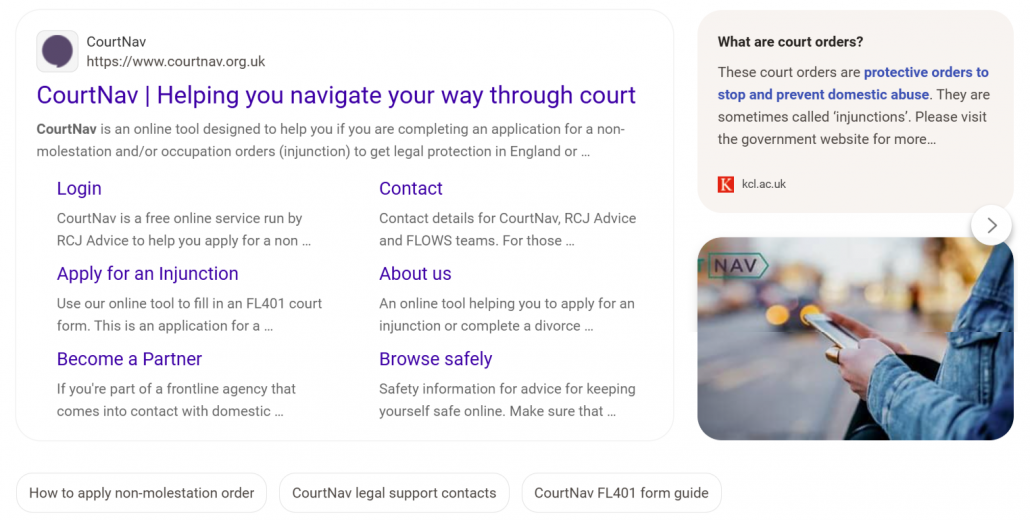
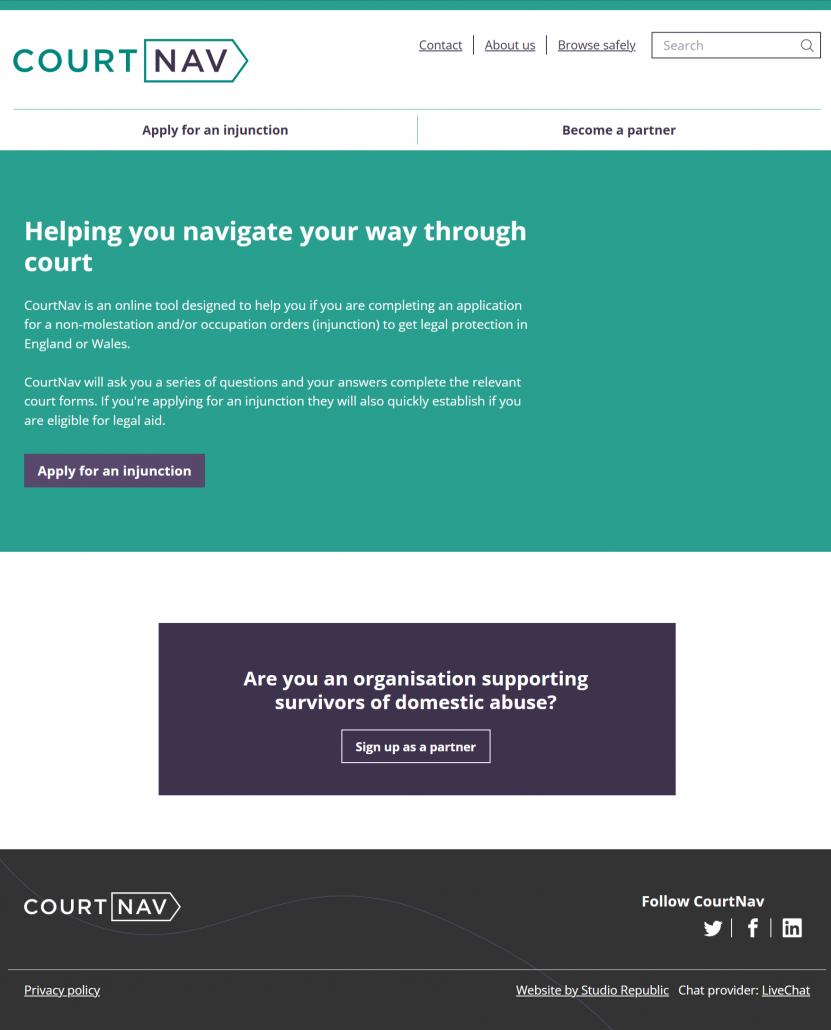
Coming next: CourtNav and the Rise of Digital Injunction Applications
Coming next: Claude vs ChatGPT for Family Court Preparation
Regulatory & Editorial Notice: JSH Law Ltd provides litigation support and McKenzie Friend services to litigants in person. JSH Law Ltd is not authorised or regulated by the Solicitors Regulation Authority. This article is provided for general educational and public-interest purposes only and does not constitute legal advice.
https://jshlaw.co.uk/wp-content/uploads/2026/02/ChatGPT-Image-Feb-3-2026-03_26_42-AM.png10241536jessica susan hillhttps://jshlaw.co.uk/wp-content/uploads/2026/01/jsh-law-logo-new-black-300x67.pngjessica susan hill2026-05-21 17:07:202026-05-21 17:26:14Advicenow Review: A Lifeline for Litigants in Person?
Almost a year after the decision in Ayinde v London Borough of Haringey [2025] EWHC 1383 (Admin) should have woken the sleeping bears in the legal profession, the Bar Standards Board has now published its long-awaited guidance on the use of Artificial Intelligence and emerging technologies by barristers. The message is unmistakable: competence in modern legal practice now includes understanding AI, its risks, its limitations and its ethical implications. This is no longer simply a technology discussion. It is now a professional standards issue.
Newsflash for Barristers: AI Competence Is Now a Professional Standards Issue
Almost a year after Ayinde v London Borough of Haringey [2025] EWHC 1383 (Admin), the legal profession has received another clear warning: artificial intelligence is no longer something barristers can treat as optional background noise. The Bar Standards Board’s new guidance on the use of Artificial Intelligence and other technologies, published on 18 May 2026, makes the position plain. AI is now firmly within the territory of professional competence, ethical judgment, client protection and duties to the court.
For barristers, this is not simply about whether they personally use ChatGPT, Copilot, Claude, Gemini or any other AI system. It is about whether they understand how these tools may affect their work, their clients, their opponents, the evidence before the court and the administration of justice itself.
The Core Message
AI is a tool. It is not a substitute for professional judgment.
Barristers remain responsible for every submission, every authority, every factual assertion and every document placed before the court. If AI has assisted in producing that work, the professional responsibility still sits with the human advocate.
Why This Guidance Matters
The Bar Standards Board has made clear that existing professional duties already apply to the use of AI and other technologies. This is important. The BSB has not created a separate “AI rulebook” sitting outside professional conduct. Instead, it has confirmed that the familiar duties of competence, honesty, confidentiality, independence and client protection all apply when technology is used in legal practice.
The guidance follows a period of growing concern about legal professionals relying on AI-generated material without proper verification. The most obvious warning sign came from Ayinde v London Borough of Haringey, where the court considered the use of false legal citations in court material. The case became a watershed moment because it exposed the risk of AI-generated legal content being treated as reliable when it had not been properly checked.
This should have woken the sleeping bears in the legal profession. In truth, some were already awake. Others are only just realising that AI is not simply a productivity tool. It is a professional standards issue.
Core Duty 7 requires barristers to provide a competent standard of work and service to each client. The BSB’s new guidance makes clear that competence now includes maintaining a sufficient level of awareness of technology and AI to understand how they may affect practice.
That does not mean every barrister must become a software engineer. It does mean that a barrister cannot responsibly ignore AI altogether.
A competent barrister now needs to understand, at least at a practical level:
how AI tools may generate inaccurate or fabricated material;
how AI-generated citations, summaries or submissions can mislead the court if not checked;
how client confidentiality and legal professional privilege may be compromised;
how AI may be used by clients, opponents, solicitors, experts or litigants in person;
how AI-generated evidence or prompt histories may arise in proceedings;
how bias may appear in AI outputs; and
what safeguards are needed before any AI-assisted work is relied upon.
Professional Standard
The “I do not use AI” answer is no longer enough.
Even barristers who do not personally use AI still need to understand how it may affect their cases, their clients, opposing parties, evidence and court submissions.
The Lesson from Ayinde
Ayinde was not just a case about fake citations. It was a case about professional responsibility.
The court was concerned with legal material being placed before it without proper checking. That concern goes directly to the administration of justice. Courts rely on lawyers to assist them accurately. When non-existent authorities, inaccurate quotations or unreliable legal propositions are put before the court, the problem is not merely technical. It undermines trust.
AI systems can produce text that looks confident, polished and legally plausible. That is precisely why they are dangerous when used without verification. A hallucinated authority may look entirely credible to a busy reader. It may contain a realistic case name, a neutral citation, judicial language and a convincing summary. But if it does not exist, it is not a minor drafting error. It is a serious professional problem.
Client Confidentiality and Privilege
One of the most important issues raised by AI in legal practice is confidentiality.
Barristers handle highly sensitive material. In family law, that may include allegations of domestic abuse, safeguarding concerns, medical information, children’s wishes and feelings, school records, police material, local authority records and private communications.
Putting that information into a free or general AI tool without proper safeguards may create serious risks. The questions are obvious:
Where is the data going?
Is it being stored?
Can it be reviewed by humans?
Can it be used to train future systems?
Has the client consented?
Has privilege been protected?
Confidentiality Warning
Free or general AI tools should not be treated as safe spaces for client information.
Where sensitive or privileged information is involved, barristers must consider confidentiality, data security, contractual protections, client consent and professional obligations before using AI.
Why Family Law Needs Particular Care
Family law is one of the areas where AI competence matters most.
Litigants in person are already using AI. They are using it to draft statements, prepare position statements, summarise messages, organise evidence, understand procedure and prepare questions for hearings. Some are using it carefully. Some are not.
This creates a new challenge for the family justice system. AI-generated material may appear in proceedings without being clearly identified. A parent may rely on an AI-generated summary of WhatsApp messages. A witness statement may contain legal phrases the party does not understand. A chronology may omit context because an AI tool compressed the material too aggressively. A safeguarding concern may be overstated, understated or framed in language that does not reflect the underlying evidence.
This does not mean AI should be dismissed. Used carefully, AI can help litigants in person organise complex information and reduce procedural overwhelm. But used carelessly, it can distort evidence, create false confidence and introduce material that may not withstand scrutiny.
Family Justice Reality
The family court is already in the AI era.
The issue is no longer whether litigants in person will use AI. They already are. The real question is whether lawyers, barristers, judges, regulators and support professionals can respond safely, ethically and intelligently.
Bias, Safeguarding and Vulnerable Court Users
AI systems are not neutral simply because they are technological. They are trained on data. That data may contain bias, assumptions and patterns that do not translate safely into legal decision-making.
In family proceedings, this matters. Cases may involve trauma, domestic abuse, coercive control, disability, neurodivergence, poverty, language barriers, cultural issues and safeguarding concerns. An AI system may not understand the lived reality behind the material it processes. It may miss context. It may flatten nuance. It may reproduce stereotypes. It may present speculation as analysis.
Barristers must therefore remain alert to bias in AI outputs and must not allow AI-generated material to replace human judgment, evidential analysis or professional responsibility.
The Duty to the Court Comes First
Core Duty 1 requires barristers to observe their duty to the court in the administration of justice. That duty remains central when AI is used.
If AI assists with drafting, research, summarising or analysis, the barrister must still ensure that anything placed before the court is accurate, properly sourced and not misleading. The court is entitled to expect that legal professionals have checked their work.
That includes checking:
case citations;
statutory references;
quotations;
procedural rules;
practice directions;
factual summaries;
chronologies;
and any legal propositions generated or assisted by AI.
The Non-Negotiable Rule
If you put it before the court, you own it.
AI cannot be blamed for inaccurate submissions. Professional responsibility remains with the barrister.
Transparency: When Should AI Use Be Disclosed?
The question of transparency is likely to become increasingly important. Not every use of AI will need to be announced. There is a difference between using AI to improve internal workflow and relying on AI-generated legal or evidential analysis in a way that affects the service provided.
However, barristers should consider whether AI use has a material impact on the work being done, the advice being given or the material being placed before the court. They should also consider whether the client needs to know that AI is being used and whether consent is required in the circumstances.
The safest approach is not performative disclosure. It is thoughtful, risk-based transparency.
The New Competence Standard for Modern Advocates
The future barrister will not be replaced by AI. But the barrister who understands AI may have a significant advantage over the barrister who ignores it.
The modern advocate will increasingly need:
legal expertise;
ethical judgment;
digital literacy;
evidence-handling skills;
data awareness;
an understanding of AI limitations;
and the ability to explain technology-related risks clearly to clients and courts.
This is particularly true in family law, where the volume of digital evidence is increasing and where litigants in person are often trying to navigate complex proceedings with limited resources.
The Bigger Point
AI competence is not about chasing trends. It is about protecting clients, protecting the court process and protecting the integrity of legal work.
Technology does not remove professional duties. It sharpens them.
What Barristers Should Be Doing Now
Barristers should now be taking practical steps to ensure that their use, understanding and supervision of AI is consistent with professional obligations.
At a minimum, that should include:
reading the BSB guidance in full;
reviewing chambers policies on AI and technology;
checking whether any AI tools used are secure and appropriate;
avoiding the input of confidential or privileged material into unsafe systems;
verifying all AI-assisted legal research against authoritative sources;
keeping records of how AI-assisted work has been checked where appropriate;
being alert to AI-generated material produced by clients or opponents;
considering whether AI use should be disclosed to clients;
and undertaking training sufficient to maintain technological competence.
For Those Training Toward Advocacy, the Message Is Clear
This guidance is not only relevant to practising barristers. It is also important for anyone training toward qualification, advocacy or a future role in modern legal practice.
The standards expected of the profession are moving. Those entering the profession now need to understand not only black-letter law and procedure, but also how technology interacts with evidence, ethics, confidentiality, client care and court duties.
That does not diminish the role of lawyers. It raises the standard.
Final Thought
The legal profession does not need to panic about AI. But it does need to stop pretending that AI is optional.
The BSB’s guidance is a significant marker in the development of professional standards. It confirms that AI is now part of the competence conversation. For barristers, the message is simple: understand the tools, understand the risks, protect your clients, protect the court, and never allow technology to replace professional judgment.
Almost a year after Ayinde, the warning has become impossible to ignore. The sleeping bears have been woken.
About the Author
Jessica Susan Hill is the founder of JSH Law, providing practical family court support, litigation strategy and evidence-led case analysis for litigants in person.
Jessica works at the intersection of family justice, access to justice and emerging legal technology, with a particular interest in how AI can be used safely and ethically to support litigants in person, improve procedural clarity and reduce overwhelm in complex family proceedings.
JSH Law is not an SRA-regulated firm and does not conduct reserved legal activities. Support is provided to litigants in person through litigation support, McKenzie Friend services, document preparation, hearing preparation and strategic case organisation.
Regulatory & Editorial Notice: This article is published for general information and commentary only. It is not legal advice and should not be relied upon as a substitute for advice from a suitably qualified legal professional. References to the Bar Standards Board, reported cases, professional duties and external guidance are provided for public-interest discussion and educational purposes. JSH Law is not affiliated with the Bar Standards Board, the Bar Council or any chambers mentioned in related commentary.
https://jshlaw.co.uk/wp-content/uploads/2026/02/ChatGPT-Image-Feb-3-2026-03_26_42-AM.png10241536jessica susan hillhttps://jshlaw.co.uk/wp-content/uploads/2026/01/jsh-law-logo-new-black-300x67.pngjessica susan hill2026-05-20 16:20:272026-05-20 16:27:34BSB AI Guidance 2026: What Barristers Must Now Understand About AI, Ethics and Professional Competence
For increasing numbers of litigants in person, the first place they now turn for help with family court is no longer a solicitor’s office, legal aid clinic or Citizens Advice bureau. It is ChatGPT. As artificial intelligence rapidly enters the justice system, family court is beginning to face difficult questions about accuracy, access to justice, privacy, ethics and the future of legal support itself. Used properly, AI can help litigants in person organise evidence, prepare chronologies and reduce overwhelm. Used badly, it can introduce dangerous misinformation, fabricated legal authorities and false confidence. The legal profession, judiciary and regulators are now actively responding to that reality.
The Truth About Using ChatGPT for Family Court as a Litigant in Person
Part 1 of the JSH Law Legal Tech & AI for Litigants in Person Series
By Jessica Susan Hill | JSH Law
The legal world is changing faster than most people realise.
While politicians continue debating court reform, legal aid and access to justice, millions of ordinary people have already started turning to artificial intelligence for help with legal problems. Increasingly, the first “person” a litigant in person speaks to is not a solicitor, barrister, Citizens Advice adviser or legal helpline.
It is ChatGPT.
That reality is now impossible to ignore.
The Master of the Rolls, Sir Geoffrey Vos, recently acknowledged that AI is now being used by “almost every individual litigant in person and small business”, noting that the first port of call used to be a lawyer if one was available and affordable — but is now often ChatGPT or Microsoft Copilot instead. :contentReference[oaicite:0]{index=0}
This article is not anti-AI.
Nor is it blind optimism dressed up as innovation.
This is a practical, honest and experience-based examination of what ChatGPT can genuinely do for litigants in person in family court, where it helps, where it becomes dangerous, and how the justice system itself is now responding to the rapid rise of AI-assisted litigation.
The Reality Facing Litigants in Person
The rise in litigants in person has transformed family court.
Many people now find themselves managing:
court forms;
position statements;
witness statements;
chronologies;
Scott schedules;
evidence bundles;
emails to the court;
CAFCASS involvement;
safeguarding allegations;
hearing preparation;
cross-examination;
procedural deadlines;
legal terminology;
and emotionally overwhelming litigation — alone.
Against that backdrop, it is hardly surprising that people are turning to AI tools for assistance.
ChatGPT offers something many litigants in person have never previously had access to:
instant drafting support;
plain-English explanations;
document organisation;
summarisation;
issue spotting;
help structuring arguments;
and the feeling that someone — or something — is helping them think clearly.
That matters more than many professionals appreciate.
What ChatGPT Actually Does Well
There is a tendency in some legal circles either to dismiss AI entirely or to hype it unrealistically. Both positions are unhelpful.
Used properly, ChatGPT can be extremely useful for litigants in person.
1. Structuring witness statements
One of the biggest problems litigants face is structure.
People often know what happened but struggle to explain it clearly in a chronological, relevant and court-focused way.
ChatGPT is often genuinely helpful at:
turning chaotic notes into coherent drafts;
improving readability;
creating headings;
removing repetition;
identifying missing context;
improving chronology flow.
That alone can significantly improve a litigant’s ability to present their case.
2. Chronologies and timelines
Family court cases frequently involve years of fragmented information spread across:
WhatsApp messages;
emails;
school records;
police disclosures;
medical documents;
social services records;
CAFCASS reports;
screenshots;
and court orders.
ChatGPT is surprisingly good at helping organise information into:
chronologies;
event summaries;
issue lists;
hearing notes;
and thematic evidence groupings.
For litigants in person, that can reduce overwhelm enormously.
3. Plain-English explanations
Family court terminology is intimidating.
PD12J, Section 7 reports, threshold criteria, welfare analysis, fact-finding hearings, prohibited steps orders, specific issue applications, directions hearings, final hearings — the language itself becomes a barrier.
ChatGPT is often effective at translating procedural language into plain English.
That improves accessibility.
4. Hearing preparation
Many litigants use ChatGPT to help:
prepare hearing notes;
identify key points;
draft position statements;
prepare questions;
organise submissions;
and rehearse explanations.
Again, used properly, this can genuinely improve confidence and clarity.
What ChatGPT Gets Dangerously Wrong
This is where the conversation becomes critical.
Because while AI can help litigants in person, it can also seriously damage cases if used carelessly.
1. Fake case citations and “hallucinations”
The biggest legal AI risk currently facing the courts is hallucinated authority.
Generative AI systems sometimes invent:
court cases;
quotations;
legal principles;
articles;
and procedural rules.
These fabricated answers often look convincing.
That is what makes them dangerous.
The issue has become so serious that the High Court has already issued warnings regarding the misuse of AI-generated legal citations after fake authorities appeared in court proceedings. :contentReference[oaicite:1]{index=1}
The Bar Council’s updated guidance on generative AI specifically warns barristers about hallucinations and entirely false legal information produced by large language models. :contentReference[oaicite:2]{index=2}
Put simply:
Never put a legal citation into a court document unless you have independently checked it against a reliable source such as BAILII, Find Case Law or a professional legal database.
2. False confidence
AI systems are designed to sound coherent and confident.
They do not “know” when they are wrong in the way humans do.
That creates a major risk for litigants in person who are already emotionally invested in their case and may mistake confidence for accuracy.
In family court, nuance matters.
Context matters.
Credibility matters.
Human behaviour, safeguarding dynamics and judicial discretion cannot simply be reduced to predictive text.
3. Privacy and confidentiality concerns
Family court cases routinely involve:
children’s information;
medical records;
domestic abuse allegations;
school information;
mental health disclosures;
police material;
safeguarding concerns.
Litigants in person often upload highly sensitive material into AI systems without understanding:
how the information is stored;
how it may be processed;
whether data may be retained;
or the confidentiality implications.
The Law Society has repeatedly warned solicitors about confidentiality, privacy and professional responsibility risks connected to generative AI use. :contentReference[oaicite:3]{index=3}
What Guidance Have Lawyers Been Given About AI?
One of the most important developments in the legal world over the past 18 months is that regulators, judges and professional bodies are no longer treating AI as theoretical.
They are actively issuing guidance.
The Law Society
The Law Society has published extensive guidance on generative AI and legal practice, including warnings about:
The Bar Council has issued updated guidance specifically addressing barristers’ use of ChatGPT and other generative AI systems. :contentReference[oaicite:4]{index=4}
The guidance highlights:
hallucination risks;
professional integrity obligations;
confidentiality concerns;
verification responsibilities;
and the need for human oversight.
The Bar Council has also acknowledged the growing misuse risks associated with AI-generated legal material. :contentReference[oaicite:5]{index=5}
The Judiciary
The Courts and Tribunals Judiciary issued updated judicial guidance on AI in October 2025. :contentReference[oaicite:6]{index=6}
The judiciary’s guidance recognises both:
the potential efficiency benefits of AI;
and the substantial risks associated with accuracy, bias, confidentiality and fabricated material.
Importantly, the judiciary expressly recognises that AI chatbots are now being used by unrepresented litigants. :contentReference[oaicite:7]{index=7}
Are Courts Looking at Restricting AI Use by Litigants in Person?
This is where things become especially interesting.
At present, there is no outright ban preventing litigants in person from using ChatGPT or other AI systems to help prepare court documents.
In reality, such a ban would likely be impossible to police.
However, courts and regulators are increasingly focused on:
accuracy;
transparency;
verification obligations;
misleading material;
and abuse of process risks.
The Civil Justice Council established a working group examining the use of AI in preparing court documents. :contentReference[oaicite:8]{index=8}
Current discussions increasingly focus on:
whether AI-assisted material should be disclosed;
whether certification requirements may emerge;
whether professional sanctions should apply for misuse;
and how courts should manage AI-generated inaccuracies.
There is also growing concern that litigants in person may unknowingly rely on fabricated legal material generated by AI systems.
At the same time, the courts are clearly aware that AI may significantly improve access to justice for people who cannot afford legal representation.
This creates a difficult tension:
The justice system is trying to balance access to justice against the risk of unreliable AI-assisted litigation.
The Access to Justice Argument
This is the part of the conversation many commentators miss.
It is easy to criticise litigants in person for using ChatGPT.
But many people are using AI because they genuinely have no realistic alternative.
Legal aid has dramatically narrowed.
Family court representation is expensive.
Court processes are procedurally complex.
Many litigants are traumatised, exhausted and overwhelmed.
Against that backdrop, AI tools can provide:
structure;
clarity;
organisation;
confidence;
and practical drafting support.
The legal profession needs to engage honestly with that reality.
Because whether lawyers approve or not, litigants in person are already using AI at scale.
How I Believe ChatGPT Should Be Used in Family Court
Used responsibly, ChatGPT can be extremely powerful as a support tool.
My view is that litigants in person should use AI for:
document organisation;
chronologies;
draft structuring;
summarisation;
plain-English explanations;
hearing preparation;
question preparation;
issue identification;
evidence management.
But not as:
a replacement for legal judgment;
a source of unchecked legal authority;
a substitute for safeguarding analysis;
a substitute for professional legal advice where needed;
or a machine that can “win” family court.
The Future of Family Court and AI
The direction of travel is obvious.
AI is not leaving the justice system.
The real questions are now:
how responsibly it will be used;
how courts will regulate it;
how litigants in person will rely upon it;
how professionals will supervise it;
and whether it will improve or damage access to justice.
In the next few years we are likely to see:
AI-assisted bundle preparation;
AI chronology generation;
AI hearing summaries;
AI evidence categorisation;
AI-assisted legal triage;
and increasingly sophisticated legal workflow systems.
But the human element will remain critical.
Family court cases involve:
children;
risk;
credibility;
emotion;
trauma;
relationships;
safeguarding;
judicial discretion.
No language model truly understands those things.
At least not yet.
Final Thoughts
ChatGPT is neither the saviour of access to justice nor the collapse of the legal profession.
It is a tool.
A very powerful one.
Used properly, it can help litigants in person reduce overwhelm, improve structure and prepare more effectively.
Used badly, it can introduce inaccuracies, fabricated authorities, procedural confusion and false confidence.
The future will belong not to the people who reject AI entirely, but to those who learn how to use it critically, ethically and intelligently.
The legal profession is already adapting.
The courts are already responding.
And litigants in person are already using these tools whether the justice system is ready or not.
About the Author
Jessica Susan Hill is training to get to Solicitor Advocate level and the founder of JSH Law. She works extensively with litigants in person in family court proceedings, particularly in cases involving safeguarding, coercive control, domestic abuse, procedural complexity and high-conflict litigation.
Jessica has a particular interest in legal technology, AI and access to justice, and regularly writes about the future intersection between family law, litigation support and emerging technologies.
JSH Law provides practical litigation support, document preparation assistance, chronology building, evidence organisation and hearing support for litigants in person.
Part of the JSH Law Legal Tech & AI for Litigants in Person Series
Part 1 — ChatGPT for Litigants in Person
Coming next: Advicenow Review for Litigants in Person
Coming next: CourtNav and the Rise of Digital Injunction Applications
Coming next: Claude vs ChatGPT for Family Court Preparation
Regulatory & Editorial Notice: JSH Law Ltd provides litigation support and McKenzie Friend services to litigants in person. JSH Law Ltd is not authorised or regulated by the Solicitors Regulation Authority. This article is provided for general educational and public-interest purposes only and does not constitute legal advice. Court users remain responsible for the accuracy of documents filed with the court and should seek advice from a suitably qualified regulated legal professional where necessary.
https://jshlaw.co.uk/wp-content/uploads/2026/02/ChatGPT-Image-Feb-3-2026-03_26_42-AM.png10241536jessica susan hillhttps://jshlaw.co.uk/wp-content/uploads/2026/01/jsh-law-logo-new-black-300x67.pngjessica susan hill2026-05-20 11:41:562026-05-20 16:30:08The Truth About Using ChatGPT for Family Court as a Litigant in Person
Representing yourself in court is not just legally difficult. It is administratively, emotionally and practically exhausting. Litigants in person are expected to manage forms, evidence, deadlines, bundles, statements, hearings and legal arguments, often while under enormous personal pressure. The right technology will not replace legal advice or court experience, but it can help bring order to the chaos.
Legal Tech, AI and Practical Tools for Litigants in Person: A JSH Law Market Map
Last updated: May 2026
Nearly every litigant in person eventually discovers the same hard truth: the court process is not designed around ordinary people trying to manage their own case. It is document-heavy, deadline-driven, procedurally technical and emotionally exhausting.
Legal tech will not replace proper legal judgment. It will not turn a weak case into a strong one. It will not remove the need to understand evidence, procedure, safeguarding, welfare or proportionality. But used carefully, the right tools can make a real difference.
For litigants in person, the most useful technology is not always labelled “legal tech”. The best practical toolkit usually combines:
official court and government resources;
free legal information and guidance;
AI drafting and research tools;
document and PDF software;
chronology and evidence management tools;
transcription tools;
task management systems;
wellbeing, safety and support resources.
This article sets out a working market map of tools currently available to litigants in person, particularly those navigating family court, civil court, domestic abuse proceedings, children matters, financial remedy issues, enforcement applications and other court processes without full representation.
1. Official Court and Government Tools
These are the first places a litigant in person should usually check. They are not always easy to navigate, but they are authoritative.
Tool / Resource
Use
Link
GOV.UK Court and Tribunal Forms
Official court forms across family, civil, tribunal and other proceedings.
Research is where litigants in person need to be especially careful. Reading case law without understanding procedure, facts, context or hierarchy can be dangerous. However, the following resources are useful when used responsibly.
AI can be extremely useful for litigants in person, but it must be used carefully. It can help organise thoughts, draft chronologies, simplify legal language, prepare questions, summarise documents and identify missing evidence. But it can also produce errors, invent legal authorities and sound confident when it is wrong.
The Law Society has warned that generative AI creates real risks, including accuracy, confidentiality and data protection issues. Its guidance can be found here: Generative AI: the essentials.
Tool
Possible LiP Use
Link
ChatGPT
Drafting, summarising, chronology building, issue spotting and plain-English explanations.
AI should not be treated as a lawyer, a judge, a legal researcher or a source of truth. It is a tool. Anything produced by AI must be checked.
In particular, litigants in person should never put a case citation, quote, legal test or authority into a court document unless they have checked it against a reliable source such as Find Case Law, BAILII, an official court judgment or a professional legal database.
The safest approach is:
use AI to organise and draft;
use official sources to verify;
do not upload sensitive documents unless you understand the privacy implications;
do not rely on AI-generated case law without checking it;
remember that the person signing the document is responsible for its contents.
5. Document Drafting and Formatting Tools
Most litigants in person underestimate how much of court preparation is document work. Clear formatting, pagination, headings, exhibits and structure matter.
Tool
Use
Link
Microsoft Word
Statements, position statements, draft orders and submissions.
Bundles are one of the biggest practical barriers for litigants in person. A litigant may have strong evidence, but if it is not organised, paginated and easy for the court to navigate, it can lose impact.
Tool
Use
Link
Adobe Acrobat Pro
PDF editing, paginating, bookmarking, merging and OCR.
In family proceedings, civil disputes, domestic abuse cases and enforcement applications, evidence is often buried in phones, emails, screenshots, WhatsApp messages, social media posts and PDFs. The problem is rarely that there is no evidence. The problem is that the evidence is scattered.
Tool
Use
Link
WhatsApp Export Chat
Export WhatsApp conversations for review and chronology work.
8. Chronology, Timeline and Case Organisation Tools
A good chronology can transform a case. It helps the litigant, the adviser and the court see the pattern, the sequence and the consequences. For litigants in person, chronology work is often one of the highest-value tasks.
Tool
Use
Link
Microsoft Excel
Chronologies, schedules, Scott schedules and evidence logs.
Transcription tools can help litigants in person convert voice notes, meetings, consultations and preparation sessions into written notes. However, recordings should only be made lawfully and appropriately. In court, recording is generally prohibited unless expressly permitted.
10. Hearing Preparation and Advocacy Support Tools
Going to court as a litigant in person is not simply about having the right documents. It is about knowing what you are asking for, why you are asking for it, what evidence supports it, and how to explain that clearly under pressure.
Tool
Use
Link
ChatGPT
Draft hearing scripts, questions, issue lists and oral submissions.
11. Domestic Abuse, Safeguarding and Personal Safety Tools
Where domestic abuse, coercive control, stalking, harassment or safeguarding concerns arise, litigants in person should not rely on general productivity tools alone. Specialist support matters.
12. Finding Legal Help, Pro Bono Support and Unbundled Assistance
Many litigants in person do not need — or cannot afford — full representation. But they may still benefit from targeted advice, document review, hearing preparation, direct access counsel, a McKenzie Friend, pro bono assistance or legal clinic support.
13. File Storage, Sharing and Digital Organisation
Litigants in person need a clean digital filing system. A case can quickly become unmanageable if documents are scattered across WhatsApp, email, phone downloads, screenshots and paper piles.
Good communication records matter. Litigants in person should assume that emails, letters and messages may later need to be evidenced. Clear, calm, dated communication is often better than long emotional exchanges.
15. Practical Productivity Tools for Litigants in Person
Court deadlines can be unforgiving. A missed filing date, a poorly named document or a forgotten direction can create avoidable problems. A simple task management system is often essential.
16. Which Tools Should Litigants in Person Start With?
There is no point overwhelming a litigant in person with fifty tools on day one. Most people need a simple starting stack.
A basic LiP toolkit
GOV.UK forms for the correct application or response document;
Advicenow for plain-English guidance;
Support Through Court for practical and emotional court support;
Google Drive or OneDrive for organised storage;
Word or Google Docs for statements and position statements;
Excel or Google Sheets for chronologies;
Adobe Acrobat, Smallpdf or iLovePDF for bundle preparation;
ChatGPT or Claude for drafting support, with careful checking;
Google Calendar or Todoist for deadlines;
CourtNav where a non-molestation or occupation order application is needed.
A more advanced LiP toolkit
Airtable or Notion for evidence management;
iMazing or Decipher TextMessage for message exports;
Otter, Fireflies or Rev for transcription;
Bundledocs or Adobe Acrobat Pro for serious bundle work;
Find Case Law and BAILII for checking legal authorities;
Direct Access Portal or Advocate where legal advocacy or advice is needed.
17. The Real Gap in the Market
The current legal tech market is full of useful tools, but most were not designed specifically for traumatised, overwhelmed or procedurally inexperienced litigants in person.
That is the gap.
Litigants in person do not just need “information”. They need:
triage;
procedural clarity;
document structure;
evidence organisation;
deadline control;
bundle discipline;
plain-English explanations;
hearing preparation;
support that understands the emotional cost of litigation.
Legal tech can help. AI can help. But the strongest results come when technology is combined with human judgment, procedural experience and a clear understanding of what the court actually needs.
18. Final Thoughts
For litigants in person, technology should not be used to make a case louder. It should be used to make a case clearer.
The court does not need every screenshot, every message, every emotional detail and every grievance. It needs the relevant facts, the correct legal framework, the key evidence, the procedural history and a clear explanation of what order is being sought and why.
The right tools can help a litigant in person move from chaos to structure. But tools are only tools. Strategy still matters. Judgment still matters. Evidence still matters. Procedure still matters.
Used properly, legal tech can reduce overwhelm, improve preparation and help litigants in person present their cases more effectively. Used badly, it can create confusion, false confidence and avoidable risk.
The future of access to justice will not be solved by technology alone. But technology, properly used, is now part of the answer.
How JSH Law Can Help
JSH Law supports litigants in person with practical court preparation, case strategy, document drafting, chronology building, evidence organisation, bundle preparation and hearing support.
If you are representing yourself and feel overwhelmed by the process, you do not have to do everything alone.
Regulatory & Editorial Notice: JSH Law Ltd provides litigation support and McKenzie Friend services to litigants in person. JSH Law Ltd is not a firm of solicitors and is not authorised or regulated by the Solicitors Regulation Authority. Information in this article is provided for general educational and public-interest purposes only and does not constitute legal advice. Every case turns on its own facts, documents, procedural history and evidence. Litigants remain responsible for the accuracy of documents they file and for decisions made in their own proceedings. Where legal advice is required, you should seek advice from a suitably qualified regulated legal professional.
https://jshlaw.co.uk/wp-content/uploads/2026/02/ChatGPT-Image-Feb-3-2026-03_26_42-AM.png10241536jessica susan hillhttps://jshlaw.co.uk/wp-content/uploads/2026/01/jsh-law-logo-new-black-300x67.pngjessica susan hill2026-05-19 18:29:242026-05-19 18:29:27Legal Tech for Litigants in Person: The Tools That Can Help You Survive Court Without a Solicitor
Coercive control is one of the most misunderstood forms of domestic abuse in the family justice system. Too often, victims and protective parents are expected to prove a pattern of fear, domination, surveillance, financial pressure, emotional abuse and post-separation control through tools designed for isolated incidents. The result is predictable: the pattern is fragmented, the abuse is minimised, and the protective parent is too often labelled “high conflict”. But coercive control has structure. It leaves traces. It can be evidenced. And with careful, ethical use of legal technology, litigants in person may finally have a better way to organise the truth.
JSH Law | Family Court, Domestic Abuse & Legal Technology
Coercive Control Is Not “High Conflict”: How Technology Could Help Victims Build the Evidence the System Keeps Missing
For too long, coercive and controlling behaviour has been misunderstood, minimised, fragmented, and dismissed — particularly in private law children proceedings where one parent is trying to prove a pattern of abuse while the other presents the case as “just conflict”.
That has to change.
Coercive control is not a bad argument. It is not ordinary relationship breakdown. It is not two difficult people failing to co-parent. It is a pattern of domination, fear, isolation, degradation, surveillance, financial pressure, emotional manipulation, litigation abuse, threats, intimidation and control.
And patterns can be proved.
The question is whether victims — especially litigants in person — are being given the tools to prove them properly.
The central problem
The family court often asks victims to present coercive control through tools designed for isolated incidents. That is a structural problem.
A Scott Schedule may ask: “What happened? When? Where? What is your evidence?”
But coercive control often asks a different question:
What was the pattern, how did it escalate, what was the impact, how did it affect the children, and how did the perpetrator use systems, money, communication, parenting arrangements, technology, threats or court proceedings to maintain control?
Why coercive control is so hard to prove
Coercive control cases rarely arrive neatly packaged. Victims often have years of WhatsApp messages, emails, screenshots, school communications, police logs, medical notes, bank records, social media material, location issues, parenting handover disputes, threatening messages, apparently “polite” controlling emails, and a history of being worn down.
Looked at separately, each incident can be minimised:
“It was only a message.”
“It was only a disagreement about contact.”
“It was only about money.”
“It was only one argument.”
“There was no physical violence.”
“The police took no further action.”
“The CPS did not charge.”
That is precisely how coercive control disappears inside the justice system. It is broken into fragments until the pattern is lost.
Technology, used carefully and ethically, could help put that pattern back together.
the defendant repeatedly or continuously engaged in behaviour towards another person;
the defendant and victim were personally connected at the time;
the behaviour had a serious effect on the victim;
the defendant knew or ought to have known that the behaviour would have a serious effect.
Domestic Abuse Act 2021
The Domestic Abuse Act 2021 created a statutory definition of domestic abuse which includes:
physical or sexual abuse;
violent or threatening behaviour;
controlling or coercive behaviour;
economic abuse;
psychological, emotional or other abuse.
Post-separation abuse
The Domestic Abuse Act 2021 also amended the controlling or coercive behaviour offence so that, from 5 April 2023, it can apply to partners, ex-partners and family members even where they no longer live together. The updated Home Office statutory guidance explains this important change in the Controlling or Coercive Behaviour Statutory Guidance Framework.
The uncomfortable truth: low charge rates are being weaponised in family court
One of the most damaging arguments victims face in private law children proceedings is this:
“If it was really abuse, the police would have charged him.”
That argument is wrong.
A decision by police or CPS not to charge does not mean abuse did not happen. It may mean the evidential test was not met at that stage. It may mean the evidence was not gathered properly. It may mean the victim could not safely support a prosecution. It may mean the case was misunderstood as incidents rather than a course of conduct.
The Office for National Statistics recorded 49,557 offences of coercive control in England and Wales in the year ending March 2025. Yet Women’s Aid, relying on ONS criminal justice data, reports that in the year ending December 2024 there were 1,299 defendant proceedings and 853 offenders convicted of controlling or coercive behaviour. See Women’s Aid: Coercive Control.
That gap matters. It shows why family courts must be very careful before treating “no charge” or “no conviction” as proof that the alleged abuse was false or irrelevant.
2: The statistics — the justice gap in coercive control cases
49,557 offences of coercive control were recorded by police in England and Wales in the year ending March 2025, according to the ONS.
45,310 offences were recorded in the year ending March 2024, showing an increase in recorded coercive control offences.
1,299 defendant proceedings for controlling or coercive behaviour were reported for the year ending December 2024 by Women’s Aid, citing ONS data.
853 offenders were convicted of controlling or coercive behaviour in the year ending December 2024, according to the same Women’s Aid summary.
The point: coercive control is being recorded. It is being reported. It is increasingly being charged. But there remains a major gap between lived experience, police recording, prosecution and conviction.
What does it take to get a conviction for coercive control?
In a criminal case, the prosecution must prove the offence beyond reasonable doubt. That is a high standard. It should be. A criminal conviction can remove liberty, affect employment, trigger safeguarding consequences, and lead to restraining orders or other protective measures.
But the high standard of proof does not mean coercive control is impossible to prove. It means the evidence must be properly built.
The CPS guidance makes clear that prosecutors should look at the pattern, the serious effect on the victim, the relationship context, previous allegations, overlapping offences, and all relevant material. That is where many cases fail before they ever reach trial: the evidential architecture is not properly assembled.
3: What the prosecution needs to prove
1. Repeated or continuous behaviour
The case cannot usually be built on one isolated act. The evidence must show a repeated or continuous course of conduct.
2. Personal connection
The parties must be personally connected under the statutory framework. This can include current partners, former partners, spouses, civil partners, relatives, and people who have or have had parental relationships in relation to the same child.
3. Serious effect
The behaviour must have a serious effect. This may include causing the victim to fear violence on at least two occasions, or causing serious alarm or distress which has a substantial adverse effect on day-to-day activities.
4. Knowledge
The defendant must know, or ought to know, that the behaviour would have a serious effect.
5. Public interest
The CPS must also consider whether prosecution is in the public interest under the Code for Crown Prosecutors.
What does a conviction mean in real terms?
A conviction for controlling or coercive behaviour is serious. It is not a minor label. It is a criminal finding that the offender repeatedly or continuously engaged in abusive behaviour which had a serious effect on the victim.
Depending on the sentence and circumstances, it may result in:
a custodial sentence, suspended sentence or community order;
a restraining order;
probation supervision;
MAPPA management in qualifying cases;
family court safeguarding consequences;
impact on child arrangements;
employment and professional consequences;
immigration, housing, firearms, DBS or regulatory consequences depending on the facts.
4: Children are not “witnesses” only — they can be victims
This is one of the most important legal developments protective parents need to understand.
Section 3 of the Domestic Abuse Act 2021 recognises that a child is a victim of domestic abuse if the child sees, hears or experiences the effects of the abuse and is related to the victim or perpetrator.
This matters in family court because coercive control is not only about the adult victim. Children may be harmed by:
living in fear or tension;
being used as messengers;
being exposed to threats, shouting, surveillance or humiliation;
seeing one parent degraded or controlled;
being used as leverage in contact arrangements;
being manipulated into rejecting or policing the other parent;
having their routines, schooling, healthcare or emotional security disrupted;
being directly controlled, monitored or emotionally pressured.
The legal point: where children see, hear or experience the effects of domestic abuse, their welfare analysis must not treat them as bystanders. They may be victims in their own right.
The family court problem: coercive control is still too often mislabelled as “high conflict”
The phrase “high conflict” can be dangerous when used lazily.
High conflict suggests mutuality. It implies two adults locked in reciprocal hostility. But coercive control is not mutual conflict. It is an imbalance of power.
The victim may appear distressed, emotional, disorganised, angry or hypervigilant. The perpetrator may appear calm, articulate and reasonable. That does not make the victim unstable or the perpetrator safe. In some cases, it may be part of the pattern.
The Domestic Abuse Commissioner’s “Everyday Business” report refers back to the Ministry of Justice Harm Panel and the need for a family court response that properly identifies and responds to domestic abuse in private law children proceedings.
5: Why Scott Schedules can fail coercive control cases
Scott Schedules can be useful where the court needs a concise list of specific allegations. But they can be inadequate where the central allegation is a pattern of control.
A coercive control case needs more than a list of incidents. It needs:
a chronological timeline;
a pattern analysis;
a behaviour map;
a child impact section;
a post-separation abuse section;
a technology abuse section;
a financial/economic abuse section;
a litigation abuse section;
a cross-referenced evidence index;
a clear explanation of serious effect.
The court needs to see the architecture of control, not just the bricks.
Where legal technology could be groundbreaking
This is where properly designed legal technology could transform the evidential position for victims and protective parents.
Technology should not be used to invent allegations, exaggerate claims, coach witnesses or replace legal judgment. But it can be used to organise evidence, detect patterns, identify gaps, build chronologies, extract dates, categorise behaviours, cross-reference exhibits, and help litigants in person present their evidence coherently.
That is not a gimmick. That is access to justice.
6: The “watertight case” evidence architecture
A properly prepared coercive control evidence bundle should aim to show:
1. Pattern
What repeated behaviours occurred over time?
2. Escalation
Did the behaviour intensify after separation, after court proceedings, after new relationships, after police involvement, or after boundaries were set?
3. Tactics
Was the alleged perpetrator using money, children, communication, threats, surveillance, immigration status, housing, religion, family networks, professional status, court proceedings or technology to maintain control?
4. Impact
What was the effect on the adult victim’s day-to-day life, mental health, work, parenting, finances, safety, autonomy and decision-making?
5. Child impact
What did the children see, hear or experience? How did the behaviour affect their emotional security, behaviour, schooling, health, contact arrangements or relationship with either parent?
6. Corroboration
What independent material supports the account? Police logs, GP records, school emails, third-party messages, photographs, bank records, social care records, call logs, location data, screenshots, court orders, admissions, apology messages, or patterns in communications?
7. Serious effect
How does the evidence show fear, alarm, distress or a substantial adverse effect on ordinary daily life?
How AI and legal tech can help litigants in person prepare
Most litigants in person do not lose because they have no evidence. Many lose because their evidence is disorganised, overwhelming, mislabelled, emotionally presented, or not linked clearly to the legal test.
AI and legal technology can help by turning chaos into structure.
For example, technology can assist with:
extracting dates from messages and documents;
building a master chronology;
identifying repeated themes such as threats, isolation, financial control, surveillance or child-related manipulation;
separating direct evidence from interpretation;
linking each allegation to exhibits;
identifying missing documents;
preparing issue-based evidence indexes;
summarising long communication threads;
creating court-friendly tables;
spotting escalation points;
mapping post-separation abuse;
preparing focused questions for legal advice or direct access counsel.
7: Technology can help — but it must be used safely
Victims and protective parents should be careful before uploading sensitive evidence into any online tool.
Before using AI or legal tech with domestic abuse evidence, consider:
Does the tool store your data?
Can you delete your data?
Is the material confidential?
Are children’s names, addresses, schools or medical details included?
Is there a live court order restricting publication or disclosure?
Could the other party access your device, cloud account or email?
Do you need to redact documents first?
Are you accidentally sharing third-party personal data?
Are you preserving the original evidence and metadata?
Technology should support safeguarding. It should never create a new risk.
Recent developments show the law is moving — but the evidence problem remains
The last few years have shown increasing legal and public recognition of coercive control.
The CPS updated its guidance on controlling or coercive behaviour in 2025. The updated CPS prosecution guidance specifically addresses evidential considerations, gathering evidence, case building, suspect-centric approaches, charge selection, ancillary orders and what should happen where there is a decision not to charge.
The Home Office statutory guidance recognises that controlling or coercive behaviour may include economic abuse, technology-facilitated abuse, harassment, stalking and other related harms.
The CPS has also recognised the importance of emerging and complex forms of abuse. In 2026, reporting on new CPS guidance highlighted issues including honour-based abuse, dowry abuse, immigration-related exploitation, spiritual abuse and the need to identify emerging patterns of abuse. See The Guardian: CPS issues new guidance on honour-based and dowry abuse.
At the same time, public reporting continues to show how poorly coercive control may be understood by juries, professionals and wider society. See, for example, The Guardian: “But he didn’t hit you, did he?”, which explored the difficulty of presenting coercive control inside a courtroom.
The law is moving. But the evidential method has not caught up quickly enough.
For litigants in person: how to start preparing a coercive control case
If you are a litigant in person trying to show coercive control in family court, do not start by writing a long emotional statement. Start by building the evidence structure.
8: Practical checklist for protective parents and litigants in person
Step 1: Create a master chronology
List events in date order. Keep each entry factual. Include the date, what happened, who was present, evidence available, and impact.
Step 2: Preserve original evidence
Keep original screenshots, messages, emails, photographs, recordings, police references, GP notes and school communications. Do not edit originals.
Step 3: Identify patterns
Use categories such as threats, isolation, financial control, child-related control, surveillance, humiliation, intimidation, litigation abuse, post-separation abuse and third-party manipulation.
Step 4: Record the impact
Do not only record what the other person did. Record how it affected ordinary life: sleep, work, parenting, school runs, money, safety planning, communication, contact handovers and mental health.
Step 5: Separate evidence from opinion
“He is controlling” is a conclusion. “Between 4 January and 9 March he sent 126 messages asking where I was, who I was with, and threatening to stop child maintenance if I did not reply” is evidence.
Step 6: Prepare a child impact section
Record what the children saw, heard or experienced, and how it affected them. Keep this child-focused and welfare-focused.
Step 7: Cross-reference everything
Every allegation should link to an exhibit where possible. The court should not have to hunt for the evidence.
Step 8: Ask for the right procedural directions
In family proceedings, consider whether the court needs to address domestic abuse allegations under Practice Direction 12J, whether a fact-finding hearing is required, and whether special measures or safeguarding directions are needed.
The digital evidence that may matter
Modern coercive control is often digital. It may be hidden in ordinary-looking messages, repeated demands, location monitoring, banking restrictions, online humiliation, password access, device surveillance or the use of parenting apps as a mechanism of control.
Relevant digital evidence may include:
WhatsApp messages;
SMS messages;
emails;
call logs;
voicemails;
social media messages;
banking alerts;
shared calendar entries;
location tracking records;
AirTag or device notifications;
parenting app communications;
school portal communications;
photographs of damage or written notes;
screenshots of deleted or edited messages where properly preserved;
police reference numbers;
999 or 101 call records;
GP, counselling or domestic abuse service records.
The key is not volume. The key is relevance, organisation and pattern.
9: The difference between a pile of evidence and a case
A pile of evidence says: “Here are 400 screenshots.”
A prepared case says: “These 400 screenshots show a repeated pattern of surveillance, financial pressure, child-related threats and post-separation intimidation between January 2023 and May 2026. The most important examples are indexed at A1-A18. The serious effect is set out at paragraphs 42-56. The child impact is set out at paragraphs 57-68.”
That is the difference technology can help create.
What family courts need to understand
Family courts must stop treating coercive control as background noise.
If coercive control is proved, it may be directly relevant to:
the welfare checklist;
risk of harm;
the need for a fact-finding hearing;
interim contact arrangements;
safe handovers;
parenting apps and communication boundaries;
supervised or supported contact;
prohibited steps orders;
specific issue orders;
non-molestation orders;
occupation orders;
whether direct contact is safe;
whether a parent can prioritise the child’s welfare over control of the other parent.
A parent who controls, intimidates, monitors, threatens, degrades or destabilises the other parent may also be harming the child. The child does not need to be physically assaulted to be affected.
Why this matters for access to justice
Many victims and protective parents cannot afford a full legal team. Legal aid is limited. Direct access counsel can help, but barristers are often brought in late and need properly prepared papers. A barrister cannot magically turn years of disorganised evidence into a coherent case the night before a hearing.
This is why litigation support, document preparation and legal technology matter.
Litigants in person need practical help to:
understand the legal framework;
identify relevant evidence;
prepare chronologies;
structure statements;
prepare bundles;
brief direct access barristers properly;
avoid emotional overloading;
present child-focused, evidence-based arguments;
ask the court for appropriate directions.
The headline point
Coercive control is not too complex to prove.
It is too often presented using tools that are too narrow to reveal it.
Legal technology could help victims and protective parents show the court what the abuse actually is: not a list of isolated incidents, but a system of control.
What should change next?
If the justice system is serious about coercive control, then family courts, police, prosecutors, lawyers, McKenzie Friend services, domestic abuse organisations and legal technologists need to work from the same starting point:
The pattern is the evidence.
That means we need better tools for:
pattern-based chronologies;
domestic abuse evidence mapping;
child impact analysis;
post-separation abuse tracking;
technology-facilitated abuse identification;
safe digital evidence storage;
court-ready bundle preparation;
direct access barrister briefing;
litigant in person guidance.
We do not need technology that replaces legal judgment. We need technology that helps victims preserve, organise and present the truth.
Final word
Coercive control thrives in confusion. It thrives when incidents are separated from context. It thrives when victims are exhausted, disbelieved, priced out, procedurally overwhelmed and told they are “high conflict”.
But coercive control has structure.
It leaves traces.
It creates patterns.
It affects children.
It can be evidenced.
And if the family justice system is going to protect children and victims properly, it must become far better at seeing the whole picture.
Need help preparing a coercive control chronology or family court evidence bundle?
JSH Law supports litigants in person with structured litigation support, court document preparation, chronologies, witness statement preparation, bundle organisation and hearing preparation in private law children proceedings.
We do not replace solicitors or barristers. We help litigants in person get organised, understand the process, and present their evidence clearly.
If you are dealing with coercive control, domestic abuse allegations, safeguarding issues or a complex child arrangements case, early preparation matters.
https://jshlaw.co.uk/wp-content/uploads/2026/02/ChatGPT-Image-Feb-3-2026-03_26_42-AM.png10241536jessica susan hillhttps://jshlaw.co.uk/wp-content/uploads/2026/01/jsh-law-logo-new-black-300x67.pngjessica susan hill2026-05-19 17:08:062026-05-19 17:08:07Coercive Control Is Not “High Conflict”: How Legal Technology Could Help Victims Build Watertight Evidence
The family court was created to protect children, resolve disputes about their welfare and help families move forward after separation. But too often, parents and children now find themselves trapped in a system that is overloaded, under-resourced, procedurally confusing and emotionally exhausting. This is not just a problem for the adults. It is a problem for the children whose lives are placed on hold while hearings are delayed, allegations remain unresolved, reports are awaited, and families struggle to navigate a process many were never properly equipped to understand.
Family Court • Access to Justice • Children
How Did We Get Here? The Family Court Crisis, Children in the Middle, and the Urgent Need for Change
The family court was meant to protect children, reduce harm and resolve disputes about their welfare. But too often, families now enter a system that is overloaded, under-resourced, procedurally confusing and emotionally brutal. The result is not merely inconvenience. The result is delay, uncertainty, trauma and children left waiting while adults, agencies and institutions struggle to keep up.
This is not an attack on every judge, Cafcass officer, social worker, solicitor, barrister, court staff member or parent involved in family proceedings. Many people in the system are working incredibly hard in impossible conditions. But it is no longer credible to pretend that the system itself is functioning well for ordinary families.
The family court is in a mess. The uncomfortable truth is that the people who suffer most are the children.
1. The family court says children come first — but the experience often says otherwise
In law, the child’s welfare is the court’s paramount consideration in private law children cases. That principle sits at the heart of the Children Act 1989, section 1.
On paper, that sounds clear. In practice, families often experience something far more fragmented.
Parents wait months for hearings. Children wait months for decisions. Allegations are made, denied, reframed, minimised or misunderstood. Evidence arrives late. Reports are sometimes produced under pressure. Hearings are adjourned. Interim arrangements become the lived reality. A child’s relationship with one parent may deteriorate while the case drifts. A protective parent may feel unheard. A safe parent may feel shut out. A child may feel that the adults are arguing about them rather than listening to them.
The family court is supposed to be child-centred. But a system cannot be truly child-centred if the child’s life is placed on hold while the adults wait for process.
Delay in family proceedings is not neutral. For a child, delay can become the status quo. Delay can alter relationships. Delay can harden positions. Delay can make the eventual order less meaningful because the child’s world has already changed.
2. How we got here: the slow construction of a crisis
The current crisis did not happen overnight. It is the result of many overlapping pressures: legal aid contraction, rising numbers of litigants in person, more complex safeguarding allegations, public law pressures, court backlogs, underfunded advice services, inconsistent early intervention, and a system still trying to modernise after COVID-19.
But procedural reform and statutory reform have not solved the lived problem: ordinary people are entering a sophisticated legal system without the support needed to navigate it.
The family court is now being asked to function as a legal forum, safeguarding forum, trauma forum, domestic abuse forum, parenting forum, mental health pressure valve, social work interface and access-to-justice safety net. That is too much for a court system already under strain.
3. Legal aid cuts and the rise of the unsupported litigant in person
Before LASPO, many parents could access early legal advice and representation. That did not make the system perfect, but it did mean that solicitors often filtered issues, explained procedure, prepared evidence, drafted statements, negotiated orders and helped clients understand the consequences of their choices.
When legal aid was removed from large areas of private family law, the need for legal help did not disappear. It simply moved elsewhere.
Parents went online. They went into Facebook groups. They relied on screenshots, templates, hearsay, emotional encouragement and sometimes dangerously confident advice from people who did not understand the law, the evidence, the court’s powers or the facts of the case.
The Law Society has reported that in 2025, in almost half of private family law cases — 47% — both parties appeared without a lawyer. That is not a small access-to-justice issue. That is a structural feature of the modern family court.
The real consequence
Removing legal advice from the front end does not remove cost from the system. It often transfers the cost to the court, to Cafcass, to judges, to children, and to parents who are left trying to conduct serious litigation while emotionally overwhelmed.
A litigant in person is not simply a person “doing paperwork”. They may be expected to understand applications, evidence, threshold concepts, domestic abuse allegations, safeguarding letters, section 7 reports, position statements, bundles, witness statements, Scott schedules, fact-finding hearings, enforcement, variation, appeals and court etiquette.
That is unrealistic for most people without help.
4. Delay: the silent harm nobody can afford to ignore
Delay is one of the most damaging features of the family justice system. Adults may experience delay as frustration. Children experience delay as life.
A six-month delay in an adult’s life may feel painful but temporary. A six-month delay in a child’s life can be enormous. It can cover a school transition, a birthday, Christmas, a developmental stage, the formation or breakdown of attachment, or the normalisation of not seeing a parent.
Where a child is not seeing one parent, delay can cement distance. Where a child is exposed to conflict, delay can prolong harm. Where allegations are unresolved, delay can leave everyone trapped in uncertainty. Where contact is unsafe, delay can expose a child or parent to risk. Where contact is wrongly stopped, delay can damage a safe and loving relationship.
The court often says that children need stability. That is true. But stability created by delay is not always welfare. Sometimes it is just the result of institutional failure.
A system that takes too long to decide what is safe, what is true and what is in a child’s best interests risks allowing time itself to become the decision-maker.
5. Domestic abuse, safeguarding and the limits of the old model
The family court has struggled for years with domestic abuse allegations in private law children cases. This is not a fringe issue. Domestic abuse allegations are common in child arrangements proceedings, and they fundamentally change the nature of the case.
In 2020, the Ministry of Justice published the final report of the expert panel on Assessing Risk of Harm to Children and Parents in Private Law Children Cases, often referred to as the Harms Report. The report examined how effectively the family courts identify and respond to allegations of domestic abuse and other serious offences in private law children proceedings.
The Harms Report matters because it exposed a deep tension in the system. The court has historically placed a strong emphasis on a child having a relationship with both parents. That principle is important in many cases. But it becomes dangerous if it is applied mechanistically in cases involving domestic abuse, coercive control, sexual abuse, intimidation, stalking, post-separation abuse, child abuse or serious safeguarding concerns.
The question should never be: “How do we get contact happening as quickly as possible?”
The proper question is: “What is safe, what is evidenced, what does this child need, and what order best protects this child’s welfare?”
The safeguarding problem
The family court is not merely dealing with “relationship breakdown”. It is often dealing with risk, trauma, coercive control, false allegations, counter-allegations, emotional harm, parental conflict, child resistance, mental health issues, substance misuse, police involvement and social services history. Treating all cases as ordinary parenting disputes is one of the reasons the system fails children.
Practice Direction 12J exists because domestic abuse is relevant to child arrangements. But PD12J is only effective if the issues are identified early, pleaded properly, evidenced properly, and case-managed properly.
That requires time, skill and judicial continuity. Those are precisely the resources the system often lacks.
6. Cafcass demand and the impossible burden of early safeguarding
Cafcass sits at a critical junction in private law children cases. It is often the first professional body to conduct safeguarding checks, speak to parties, identify risk issues and assist the court with early recommendations.
Cafcass data shows the scale of the issue. Between 1 April 2025 and 31 March 2026, Cafcass received 42,172 new private law children’s cases involving 63,879 children.
Behind every number is a child. Behind every child is a family system under strain.
Cafcass officers are being asked to produce safeguarding work in cases that may involve domestic abuse, police information, local authority involvement, parental alienation allegations, mental health issues, substance misuse, school concerns and child wishes and feelings — often at speed and under pressure.
When the system works well, Cafcass can provide vital child-focused input. When the system is overloaded, mistakes, omissions, assumptions and rushed analysis can have serious consequences.
Parents often experience Cafcass as either too powerful or not powerful enough. One parent may feel Cafcass has accepted the other parent’s narrative. Another may feel Cafcass has failed to understand risk. Another may feel Cafcass has not spoken to the child properly. Another may feel that Cafcass has become the de facto decision-maker long before a judge has tested the evidence.
That is not a healthy place for the system to be.
7. Procedure has become a maze for ordinary parents
Family court procedure is not designed for the average parent in crisis.
A parent may be told to file a C100, a C1A, a position statement, a witness statement, a chronology, a schedule of allegations, a safeguarding response, a bundle index, a draft order or a response to a Cafcass report. They may be told to comply with directions, attend a MIAM, respond to allegations, prepare for FHDRA, DRA, fact-finding or final hearing, and understand what the court can and cannot decide at each stage.
That is a lot even for legally trained people. For a frightened parent, a traumatised parent, a neurodivergent parent, a parent with English as a second language, a parent dealing with domestic abuse, or a parent who has never been inside a court building, it can be overwhelming.
The result is predictable:
important evidence is not filed;
irrelevant material floods the bundle;
allegations are not properly particularised;
parents focus on adult grievance rather than child welfare;
hearings are wasted because the issues are unclear;
judges have to spend court time working out what the case is actually about;
children wait while adults try to understand the rules.
Procedure is supposed to support justice. But for litigants in person, procedure can become another barrier.
8. Secrecy, transparency and public trust
Family proceedings involving children have historically operated with strict privacy protections. That privacy exists for good reason: children should not have the intimate details of their family life exposed to the world.
But privacy and secrecy are not the same thing.
A system that is almost entirely hidden from public scrutiny risks losing public confidence. Parents who feel unheard often believe there is nowhere to take their concerns. Journalists struggle to report responsibly. Researchers struggle to track patterns. Poor practice is harder to identify. Good practice is harder to understand and replicate.
The family court transparency reforms are therefore important. Official guidance confirms that the President of the Family Division led a transparency review in 2021, followed by the Transparency Implementation Group pilot between 2023 and 2025. From January 2025, open reporting provisions were extended to all family courts in England and Wales, subject to transparency orders and safeguards protecting the anonymity of children and families.
That is progress. But it is only one part of the answer.
Transparency must not become spectacle. The aim should be accountable justice, not public shaming of families. The family court needs careful reporting, anonymised learning, better data, clearer explanations and more honest public discussion about what is going wrong.
9. Why legal tech matters — but only if it is safe, practical and child-focused
Legal technology will not magically fix the family court. But safe, well-designed legal tech could make a real difference for litigants in person.
The current system expects people to organise complex legal material under emotional pressure. That is exactly where practical technology could help.
The right tools could help parents:
understand the stage of proceedings;
prepare a focused chronology;
separate evidence from opinion;
identify missing documents;
prepare questions for Cafcass reports;
organise safeguarding concerns;
draft clear position statements;
track directions and deadlines;
understand court orders in plain English;
prepare for hearings without relying on random social media advice.
But legal tech in family law must be built carefully. It cannot simply be a chatbot that tells frightened people what they want to hear. It must understand risk, domestic abuse, safeguarding, confidentiality, data protection, evidence, trauma and the limits of non-lawyer assistance.
The opportunity
The family justice system does not need shiny technology for the sake of it. It needs safe, practical, child-focused tools that reduce confusion, improve preparation, support better evidence and help litigants in person engage with the court more effectively.
Technology should not replace lawyers, judges or Cafcass. But it could help people arrive better prepared, which would help everyone — including the child.
10. What litigants in person actually need
Litigants in person do not need vague reassurance that “the court will see through everything”. They need practical, structured support.
They need to understand what the court can decide, what evidence matters, what orders are realistic, what risk issues must be raised, and what material is distracting or harmful to their own case.
They need help moving from emotional narrative to court-ready presentation.
That does not mean stripping the humanity out of the case. Family court is intensely human. But emotion must be organised into evidence, chronology, welfare analysis and focused submissions.
In practical terms, litigants in person need:
a clear chronology showing what happened and when;
a focused issues list identifying what the court actually needs to decide;
a child-focused narrative rather than adult grievance;
properly organised evidence linked to the issues;
realistic draft orders that the court has power to make;
preparation for Cafcass involvement and safeguarding questions;
support understanding court directions and deadlines;
hearing preparation so they know what to say and what not to say;
help after hearings understanding what the order means and what must happen next.
The family court will not slow down simply because a litigant in person does not understand the process. That is why preparation matters.
11. Conclusion: children cannot wait for a perfect system
The family court is trying to deal with some of the most painful disputes in society: children, separation, domestic abuse, allegations of harm, parental breakdown, poverty, trauma and fear.
No court system could make those issues easy. But the current system too often makes them harder.
We have reached this point through a combination of underfunding, legal aid contraction, rising self-representation, procedural complexity, safeguarding pressure, delay, patchy early intervention and insufficient practical support for families before they reach crisis.
The answer is not one single reform. It is a combination of proper funding, earlier advice, safer processes, better child participation, more consistent domestic abuse handling, improved transparency, responsible legal tech and structured support for litigants in person.
Children should not have to wait years for adults to build a better system. They need the adults around them — parents, professionals, courts, advisers, technologists and policymakers — to do better now.
The family court crisis is not just a legal problem. It is a childhood problem. And childhood does not pause while the system catches up.
Need help preparing for family court?
JSH Law provides practical litigation support for litigants in person in family court proceedings, including case strategy, chronology preparation, statement support, safeguarding analysis, Cafcass preparation, hearing preparation and McKenzie Friend support where appropriate.
We do not conduct litigation and we are not on the court record. You remain responsible for your own case, evidence, filing, service and decisions. But we can help you get organised, understand the process and present your case more clearly.
JSH Law Ltd provides litigation support and McKenzie Friend services to litigants in person. JSH Law Ltd is not a firm of solicitors and is not regulated by the Solicitors Regulation Authority. We do not conduct litigation, do not go on the court record, and do not exercise rights of audience unless the court grants permission in a specific hearing.
Any draft document prepared with our assistance must be checked, approved and used by the litigant in person, who remains responsible for the accuracy of their evidence and the conduct of their case.
This article is for general information and public legal education only. It does not constitute legal advice. References to legislation, public reports, court reform, Cafcass data, legal aid, legal technology or third-party organisations are included for commentary and public-interest discussion. Links are provided for reference and do not imply endorsement.
https://jshlaw.co.uk/wp-content/uploads/2026/02/ChatGPT-Image-Feb-3-2026-03_26_42-AM.png10241536jessica susan hillhttps://jshlaw.co.uk/wp-content/uploads/2026/01/jsh-law-logo-new-black-300x67.pngjessica susan hill2026-05-19 11:57:362026-05-19 11:57:38How Did We Get Here? The Family Court Crisis and Children in the Middle | JSH Law
The latest family court figures should stop us in our tracks. Cafcass recorded 42,172 new private law children’s cases involving 63,879 children between 1 April 2025 and 31 March 2026, while the Law Society reports that in 47% of private family law cases in 2025, both parties appeared without lawyers. Behind those numbers are parents trying to restore contact, protect children, respond to allegations, prepare evidence, deal with Cafcass, and stand before a judge without a solicitor beside them. It is shocking — but for anyone working with litigants in person, it is not surprising.
Private Children Proceedings | Litigants in Person | Family Court Support
Shocking, But Not Surprising: The Reality for Families in Private Law Children Proceedings Is Now Impossible to Ignore
Cafcass recorded 42,172 new private law children’s cases involving 63,879 children between 1 April 2025 and 31 March 2026. The Law Society has also reported that, in 2025, both parties appeared without lawyers in 47% of private family law cases. For parents entering the family court without legal representation, these figures are not abstract statistics. They describe the reality they are already living.
The family court system is under pressure — and parents are carrying the weight
The latest Cafcass figures should make everyone involved in the family justice system stop and think. Between 1 April 2025 and 31 March 2026, Cafcass received 42,172 new private law children’s cases, involving 63,879 children. Private law children proceedings usually involve disputes between parents or family members about where a child should live, how much time they should spend with each parent, and how parental responsibility should be exercised.
These are not minor administrative disputes. These are cases about children’s homes, routines, safety, identity, schooling, relationships, emotional wellbeing and long-term stability. They are cases where a parent may be asking to restore contact after months of separation. They are cases where one parent may be raising safeguarding concerns. They are cases involving allegations of domestic abuse, coercive control, alienating behaviours, emotional harm, substance misuse, mental health difficulties, parental conflict and entrenched mistrust.
At the same time, the Law Society has reported that in 2025, in 47% of private family law cases, both parties appeared without lawyers. That means that in almost half of these cases, both parents were trying to navigate the family court process without formal legal representation.
That is shocking. But for anyone who works with litigants in person, it is not surprising.
Why so many parents are now representing themselves
Many parents do not become litigants in person because they want to. They become litigants in person because they have no realistic alternative.
Some cannot afford private solicitors. Some are outside the legal aid threshold but still nowhere near able to fund full representation. Some have had legal aid refused. Some have started with solicitors but run out of money before the case reaches a final hearing. Some feel they have been let down by previous representation. Others are capable, organised and determined, and want to run their own case while paying for targeted help at the points where it matters most.
The difficulty is that private children proceedings are procedurally demanding. A parent may have to understand the C100 application process, safeguarding checks, the role of Cafcass, the First Hearing Dispute Resolution Appointment, interim contact, directions, position statements, witness statements, Scott schedules, Section 7 reports, drug or alcohol testing, psychological evidence, bundle preparation, cross-allegations, enforcement applications and the welfare checklist under section 1 of the Children Act 1989.
Most parents are trying to learn all of this while under extreme emotional pressure. They are worried about their child. They are worried about what the other parent is saying. They are worried about being misunderstood by the court. They are worried about missing deadlines, saying the wrong thing, filing the wrong application or failing to put their evidence forward properly.
That is the gap JSH Law exists to help fill: practical, structured, non-solicitor support for litigants in person who need clarity, organisation and court-focused preparation.
Private children cases are not “simple” just because they are common
One of the most dangerous misunderstandings about child arrangements proceedings is the idea that they are straightforward because they are common. They are not.
A case may start with what appears to be a simple issue: one parent says contact has stopped. The other parent says there are safeguarding concerns. Very quickly, the case can become much more complex. The court may need to consider whether there has been domestic abuse. Cafcass may need to speak to the child. Allegations may need to be particularised. The parties may be directed to file statements. The court may have to decide whether a fact-finding hearing is necessary. There may be questions about indirect contact, supervised contact, handovers, school information, parental responsibility, prohibited steps, specific issues or enforcement.
For a represented party, a solicitor will usually help identify the legal issues, prepare the documents, manage the deadlines and frame the evidence. For a litigant in person, all of that responsibility often falls on the parent directly.
That is a heavy burden. It is also one of the reasons why preparation matters so much.
What litigants in person often need most urgently
When a parent is urgently searching for help before a children hearing, they are rarely looking for theory. They usually need practical answers to immediate problems.
They may need to know:
whether they need a C100, C2 or C79 application;
how to explain that contact has stopped without sounding hostile or emotional;
how to respond to allegations made by the other parent;
how to prepare a short but effective position statement;
how to create a chronology that actually assists the judge;
how to organise WhatsApp messages, emails, school records, police material or professional correspondence;
how to respond to a Cafcass safeguarding letter or Section 7 report;
what to ask the court for at the next hearing;
how to make their case child-focused rather than parent-focused;
what a McKenzie Friend can and cannot do in court.
Most litigants in person do not need someone to take over their entire case. Many need focused support at the right time: before issuing an application, before filing a statement, before a Cafcass call, before a directions hearing, before a final hearing, or when evidence has become messy and overwhelming.
The court needs evidence, not just distress
One of the hardest truths for parents in family court is this: being right is not enough. Being distressed is not enough. Feeling that the situation is unfair is not enough. The court has to make decisions based on evidence, welfare analysis and the law.
That does not mean the emotional reality is irrelevant. It means it has to be translated into a format the court can use.
For example, a parent may say:
“The other parent has completely cut me out and is turning the children against me.”
That may be the truth. But the court will need more than a conclusion. The court will need dates, examples, messages, missed calls, cancelled arrangements, changes in the child’s language or behaviour, school information, professional concerns, previous orders, and evidence of attempts to resolve matters.
Equally, a parent raising safeguarding concerns must be able to explain those concerns clearly and proportionately. If domestic abuse, coercive control or risk of harm is alleged, the court will need to understand what happened, when, what evidence exists, how the child is affected, and what protective arrangements are being sought.
The central question is always the child’s welfare. A strong case is not the loudest case. It is the clearest, best evidenced and most child-focused case.
Why chronology is one of the most powerful tools in a children case
A properly prepared chronology can change the way a case is understood.
Many parents arrive with hundreds of screenshots, years of messages and a strong feeling that there is a pattern of behaviour. But unless that material is organised, the pattern can be lost. Judges do not have unlimited time. Cafcass officers are dealing with heavy caseloads. A litigant in person who can present the key events clearly has a real advantage.
A good chronology should not be a dumping ground for every grievance. It should identify the events that matter. In a private children case, that may include:
when the parents separated;
what contact arrangements were in place;
when contact changed or stopped;
what efforts were made to resolve the issue;
what the child said or did, where relevant;
what professionals became involved;
what allegations were made and when;
what orders were made by the court;
what breaches or safeguarding incidents occurred;
what evidence supports each important event.
A chronology helps the court see sequence, context and pattern. In children proceedings, that can be vital.
Litigants in person need clarity about Cafcass
Cafcass plays a central role in many private children cases. For some parents, the first Cafcass safeguarding call feels like the most important conversation of the case. It can also feel intimidating, especially if the parent does not understand what Cafcass is looking for.
Cafcass is not there to represent either parent. Its role is to advise the court about the child’s welfare. That may involve safeguarding checks, speaking to the parties, identifying risk issues, making recommendations about interim arrangements, and, in some cases, preparing a more detailed Section 7 report.
Parents often make two mistakes with Cafcass. The first is saying too little because they are frightened of sounding difficult. The second is saying too much in an unstructured way because they are desperate to be heard.
The better approach is preparation. A parent should be able to explain the child’s current arrangements, what is working, what is not working, what the risks are, what evidence exists, what outcome they seek, and why that outcome is in the child’s welfare interests.
That requires calm, structure and focus.
What a McKenzie Friend can do for a litigant in person
A McKenzie Friend can provide practical support to a litigant in person. This may include helping a parent understand the court process, organise documents, prepare chronologies, draft position statements, prepare hearing notes, identify key issues, and feel less alone in a system that can otherwise feel overwhelming.
A McKenzie Friend is not the same as a solicitor. JSH Law is not a firm of solicitors and does not conduct litigation. A litigant in person remains responsible for their own case, their own decisions, the accuracy of their documents and compliance with court directions. Rights of audience are not automatic and are always a matter for the court.
But for many parents, targeted non-solicitor support can make an enormous practical difference. It can help them move from panic to preparation. It can help turn scattered evidence into a coherent case. It can help them understand what the court needs to decide and how to present their position in a child-focused way.
The real issue: access to justice
The figures from Cafcass and the Law Society point to a wider access to justice problem. If private children applications are increasing, and almost half of private family law cases involve both parties appearing without lawyers, then the system has to confront the reality of who is actually standing before the court.
These are not trained advocates. They are parents, grandparents and family members trying to protect relationships with children, respond to allegations, raise safeguarding concerns and comply with court orders, often while under intense personal stress.
The family court cannot function properly if the people using it cannot understand the process, cannot present their evidence, and cannot identify what the court is being asked to decide.
Access to justice is not only about whether someone can technically issue an application. It is about whether they can participate meaningfully once they are in the process.
What parents should do before the next hearing
If you are representing yourself in private children proceedings, the most important step is to get organised early. Do not wait until the night before the hearing to gather your evidence. Do not assume the judge will understand the full background unless you explain it clearly. Do not file long, emotional documents that obscure the key issues.
Before the next hearing, ask yourself:
What is the court being asked to decide?
What order do I want the court to make?
Why is that order in my child’s welfare interests?
What evidence supports my position?
What are the strongest points against me?
How do I answer those points calmly and properly?
Have I complied with all directions?
Is my position statement clear, concise and useful?
Are my exhibits properly organised?
Can the judge understand the case quickly?
Family court preparation is not about making the other parent look bad. It is about helping the court make safe, fair and child-focused decisions.
How JSH Law can help
JSH Law provides practical support for litigants in person involved in private children proceedings. This can include help with:
C100, C2 and C79 application preparation;
case strategy and issue identification;
chronologies and evidence summaries;
position statements;
witness statement structure;
responding to Cafcass letters and Section 7 reports;
organising screenshots, WhatsApp messages and correspondence;
hearing preparation;
bundle planning and exhibit organisation;
practical McKenzie Friend support where appropriate.
The aim is not to overwhelm parents with legal jargon. The aim is to help litigants in person understand the process, prepare properly and present their case in a way the court can use.
If your child arrangements case has become urgent, confusing or emotionally overwhelming, it is better to get structured support early than to wait until the case has already drifted, deadlines have passed or evidence has become unmanageable.
Need help preparing for family court?
If you are representing yourself in child arrangements proceedings and need help preparing your application, statement, chronology, evidence, bundle or next hearing strategy, JSH Law provides practical non-solicitor support for litigants in person.
You remain in control of your case. JSH Law helps you get organised, focused and court-ready.
Book a 15-minute enquiry call or send your case papers for an initial review.
Jessica Susan Hill is the founder of JSH Law, providing practical litigation support and McKenzie Friend services for litigants in person involved in private children proceedings. Jessica is training to qualify as a family law solicitor and has extensive lived and practical experience of navigating the family court system, preparing court documents, organising evidence, and helping parents approach hearings with clarity and confidence.
JSH Law supports parents with child arrangements, Cafcass involvement, statements, chronologies, applications, hearing preparation and evidence organisation. The focus is practical, child-centred and court-ready support for people who are representing themselves.
JSH Law is not a firm of solicitors and is not SRA-regulated. Jessica does not conduct litigation or go on the court record. Clients remain responsible for their own case decisions, documents and court filings.
https://jshlaw.co.uk/wp-content/uploads/2026/02/ChatGPT-Image-Feb-3-2026-03_26_42-AM.png10241536jessica susan hillhttps://jshlaw.co.uk/wp-content/uploads/2026/01/jsh-law-logo-new-black-300x67.pngjessica susan hill2026-05-14 12:49:302026-05-14 12:50:47Shocking, But Not Surprising: What the Latest Family Court Figures Reveal About Parents Going It Alone
Ontario’s move toward an Integrated Domestic Violence Court should make England and Wales pay attention. Survivors of coercive control and domestic abuse do not experience criminal proceedings, family court, protection orders and child arrangements as separate realities. Yet our systems often force them to navigate exactly that. This article explores why integrated court models could be transformational for litigants in person and why the UK should now consider serious reform.
If the Harm Is Integrated, the Court Response Must Be Too
Ontario’s Integrated Domestic Violence Court model should make England and Wales ask a difficult question: why are survivors and litigants in person still being forced to join up fragmented criminal and family court systems themselves?
This article was prompted by a LinkedIn post shared by Trish Guise MSc, MBA, discussing Ontario’s move toward an Integrated Domestic Violence Court model. The post immediately stood out because the same fragmentation problem is visible in England and Wales, particularly for litigants in person trying to navigate family court where coercive control, post-separation abuse and criminal proceedings overlap.
Image credit: Halton Women’s Place, citing Ontario Court of Justice, April 2026. Post seen via Trish Guise MSc, MBA on LinkedIn. Shared here for public-interest commentary on domestic abuse court reform and integrated family and criminal court responses.
Key Takeaways for Litigants in Person
Ontario is moving toward a more coordinated model for eligible domestic violence cases involving both criminal and family law issues.
Survivors of coercive control often experience the legal system as fragmented, repetitive and retraumatising.
Criminal proceedings, police evidence, bail conditions and family court decisions should not be treated as disconnected issues where risk overlaps.
Integrated court models may help judges see the full pattern of behaviour rather than isolated incidents.
England and Wales should consider whether a properly designed Integrated Domestic Abuse Court pilot could improve safety, evidence management and access to justice.
Ontario has just made a change that should make family justice reformers in England and Wales sit up and pay attention.
From 2 April 2026, certain criminal intimate partner violence cases in Toronto, where there are related family law proceedings, are being scheduled together in the Integrated Domestic Violence Court at 10 Armoury Street.
In practical terms, this means that eligible criminal domestic abuse cases and connected family law issues can be brought before one coordinated court process, with one judge case-managing the connected matters rather than survivors being forced to navigate fragmented proceedings in different places, with different professionals, different timetables, and sometimes completely different understandings of risk.
This matters.
It matters because survivors do not experience domestic abuse as a criminal file over here, a children case over there, a safeguarding concern somewhere else, and a protection issue sitting in another system altogether. They experience it as one lived reality. The legal system, however, often slices that reality into separate jurisdictions, separate applications, separate hearings, separate evidence bundles and separate narratives.
That fragmentation is not a minor administrative inconvenience. In coercive control cases, it can become part of the harm.
Credit and source note: This article was prompted by a LinkedIn post shared by Trish Guise MSc, MBA, Litigation Support & Expert Witness, whose work focuses on coercive control across family, civil and criminal law in Canada and internationally. The image referenced in this article was originally shared by Halton Women’s Place, citing the Ontario Court of Justice, April 2026.
This article is a UK-focused commentary on why the Ontario development matters for family justice reform in England and Wales, particularly for litigants in person dealing with coercive control, post-separation abuse and parallel criminal and family proceedings.
The Ontario Development: What Has Changed?
The Ontario Court of Justice has issued a Practice Direction confirming that, effective 2 April 2026, specified criminal intimate partner violence cases and related family law matters will be scheduled in the Integrated Domestic Violence Court in Toronto.
The key point is coordination. The model is designed for cases where there is both:
a criminal intimate partner violence case; and
a related family law matter involving issues under the relevant Ontario family law framework.
The Practice Direction is not a magic wand. It does not mean every domestic abuse case will be absorbed into one court. It does not mean all trials will be heard there. In fact, the Ontario direction makes clear that where there are triable issues under the Criminal Code, the Children’s Law Reform Act or the Family Law Act, the proceeding may be referred back to the originating court for trial.
The Integrated Domestic Violence Court is therefore best understood as a coordinated judicial case-management model for connected domestic abuse proceedings.
But even that is significant.
Because in domestic abuse cases, especially cases involving coercive control and post-separation abuse, judicial case management is not just about administrative efficiency. It is about pattern recognition. It is about risk. It is about whether the court understands the case as a whole, or whether it sees only disconnected fragments.
If the harm is integrated, the court response must be integrated too.
The Problem: Survivors Are Forced Through Fragmented Systems
In England and Wales, survivors of domestic abuse can find themselves dealing with several legal processes at the same time. For example:
a criminal investigation or prosecution;
bail conditions or restraining order issues;
private law children proceedings under the Children Act 1989;
non-molestation or occupation order proceedings;
social care involvement;
school or safeguarding concerns;
financial control, housing insecurity or immigration issues;
police disclosure requests in the family court;
Cafcass safeguarding checks and reports;
allegations of “parental alienation” or “implacable hostility” being raised in response to abuse allegations.
Each process may have its own language, threshold, burden of proof, timetable and culture. Criminal justice asks whether an offence can be proved. Family justice asks what arrangements are in the child’s welfare interests. Civil protective proceedings focus on risk and protection. Social care may focus on parenting capacity, child protection thresholds and safeguarding plans.
Those differences matter. But the problem is that the systems often do not communicate with each other properly.
The result is that survivors, many of whom are litigants in person, are left carrying the burden of joining up the evidence themselves. They are expected to explain the same history again and again. They are expected to remember dates, incidents, messages, patterns, threats, safeguarding reports, police logs, school issues and children’s reactions. They are expected to understand which evidence matters in which court. They are expected to know how to raise criminal bail conditions in family proceedings, how to ask for police disclosure, how to challenge a report, and how to frame coercive control as a pattern rather than a list of isolated incidents.
That is not access to justice. That is system navigation under trauma.
Fragmentation Minimises Coercive Control
Coercive control is not properly understood by looking at incidents in isolation. It is a pattern of domination, intimidation, restriction, surveillance, threat, punishment, manipulation and control. It often escalates after separation, precisely because the perpetrator has lost direct access to the victim.
In family court, that pattern can become dangerously blurred.
A survivor may describe years of control, intimidation and fear. The alleged perpetrator may present as calm, reasonable and child-focused. Professionals may see two parents in conflict and conclude that the case is “high conflict”. But “high conflict” and coercive control are not the same thing.
High conflict suggests mutual hostility. Coercive control involves a pattern of power, fear and domination.
That distinction matters because the wrong label leads to the wrong intervention.
If the court sees the case as mutual conflict, it may push for communication, co-parenting, mediation-style thinking, parental education, contact progression or “both parents need to move on” reasoning. If the court sees the case as coercive control, it should be asking different questions:
What is the history of power and control?
What happened during the relationship?
What changed after separation?
Has the family court process itself become a vehicle for continued control?
Are repeated applications, emails, allegations, disclosure demands or contact disputes being used as litigation abuse?
Are children being exposed directly or indirectly to fear, manipulation or emotional pressure?
Are professionals seeing the full pattern or only the latest application?
That is why integrated case management matters. Not because it solves everything, but because it creates a better chance that someone in the system is holding the whole picture.
The UK Already Knows There Is a Problem
This is not a new issue in England and Wales.
The Ministry of Justice’s 2020 Harm Report examined how the family courts respond to allegations of domestic abuse and other serious harm in private law children cases. The report identified serious structural issues, including the way domestic abuse can be minimised in private law proceedings. It also recognised the problem of silo working.
The Domestic Abuse Act 2021 gave England and Wales a statutory definition of domestic abuse that goes beyond physical violence and includes coercive or controlling behaviour, economic abuse, emotional abuse and psychological abuse. It also recognises children as victims of domestic abuse in their own right where they see, hear or experience the effects of abuse.
On paper, therefore, the legal framework has moved forward.
In practice, litigants in person still encounter a fragmented system.
That gap between legal recognition and courtroom reality is where much of the harm sits.
Pathfinder Is Not Enough If the System Remains Fragmented
The Pathfinder model, now being rolled out more widely under the language of “Child Focused Courts”, is an important development in private law children proceedings. It has been promoted as a less adversarial, more child-focused approach, with earlier information gathering and stronger attention to domestic abuse and safeguarding.
But Pathfinder is still primarily a family court reform.
It does not, on its own, solve the fragmentation between family court and criminal court. It does not automatically place criminal proceedings, police evidence, bail conditions, risk assessment, Cafcass safeguarding, domestic abuse support, children’s welfare, enforcement issues and litigation abuse before one coordinated judicial structure.
That is why the Ontario model is worth watching.
England and Wales should not simply copy and paste another jurisdiction’s approach. Our legal system is different. Our court structures are different. Our family and criminal jurisdictions operate differently. But the principle is directly relevant:
Where domestic abuse gives rise to linked criminal and family proceedings, the system should not require survivors and children to carry the burden of joining up the courts themselves.
Why This Matters So Much for Litigants in Person
For represented parties, fragmentation is difficult. For litigants in person, it can be devastating.
A solicitor can identify which court needs which document. A barrister can frame the relevance of criminal bail conditions to child arrangements. A legally trained advocate can explain why police disclosure is necessary before the court progresses contact. A specialist domestic abuse lawyer can challenge minimising language in a report. A professional can distinguish between isolated allegations and a pattern of coercive control.
A litigant in person is often expected to do all of that alone.
They may be traumatised. They may be frightened. They may be financially controlled. They may have children to protect. They may have no legal aid. They may be dealing with an alleged perpetrator who is calm, articulate and strategic. They may be accused of exaggerating, obstructing contact or failing to co-parent. They may be cross-referencing police incidents, WhatsApp messages, school concerns, GP notes, MARAC referrals, Cafcass safeguarding letters and court orders late at night, while trying to hold their life together.
That is the reality for many litigants in person.
And it is why system design matters.
A fragmented system favours the party with stamina, resources, confidence and procedural knowledge. In coercive control cases, that can mean the system unintentionally advantages the person already using process as power.
The Family Court Must Stop Treating Criminal Proceedings as Background Noise
One of the recurring problems in private law children proceedings is that criminal justice information is often treated as something separate, delayed or peripheral.
There may be an ongoing police investigation. There may be bail conditions. There may be a pending charging decision. There may be digital evidence. There may be body-worn camera footage, 999 calls, DASH risk assessments, officer notes, witness statements or admissions. But the family court timetable may continue moving.
In some cases, the family court is being asked to make decisions about children before the relevant criminal evidence has been obtained, understood or tested.
That is dangerous.
Not because every allegation is automatically proved. Not because the family court must wait indefinitely for the criminal process. Not because contact should be suspended forever simply because a criminal investigation exists.
But because risk cannot be properly assessed if the court refuses to look at the whole evidential landscape.
If a criminal case contains evidence relevant to coercive control, violence, threats, harassment, stalking, non-fatal strangulation, child exposure to abuse, breach of protective conditions or post-separation intimidation, that evidence may be directly relevant to welfare.
It is not background noise. It may be central.
The Same Judge Seeing the Whole Picture Is Not a Luxury
The idea of one judge seeing the connected picture is powerful because coercive control is cumulative.
A single judge who understands the linked family and criminal context is better placed to identify:
inconsistent orders between courts;
contact proposals that conflict with bail or protective conditions;
risk minimisation in professional reports;
litigation behaviour that mirrors the abuse pattern;
repeated applications used as pressure;
children being used as conduits for control;
attempts to reframe abuse as parental conflict;
whether professional intervention is reducing risk or simply moving the case along.
Domestic abuse cases require more than diary management. They require judicial memory. They require continuity. They require pattern recognition.
Too often, family court hearings are treated as isolated events. One judge deals with an urgent application. Another handles a directions hearing. Another hears a fact-finding issue. Another considers interim contact. Each judge sees part of the file. Each professional sees part of the picture. The survivor keeps having to start again.
That is not a trauma-informed system.
It is a system that repeatedly asks survivors to prove the same context to new people.
Coordination Alone Is Not Enough
There is an important caution here.
An integrated domestic abuse court is only as good as the understanding of the professionals within it.
If judges, lawyers, Cafcass officers, court staff, domestic abuse workers and liaison professionals do not understand coercive control, integration will not be enough. A coordinated court that still mislabels coercive control as conflict will simply process the wrong analysis more efficiently.
That is why any UK model must include specialist training in:
coercive and controlling behaviour;
post-separation abuse;
litigation abuse;
economic abuse;
trauma presentation;
risk assessment;
child impact;
perpetrator tactics;
how abuse can be disguised as concern, reasonableness or child-focused litigation;
the difference between conflict and coercive control;
the limits of unsupported “parental alienation” narratives where abuse is alleged;
how to scrutinise professional reports properly.
This cannot be tokenistic training. It cannot be a one-hour webinar and a laminated checklist. Coercive control is sophisticated. Perpetrators can be sophisticated. Court misuse can be sophisticated. The professional response must be equally sophisticated.
What a UK Integrated Domestic Abuse Court Model Could Look Like
A serious model for England and Wales would need more than branding. It would need structure.
At minimum, a proper integrated domestic abuse court pilot should consider the following features:
1. Linked Family and Criminal Case Identification
There should be a clear mechanism for identifying where parties have connected family and criminal proceedings. This should not depend solely on a distressed litigant in person telling each court what is happening elsewhere.
2. Judicial Continuity
Where domestic abuse and coercive control are alleged, judicial continuity should be treated as a safeguarding feature, not an administrative preference. The same judge, or a small specialist judicial team, should manage the linked proceedings where possible.
3. Domestic Abuse Liaison Support
The court should include trained domestic abuse liaison professionals who understand both court process and survivor safety. Their role should include signposting, safety planning, procedural navigation and coordination with community support services.
4. Early Evidence Mapping
At the start of the case, the court should identify what evidence exists across the systems: police logs, body-worn footage, bail conditions, MARAC information, GP records, school safeguarding material, social care documents, Cafcass safeguarding checks and digital communications.
5. Proper Police Disclosure Pathways
Police disclosure in family proceedings is often slow, inconsistent and poorly understood. A specialist integrated model should have clear disclosure pathways and realistic timetables so that family court decisions are not made in an evidential vacuum.
6. Specialist Risk Assessment
Risk should not be assessed merely by asking whether there has been a recent incident. Coercive control risk is often embedded in patterns: escalation, separation, threats, stalking, harassment, legal intimidation, financial pressure, child contact demands and breach behaviour.
7. Scrutiny of Reports
Cafcass, local authority and expert reports must be properly scrutinised. Reports should not be accepted simply because they carry professional letterhead. The court should ask whether the report writer has understood coercive control, whether they have considered the full evidence, whether they have minimised risk, and whether their recommendations are safe.
8. LiP-Friendly Procedure
If the model is not usable by litigants in person, it will fail the very people who need it most. Orders must be clear. Directions must be practical. Evidence requirements must be explained. Safety measures must be proactive. The court must not assume that a survivor can navigate multi-track proceedings alone.
9. No Automatic Push to Contact Progression
In domestic abuse cases, contact should not be progressed simply because time has passed or because the court wants momentum. Progression must be tied to safety, insight, accountability, child welfare and evidence.
10. Accountability and Data
A UK pilot must publish meaningful data. Not just speed. Not just disposal rates. Not just how quickly cases conclude. The court must measure safety, recurrence, breach, survivor experience, child outcomes, re-litigation and whether allegations of domestic abuse were properly identified and addressed.
Speed Is Not the Same as Justice
This point matters.
There is a real risk that court reform becomes obsessed with speed. Faster hearings. Faster reports. Faster disposal. Faster case closure.
But a fast unsafe decision is not justice.
For survivors and children, the question is not simply “how quickly was the case resolved?” The question is:
Was the risk understood?
Was the evidence properly gathered?
Was coercive control recognised?
Were children protected?
Was the survivor heard without being retraumatised?
Did the court prevent litigation abuse?
Were orders safe, clear and enforceable?
Pathfinder and Child Focused Courts will be judged not by branding, but by outcomes. If cases conclude faster but unsafe contact is ordered, risk is minimised, evidence is not properly tested, and survivors are left feeling steamrolled, then the reform will not have solved the problem.
It will simply have made the machinery move faster.
Why England and Wales Need More Ambition
The family justice system in England and Wales is currently trying to reform itself while still operating inside deeply fragmented structures. That is the difficulty.
We have domestic abuse legislation recognising coercive control. We have PD12J in private law children cases. We have Pathfinder reform. We have increased public discussion about post-separation abuse. We have growing criticism of parental alienation arguments being used to obscure domestic abuse. We have more awareness of litigation abuse.
But awareness is not enough.
The court structure itself must change.
It is not reasonable to expect litigants in person to coordinate the criminal court, family court, police disclosure, safeguarding evidence, Cafcass reports, domestic abuse support and children’s welfare issues while also trying to survive the abuse itself.
That is the work of a system. It should not be pushed onto the shoulders of the survivor.
What Ontario Gets Right in Principle
Ontario’s model is not perfect. It has eligibility limits. It is geographically specific. It does not hear all trials. It does not cover every type of family law case. It will need proper evaluation.
But the principle is right.
The principle is that connected domestic abuse proceedings should be seen as connected.
The principle is that survivors should not be sent from one process to another as though each hearing exists in a vacuum.
The principle is that one judge seeing the full picture may reduce inconsistency, duplication, retraumatisation and risk.
The principle is that domestic abuse is not just a collection of incidents. It is a pattern. And a pattern cannot be properly understood if the system only looks at pieces.
The UK Should Pilot Proper Integrated Domestic Abuse Courts
England and Wales should now be looking seriously at a properly designed Integrated Domestic Abuse Court pilot.
Not merely a renamed family court process.
Not merely a faster case management pathway.
Not merely a domestic abuse “flag” on a file.
A genuinely integrated model should bring together the criminal and family dimensions of domestic abuse where proceedings are connected. It should include specialist judicial continuity, domestic abuse liaison, police disclosure pathways, evidence mapping, safeguarding oversight, proper report scrutiny and LiP-friendly procedural design.
It should be built around the lived reality of coercive control, not around the convenience of court silos.
For Litigants in Person, This Could Be Transformational
For represented parties, integrated domestic abuse courts would improve coordination.
For litigants in person, they could be transformational.
They could mean fewer repeated hearings. Fewer inconsistent orders. Less need to explain the same abuse history to different professionals. Better understanding of bail conditions and protective measures. Better scrutiny of contact proposals. Better recognition of litigation abuse. Better identification of coercive control as a pattern. Better protection for children.
Most importantly, they could shift the burden of coordination away from survivors and onto the justice system where it belongs.
That is the real issue.
Litigants in person do not need more slogans about access to justice. They need a system that is actually designed for the reality they are living through.
Ontario’s Integrated Domestic Violence Court development should be watched closely by anyone concerned with family justice reform in England and Wales.
It is not the whole answer. But it points in the right direction.
Domestic abuse cases do not sit neatly inside one legal box. Coercive control does not stop at the boundary between criminal and family law. Post-separation abuse often moves through the very systems that are supposed to protect survivors and children.
If the harm is integrated, the court response must be integrated too.
Until England and Wales confront that reality, litigants in person will continue to be left doing the work that the system itself should be doing: joining the dots, explaining the pattern, chasing the evidence, managing the risk and trying to protect their children while navigating a fragmented court process alone.
That is not good enough.
Ontario has taken a step that recognises the problem. The UK should be brave enough to do the same.
Need Support Navigating Family Court?
JSH Law Ltd provides litigation support and McKenzie Friend services for litigants in person, including support with family court preparation, position statements, evidence organisation, safeguarding issues, coercive control allegations, Cafcass reports and hearing preparation.
If you are dealing with private law children proceedings and feel overwhelmed by the process, you do not have to prepare alone.
This article is published by JSH Law Ltd for general information and public legal education only. It does not constitute legal advice and should not be relied upon as a substitute for advice from a qualified solicitor or barrister about your specific circumstances.
JSH Law Ltd provides litigation support and McKenzie Friend services to litigants in person. JSH Law Ltd is not authorised or regulated by the Solicitors Regulation Authority or any other approved legal services regulator. It does not conduct litigation, does not carry out reserved legal activities, and has no automatic right of audience. Where court attendance or advocacy support is requested, any right to address the court is subject to the court’s permission.
References to third-party posts, organisations, court developments or public materials are included for commentary, analysis and public-interest discussion. Credit is given where known. Inclusion of a third-party source does not imply endorsement by that person or organisation.
https://jshlaw.co.uk/wp-content/uploads/2026/02/ChatGPT-Image-Feb-3-2026-03_26_42-AM.png10241536jessica susan hillhttps://jshlaw.co.uk/wp-content/uploads/2026/01/jsh-law-logo-new-black-300x67.pngjessica susan hill2026-05-07 09:24:102026-05-07 11:12:46Ontario’s Integrated Domestic Violence Court: Why the UK Should Be Watching
The legal landscape is shifting in two powerful directions at once. On one hand, the High Court decision in Mazur v Charles Russell Speechlys LLP has reinforced the boundaries around who can legally conduct litigation. On the other, artificial intelligence is rapidly expanding what litigants in person are capable of achieving without formal representation. These developments are not in conflict—they are converging. Together, they are reshaping the future of legal support into something more structured, more transparent, and ultimately more empowering for those navigating the system themselves.
Mazur, AI, and the Future of Legal Support | JSH Law
Key Takeaways
Mazur reinforces that conduct of litigation must remain with authorised or exempt individuals.
AI does not replace the litigant — it enhances their ability to run their case.
The future of legal support lies in structured, transparent, tech-enabled models.
Litigants in person can become more capable, not more dependent.
The combination of AI and proper legal structure will redefine access to justice.
Mazur, AI, and the Future of Legal Support
The legal system is entering a period of change that is both structural and technological.
On one side, the High Court decision in Mazur v Charles Russell Speechlys LLP [2025] EWHC 2341 (KB) has reinforced the boundaries of who can legally conduct litigation. On the other, the rapid development of artificial intelligence is transforming how legal work is prepared, structured, and delivered.
At first glance, these developments may appear to be in tension.
One restricts who can carry out certain legal functions. The other expands who can access tools that were once limited to professionals.
In reality, they are moving in the same direction.
Towards a legal system where structure, transparency, and capability matter more than ever.
—
The Reinforcement of Legal Boundaries
The significance of Mazur lies not in creating new law, but in clarifying how existing law is to be applied.
The decision reinforces a simple but important principle:
The conduct of litigation is a reserved activity. It cannot be delegated simply through supervision or informal arrangements.
This draws a clear boundary around who can formally run a case.
For litigants in person, that boundary is not a barrier—it is a framework.
It confirms that the case is, and remains, theirs.
—
The Rise of AI in Legal Support
At the same time, artificial intelligence is rapidly changing how legal work is done.
Tasks that once required significant time and expertise can now be supported by systems that:
Analyse large volumes of documents
Structure arguments and chronologies
Assist with drafting and refinement
Identify gaps and inconsistencies
These tools are not theoretical.
They are already being used across the legal sector, from large firms to individual practitioners.
The question is not whether AI will play a role in legal support.
It is how that role is defined.
—
AI Does Not Conduct Litigation
This is where the alignment between Mazur and AI becomes clear.
AI does not “conduct litigation”.
It does not make decisions, take responsibility, or act on behalf of a party in a legal sense.
What it does is enhance capability.
It enables:
Better preparation
Clearer structure
More efficient organisation
Used properly, AI sits firmly within the category of support.
It strengthens the litigant’s ability to run their own case, rather than replacing them.
—
A Shift From Representation to Enablement
Traditionally, legal services have been built around representation.
A solicitor or barrister takes conduct of the case and acts on behalf of the client.
For many litigants in person, that model is not accessible.
What is emerging instead is a different model.
One based on enablement.
In this model:
The litigant remains in control
Support is provided to enhance capability
Technology is used to improve structure and clarity
This is not a second-tier alternative.
It is a distinct and increasingly important part of the legal ecosystem.
—
The Risk of Getting It Wrong
As with any shift, there are risks.
AI, if misunderstood, can create the same problems as poorly structured human support.
If it is used in a way that removes the litigant from decision-making, or creates a sense that the case is being “run externally”, then the underlying issue remains.
The tool itself is not the risk.
How it is used is what matters.
—
The Opportunity for Litigants in Person
For litigants in person, this moment presents a significant opportunity.
With the right approach, it is now possible to:
Prepare cases to a higher standard
Organise evidence more effectively
Present arguments with greater clarity
Without stepping outside the boundaries of the law.
This is not about replacing legal professionals.
It is about increasing the capability of those who are navigating the system themselves.
—
A More Structured Future
The combined effect of Mazur and AI is likely to lead to a more structured approach to legal support.
We can expect to see:
Clearer definitions of roles
More transparent support models
Greater emphasis on litigant control
At the same time, the tools available to litigants will continue to improve.
This creates a system that is both more disciplined and more accessible.
—
Where This Leaves Legal Professionals
For legal professionals, this shift is not a threat—it is a redefinition.
There will always be a need for authorised representation.
But alongside that, there is a growing space for:
Strategic support
Case structuring
Technology-enabled assistance
Those who understand this shift are likely to play a key role in shaping the future of legal services.
—
Final Thoughts
The legal system is not standing still.
Mazur reinforces the boundaries of who can formally conduct litigation.
AI expands the tools available to those who cannot access traditional representation.
Together, they point towards a future where:
Litigants in person are not left behind — but are better equipped, better supported, and more capable than ever before.
The key is structure.
Get that right, and both law and technology work in your favour.
—
Want to Use AI and Legal Strategy Properly in Your Case?
If you are a litigant in person and want structured, forward-thinking support that combines legal strategy with modern tools, you can book an initial consultation below.
—
Regulatory & Editorial Notice:
JSH Law Ltd is not a firm of solicitors and does not provide regulated legal services.
This article is for general information and commentary only and does not constitute legal advice.
Any references to legal cases or third-party practices are provided for public interest analysis and educational purposes.
https://jshlaw.co.uk/wp-content/uploads/2026/02/ChatGPT-Image-Feb-3-2026-03_26_42-AM.png10241536jessica susan hillhttps://jshlaw.co.uk/wp-content/uploads/2026/01/jsh-law-logo-new-black-300x67.pngjessica susan hill2026-04-03 15:55:362026-04-03 15:55:37Mazur, AI, and the Future of Legal Support | JSH Law
If you are a litigant in person, the way your case is structured now matters more than ever. Following the High Court decision in Mazur v Charles Russell Speechlys LLP, the court has made it clear that only authorised or exempt individuals can conduct litigation—and that line is being looked at more closely in practice. The result is that many people, often without realising it, may be exposing their case to unnecessary risk simply through how it is being handled. The good news is that this is entirely manageable. With the right structure in place, you can stay fully compliant, protect your position, and strengthen your case at the same time.
How to Stay Safe as a Litigant in Person After Mazur (Step-by-Step Guide) | JSH Law
Key Takeaways for Litigants in Person
You must remain in control of your case at all times.
Support is allowed — but it must not become “conduct of litigation”.
The court is increasingly alert to who is actually running the case.
Clear structure protects your credibility and your position.
Simple procedural discipline can eliminate most risks.
How to Stay Safe as a Litigant in Person After Mazur (Step-by-Step Guide)
If you are a litigant in person, you are already carrying a significant responsibility.
You are managing your own case, navigating court procedure, and making decisions that may have long-term consequences for you and your family.
Following the High Court decision in Mazur v Charles Russell Speechlys LLP [2025] EWHC 2341 (KB), there is now an additional layer to that responsibility:
You must not only run your case — you must be seen to be running it.
This is where many people unintentionally expose themselves to risk.
This guide sets out, in practical terms, how to stay safe, compliant, and in control — while still getting the support you need.
—
Step 1: Understand the One Rule That Matters
Everything in this area comes back to a single principle:
You are the one conducting your case.
That means:
You make the decisions
You give the instructions
You take responsibility for what is filed and said
This is not about doing everything alone.
It is about ensuring that, at every stage, it is clear that the case is yours.
If that is maintained, you are on solid ground.
—
Step 2: Separate “Support” from “Control”
The most common mistake litigants make is confusing support with control.
Support is allowed — and often essential.
Control must remain with you.
To make this clear, apply this simple test:
“Am I the one making the decision and taking the step?”
If the answer is yes, you are within the correct structure.
If the answer is unclear, that is where risk begins.
For example:
If someone drafts a document for you → that is support
If someone decides what goes in that document → that may be control
If someone sends the document on your behalf → that may cross the line
The difference is subtle, but important.
—
Step 3: Take Ownership of Every Document
Every document in your case should be something you can stand behind.
That means:
You have read it
You understand it
You agree with it
In practical terms:
Do not submit anything you have not reviewed carefully
Do not rely on “it’s been handled”
Do not allow documents to be sent without your approval
Your name is on the case. The responsibility follows it.
—
Step 4: You Send the Emails
This is one of the simplest and most important safeguards.
All communications with:
The court
The other party
Solicitors
should be sent by you.
Support can help you draft those emails.
But you should be the one pressing send.
This ensures that:
Your role is clear
Your control is visible
Your position cannot be easily challenged
It also reinforces your credibility as a litigant in person.
—
Step 5: You Sign and File Everything
This is non-negotiable.
All documents:
Statements
Position statements
Applications
must be:
Signed by you
Filed by you
This is not just procedural.
It is a clear marker of who is conducting the case.
Where that marker is missing, questions can arise.
—
Step 6: Maintain a Clear Audit Trail
If your case were examined closely, you should be able to show:
That you made decisions
That you approved documents
That you gave instructions
This does not require complex systems.
It can be as simple as:
Email confirmations
Document versions showing your approval
Clear communication records
The aim is clarity.
If it is clear that you are in control, your position is protected.
—
Step 7: Be Careful Who You Rely On
Not all support is structured in the same way.
Some models are careful to remain within the boundaries of support.
Others may move closer to running the case, sometimes without clearly recognising the distinction.
This is not always obvious at the outset.
But you should be alert to signs such as:
Someone taking over communications
Decisions being made without your input
A sense that the case is being “handled” for you
These are indicators that the structure may need to be corrected.
—
Step 8: Understand How the Court Sees It
The court is not concerned with internal arrangements.
It looks at what is visible.
From the court’s perspective, the key question is simple:
Who appears to be running this case?
If the answer is clearly you, there is no issue.
If the answer is unclear, the court may take a closer look.
Clarity removes that risk entirely.
—
Step 9: Do Not Lose Your Voice in Your Own Case
One of the unintended consequences of over-reliance on support is that litigants can lose confidence in their own voice.
This can show in:
Hesitation in court
Uncertainty about their own position
Difficulty responding to questions
Staying in control of your case avoids this.
It ensures that:
You understand your arguments
You can explain your position
You remain engaged with the process
This is not just legally important.
It is strategically important.
—
Step 10: Use Support Properly — and Powerfully
The answer to all of this is not to avoid support.
It is to use it properly.
When structured correctly, support can:
Strengthen your case
Improve your preparation
Increase your confidence
Enhance how your case is presented
But it should always operate behind your role — not replace it.
You remain the decision-maker. Support strengthens you, not substitutes you.
—
Step 11: Recognise the Red Flags Early
One of the most effective ways to protect your case is to recognise when the structure is beginning to drift.
This rarely happens suddenly. It is usually gradual.
Support becomes more involved. Communication becomes more direct. Decisions start to feel less like yours and more like something being done “for you”.
That is the point at which you need to pause and reassess.
Common red flags include:
Emails being sent without your direct involvement
Documents being finalised without your review
Instructions being given on your behalf
A sense that you are being told what will happen, rather than deciding it
None of these, in isolation, automatically creates a problem.
But taken together, they can indicate that the structure of your case is no longer clear.
Clarity is what protects you. Loss of clarity is what creates risk.
—
Step 12: Real-World Scenario — Where Things Go Wrong
To understand how easily this can happen, consider a common scenario.
A litigant in person is overwhelmed. They engage someone to help. That person is experienced and confident. They begin by assisting with drafting. Then they begin to suggest wording. Then they begin to take a more active role in communication.
At first, this feels helpful.
Over time, however, the balance shifts.
The litigant becomes less involved in the detail. Documents are trusted without being fully reviewed. Emails are sent quickly to “keep things moving”.
From the outside, it may now appear that the case is being run by someone else.
This is not usually intentional.
But intention is not the test.
What matters is how the case is being conducted in practice.
—
Step 13: The “Safe Structure” Checklist
If you want to be confident that your case is properly structured, use this checklist.
You should be able to answer “yes” to all of the following:
I make the final decisions in my case
I review and approve every document before it is sent
I send all emails in my own name
I sign all statements and applications personally
I understand the key points being made in my case
I can explain my position to the court
If any of these answers are “no”, that is an opportunity to bring the structure back into line.
This is not about blame.
It is about clarity and control.
—
Step 14: Common Mistakes to Avoid
There are a number of recurring mistakes that litigants make, particularly when under pressure.
These include:
1. Delegating decisions
Allowing someone else to decide what should be said or done without your full involvement.
2. Not reviewing documents properly
Signing or sending documents without fully understanding their content.
3. Allowing others to communicate on your behalf
This is one of the clearest ways the line can be crossed.
4. Becoming disengaged from the case
Relying too heavily on support can reduce your own understanding and confidence.
Each of these is understandable.
But each can also weaken your position if not addressed.
—
Step 15: How This Strengthens Your Case — Not Just Protects It
It is important to recognise that these steps are not simply about avoiding problems.
They actively improve your case.
When you are clearly in control:
Your credibility with the court increases
Your submissions are more coherent
Your responses are more confident
Your case is more resilient to challenge
Judges are used to dealing with litigants in person.
What they look for is clarity, engagement, and understanding.
A well-structured case demonstrates all three.
—
Step 16: Confidence Comes From Control
Many litigants assume that confidence comes from having someone else take over.
In reality, the opposite is true.
Confidence comes from understanding your case and being able to explain it.
That only happens when you remain actively involved.
Support should increase your confidence, not replace your role.
—
Step 17: The Strategic Advantage Most People Miss
There is a misconception that staying within these boundaries limits what you can do.
In practice, it creates an advantage.
When your case is structured properly:
There is less room for procedural attack
Your position is clearer and more focused
The court can engage directly with you
At the same time, you still benefit from support behind the scenes.
This combination—control at the front, structure behind—can be extremely effective.
—
Step 18: A Final Word on Balance
This is not about drawing rigid lines that make your case harder to manage.
It is about balance.
You should not feel that you are facing proceedings alone.
But equally, you should not feel that your case is being taken out of your hands.
The correct position sits between those two points.
You are supported, but you remain in control.
—
Final Thoughts
The decision in Mazur has brought clarity to an area that many people did not fully consider.
For litigants in person, that clarity is an opportunity.
It allows you to structure your case in a way that is:
Compliant
Robust
Credible
Most importantly, it ensures that your case is judged on what matters:
The facts, the evidence, and the outcome you are seeking.
Get the structure right, and everything else becomes stronger.
—
Want to Make Sure Your Case Is Structured Properly?
If you are a litigant in person and want support that strengthens your case while keeping you fully compliant and in control, you can book an initial consultation below.
—
Regulatory & Editorial Notice:
JSH Law Ltd is not a firm of solicitors and does not provide regulated legal services.
This article is for general information and commentary only and does not constitute legal advice.
Any references to legal cases or third-party practices are provided for public interest analysis and educational purposes.
https://jshlaw.co.uk/wp-content/uploads/2026/02/ChatGPT-Image-Feb-3-2026-03_26_42-AM.png10241536jessica susan hillhttps://jshlaw.co.uk/wp-content/uploads/2026/01/jsh-law-logo-new-black-300x67.pngjessica susan hill2026-04-03 15:48:522026-04-03 15:48:54How to Stay Safe as a Litigant in Person After Mazur (Step-by-Step Guide) | JSH Law