
 © 2026 JSH Law Ltd. All rights reserved.
Shocking, But Not Surprising: What the Latest Family Court Figures Reveal About Parents Going It Alone
The latest family court figures should stop us in our tracks. Cafcass recorded 42,172 new private law children’s cases involving 63,879 children between 1 April 2025 and 31 March 2026, while the Law Society reports that in 47% of private family law cases in 2025, both parties appeared without lawyers. Behind those numbers are parents trying to restore contact, protect children, respond to allegations, prepare evidence, deal with Cafcass, and stand before a judge without a solicitor beside them. It is shocking — but for anyone working with litigants in person, it is not surprising.
Private Children Proceedings | Litigants in Person | Family Court Support
Shocking, But Not Surprising: The Reality for Families in Private Law Children Proceedings Is Now Impossible to Ignore
Cafcass recorded 42,172 new private law children’s cases involving 63,879 children between 1 April 2025 and 31 March 2026. The Law Society has also reported that, in 2025, both parties appeared without lawyers in 47% of private family law cases. For parents entering the family court without legal representation, these figures are not abstract statistics. They describe the reality they are already living.
The family court system is under pressure — and parents are carrying the weight
The latest Cafcass figures should make everyone involved in the family justice system stop and think. Between 1 April 2025 and 31 March 2026, Cafcass received 42,172 new private law children’s cases, involving 63,879 children. Private law children proceedings usually involve disputes between parents or family members about where a child should live, how much time they should spend with each parent, and how parental responsibility should be exercised.
These are not minor administrative disputes. These are cases about children’s homes, routines, safety, identity, schooling, relationships, emotional wellbeing and long-term stability. They are cases where a parent may be asking to restore contact after months of separation. They are cases where one parent may be raising safeguarding concerns. They are cases involving allegations of domestic abuse, coercive control, alienating behaviours, emotional harm, substance misuse, mental health difficulties, parental conflict and entrenched mistrust.
At the same time, the Law Society has reported that in 2025, in 47% of private family law cases, both parties appeared without lawyers. That means that in almost half of these cases, both parents were trying to navigate the family court process without formal legal representation.
That is shocking. But for anyone who works with litigants in person, it is not surprising.
Why so many parents are now representing themselves
Many parents do not become litigants in person because they want to. They become litigants in person because they have no realistic alternative.
Some cannot afford private solicitors. Some are outside the legal aid threshold but still nowhere near able to fund full representation. Some have had legal aid refused. Some have started with solicitors but run out of money before the case reaches a final hearing. Some feel they have been let down by previous representation. Others are capable, organised and determined, and want to run their own case while paying for targeted help at the points where it matters most.
The difficulty is that private children proceedings are procedurally demanding. A parent may have to understand the C100 application process, safeguarding checks, the role of Cafcass, the First Hearing Dispute Resolution Appointment, interim contact, directions, position statements, witness statements, Scott schedules, Section 7 reports, drug or alcohol testing, psychological evidence, bundle preparation, cross-allegations, enforcement applications and the welfare checklist under section 1 of the Children Act 1989.
Most parents are trying to learn all of this while under extreme emotional pressure. They are worried about their child. They are worried about what the other parent is saying. They are worried about being misunderstood by the court. They are worried about missing deadlines, saying the wrong thing, filing the wrong application or failing to put their evidence forward properly.
That is the gap JSH Law exists to help fill: practical, structured, non-solicitor support for litigants in person who need clarity, organisation and court-focused preparation.
Private children cases are not “simple” just because they are common
One of the most dangerous misunderstandings about child arrangements proceedings is the idea that they are straightforward because they are common. They are not.
A case may start with what appears to be a simple issue: one parent says contact has stopped. The other parent says there are safeguarding concerns. Very quickly, the case can become much more complex. The court may need to consider whether there has been domestic abuse. Cafcass may need to speak to the child. Allegations may need to be particularised. The parties may be directed to file statements. The court may have to decide whether a fact-finding hearing is necessary. There may be questions about indirect contact, supervised contact, handovers, school information, parental responsibility, prohibited steps, specific issues or enforcement.
For a represented party, a solicitor will usually help identify the legal issues, prepare the documents, manage the deadlines and frame the evidence. For a litigant in person, all of that responsibility often falls on the parent directly.
That is a heavy burden. It is also one of the reasons why preparation matters so much.
What litigants in person often need most urgently
When a parent is urgently searching for help before a children hearing, they are rarely looking for theory. They usually need practical answers to immediate problems.
They may need to know:
- whether they need a C100, C2 or C79 application;
- how to explain that contact has stopped without sounding hostile or emotional;
- how to respond to allegations made by the other parent;
- how to prepare a short but effective position statement;
- how to create a chronology that actually assists the judge;
- how to organise WhatsApp messages, emails, school records, police material or professional correspondence;
- how to respond to a Cafcass safeguarding letter or Section 7 report;
- what to ask the court for at the next hearing;
- how to make their case child-focused rather than parent-focused;
- what a McKenzie Friend can and cannot do in court.
Most litigants in person do not need someone to take over their entire case. Many need focused support at the right time: before issuing an application, before filing a statement, before a Cafcass call, before a directions hearing, before a final hearing, or when evidence has become messy and overwhelming.
The court needs evidence, not just distress
One of the hardest truths for parents in family court is this: being right is not enough. Being distressed is not enough. Feeling that the situation is unfair is not enough. The court has to make decisions based on evidence, welfare analysis and the law.
That does not mean the emotional reality is irrelevant. It means it has to be translated into a format the court can use.
For example, a parent may say:
“The other parent has completely cut me out and is turning the children against me.”
That may be the truth. But the court will need more than a conclusion. The court will need dates, examples, messages, missed calls, cancelled arrangements, changes in the child’s language or behaviour, school information, professional concerns, previous orders, and evidence of attempts to resolve matters.
Equally, a parent raising safeguarding concerns must be able to explain those concerns clearly and proportionately. If domestic abuse, coercive control or risk of harm is alleged, the court will need to understand what happened, when, what evidence exists, how the child is affected, and what protective arrangements are being sought.
The central question is always the child’s welfare. A strong case is not the loudest case. It is the clearest, best evidenced and most child-focused case.
Why chronology is one of the most powerful tools in a children case
A properly prepared chronology can change the way a case is understood.
Many parents arrive with hundreds of screenshots, years of messages and a strong feeling that there is a pattern of behaviour. But unless that material is organised, the pattern can be lost. Judges do not have unlimited time. Cafcass officers are dealing with heavy caseloads. A litigant in person who can present the key events clearly has a real advantage.
A good chronology should not be a dumping ground for every grievance. It should identify the events that matter. In a private children case, that may include:
- when the parents separated;
- what contact arrangements were in place;
- when contact changed or stopped;
- what efforts were made to resolve the issue;
- what the child said or did, where relevant;
- what professionals became involved;
- what allegations were made and when;
- what orders were made by the court;
- what breaches or safeguarding incidents occurred;
- what evidence supports each important event.
A chronology helps the court see sequence, context and pattern. In children proceedings, that can be vital.
Litigants in person need clarity about Cafcass
Cafcass plays a central role in many private children cases. For some parents, the first Cafcass safeguarding call feels like the most important conversation of the case. It can also feel intimidating, especially if the parent does not understand what Cafcass is looking for.
Cafcass is not there to represent either parent. Its role is to advise the court about the child’s welfare. That may involve safeguarding checks, speaking to the parties, identifying risk issues, making recommendations about interim arrangements, and, in some cases, preparing a more detailed Section 7 report.
Parents often make two mistakes with Cafcass. The first is saying too little because they are frightened of sounding difficult. The second is saying too much in an unstructured way because they are desperate to be heard.
The better approach is preparation. A parent should be able to explain the child’s current arrangements, what is working, what is not working, what the risks are, what evidence exists, what outcome they seek, and why that outcome is in the child’s welfare interests.
That requires calm, structure and focus.
What a McKenzie Friend can do for a litigant in person
A McKenzie Friend can provide practical support to a litigant in person. This may include helping a parent understand the court process, organise documents, prepare chronologies, draft position statements, prepare hearing notes, identify key issues, and feel less alone in a system that can otherwise feel overwhelming.
A McKenzie Friend is not the same as a solicitor. JSH Law is not a firm of solicitors and does not conduct litigation. A litigant in person remains responsible for their own case, their own decisions, the accuracy of their documents and compliance with court directions. Rights of audience are not automatic and are always a matter for the court.
But for many parents, targeted non-solicitor support can make an enormous practical difference. It can help them move from panic to preparation. It can help turn scattered evidence into a coherent case. It can help them understand what the court needs to decide and how to present their position in a child-focused way.
The real issue: access to justice
The figures from Cafcass and the Law Society point to a wider access to justice problem. If private children applications are increasing, and almost half of private family law cases involve both parties appearing without lawyers, then the system has to confront the reality of who is actually standing before the court.
These are not trained advocates. They are parents, grandparents and family members trying to protect relationships with children, respond to allegations, raise safeguarding concerns and comply with court orders, often while under intense personal stress.
The family court cannot function properly if the people using it cannot understand the process, cannot present their evidence, and cannot identify what the court is being asked to decide.
Access to justice is not only about whether someone can technically issue an application. It is about whether they can participate meaningfully once they are in the process.
What parents should do before the next hearing
If you are representing yourself in private children proceedings, the most important step is to get organised early. Do not wait until the night before the hearing to gather your evidence. Do not assume the judge will understand the full background unless you explain it clearly. Do not file long, emotional documents that obscure the key issues.
Before the next hearing, ask yourself:
- What is the court being asked to decide?
- What order do I want the court to make?
- Why is that order in my child’s welfare interests?
- What evidence supports my position?
- What are the strongest points against me?
- How do I answer those points calmly and properly?
- Have I complied with all directions?
- Is my position statement clear, concise and useful?
- Are my exhibits properly organised?
- Can the judge understand the case quickly?
Family court preparation is not about making the other parent look bad. It is about helping the court make safe, fair and child-focused decisions.
How JSH Law can help
JSH Law provides practical support for litigants in person involved in private children proceedings. This can include help with:
- C100, C2 and C79 application preparation;
- case strategy and issue identification;
- chronologies and evidence summaries;
- position statements;
- witness statement structure;
- responding to Cafcass letters and Section 7 reports;
- organising screenshots, WhatsApp messages and correspondence;
- hearing preparation;
- bundle planning and exhibit organisation;
- practical McKenzie Friend support where appropriate.
The aim is not to overwhelm parents with legal jargon. The aim is to help litigants in person understand the process, prepare properly and present their case in a way the court can use.
If your child arrangements case has become urgent, confusing or emotionally overwhelming, it is better to get structured support early than to wait until the case has already drifted, deadlines have passed or evidence has become unmanageable.
Need help preparing for family court?
If you are representing yourself in child arrangements proceedings and need help preparing your application, statement, chronology, evidence, bundle or next hearing strategy, JSH Law provides practical non-solicitor support for litigants in person.
You remain in control of your case. JSH Law helps you get organised, focused and court-ready.
Book a 15-minute enquiry call or send your case papers for an initial review.
Sources
- Cafcass, “Our Data”, private law children’s cases, financial year 1 April 2025 to 31 March 2026: https://www.cafcass.gov.uk/about-us/our-data
- The Law Society, “Family court cases rise as legal aid sinks”, 26 March 2026: https://www.lawsociety.org.uk/contact-or-visit-us/press-office/press-releases/family-court-cases-rise-as-legal-aid-sinks
About the author
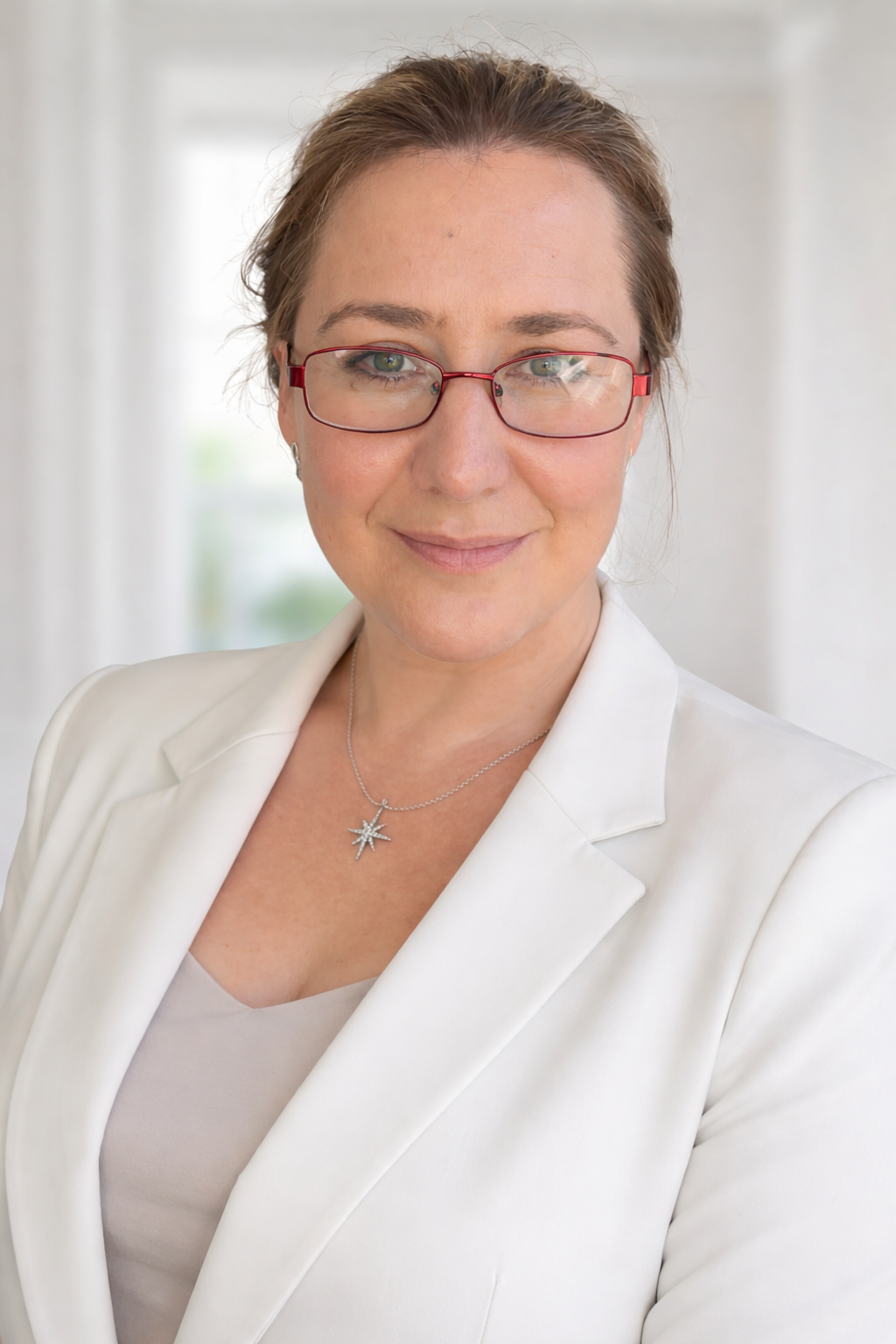
Jessica Susan Hill
Jessica Susan Hill is the founder of JSH Law, providing practical litigation support and McKenzie Friend services for litigants in person involved in private children proceedings. Jessica is training to qualify as a family law solicitor and has extensive lived and practical experience of navigating the family court system, preparing court documents, organising evidence, and helping parents approach hearings with clarity and confidence.
JSH Law supports parents with child arrangements, Cafcass involvement, statements, chronologies, applications, hearing preparation and evidence organisation. The focus is practical, child-centred and court-ready support for people who are representing themselves.
JSH Law is not a firm of solicitors and is not SRA-regulated. Jessica does not conduct litigation or go on the court record. Clients remain responsible for their own case decisions, documents and court filings.
 © 2026 JSH Law Ltd. All rights reserved.
 © 2026 JSH Law Ltd. All rights reserved.
Leave a Reply
Want to join the discussion?Feel free to contribute!